Molecular Cages

13 Followers
6 Following
1.1K Posts

Molecular cages bot 🤖 maintained by https://mstdn.science/@vtemarticent

This bot will search the literature and post regularly publications in the field of #MolecularCages, including organic cages, metal-organic cages, nanocages, etc.

If you have a paper published that is not automatically indexed, please contact to update the search algorithm

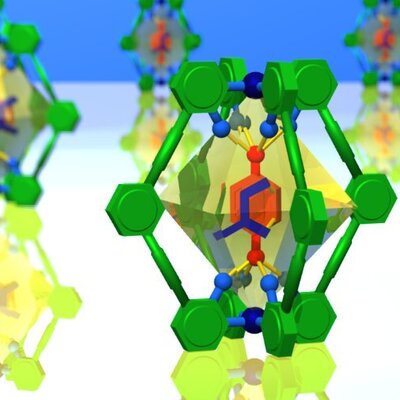
Paracetamol Inclusion in Mechanically Interlocked Nanocages https://chemistry-europe.onlinelibrary.wiley.com/doi/10.1002/cplu.202400332?af=R
Molecules, Vol. 28, Pages 6716: Influence of Different Types, Utilization Times, and Volumes of Aging Barrels on the Metabolite Profile of Red Wine Revealed by 1H-NMR Metabolomics Approach https://www.mdpi.com/1420-3049/28/18/6716
Influence of Different Types, Utilization Times, and Volumes of Aging Barrels on the Metabolite Profile of Red Wine Revealed by 1H-NMR Metabolomics Approach

It is well recognized that the aging process is a critical step in winemaking because it induces substantial chemical changes linked to the organoleptic properties and stability of the finished wines. Therefore, this study aimed to investigate the influence of different types, utilization times, and volumes of aging barrels on the metabolite profile of red wines, produced from Thai-grown Shiraz grapes, using a non-targeted proton nuclear magnetic resonance (1H-NMR) metabolomics approach. As a result, 37 non-volatile polar metabolites including alcohols, amino acids, organic acids, carbohydrates and low-molecular-weight phenolics were identified. Chemometric analysis allowed the discrimination of wine metabolite profiles associated with different types of aging containers (oak barrels vs. stainless-steel tanks), as well as the utilization times (2, 6 and >10 years old) and volumes (225, 500 and 2000 L) of the wooden barrels employed. Significant variations in the concentration of formate, fumarate, pyruvate, succinate, citrate, gallate, acetate, tyrosine, phenylalanine, histidine, Îł-aminobutyrate, methionine and choline were statistically suggested as indicators accountable for the discrimination of samples aged under different conditions. These feature biomarkers could be applied to manipulate the use of aging containers to achieve the desired wine maturation profiles.

MDPI
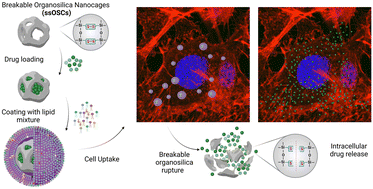
Cargo-loaded lipid-shielded breakable organosilica nanocages for enhanced drug delivery http://pubs.rsc.org/en/Content/ArticleLanding/2023/NR/D3NR02155F
Cargo-loaded lipid-shielded breakable organosilica nanocages for enhanced drug delivery

The recent nanomedicine advancements have introduced a variety of smart nanoparticles in cancer treatment and diagnostics. However, their application to the clinic is still hindered by several challenges related to their biocompatibility, elimination and biodistribution. Here we propose breakable organosilica mesop

Structural polymorphism in protein cages and virus-like particles http://pubs.rsc.org/en/Content/ArticleLanding/2023/TB/D3TB00991B
Structural polymorphism in protein cages and virus-like particles

Protein cages and virus-like particles are often thought of as highly uniform structures that obey strict geometric rules for self-assembly. Yet, there is a growing number of examples where different architectures can emerge from the same native cage system through minor changes in experimental conditions or

Entropy compartmentalization stabilizes open host–guest colloidal clathrates https://www.nature.com/articles/s41557-023-01200-6
Entropy compartmentalization stabilizes open host–guest colloidal clathrates - Nature Chemistry

Clathrates—open crystals with a hierarchy of polyhedral cages—are mostly found in atomic and molecular systems. Now, it has been shown through Monte Carlo simulations that the formation of colloidal host–guest clathrates can be driven by entropy alone, through entropy compartmentalization.

Nature
Route to complex colloidal crystals through entropy compartmentalization https://www.nature.com/articles/s41557-023-01227-9
Route to complex colloidal crystals through entropy compartmentalization - Nature Chemistry

Colloidal clathrate crystals self-assembled from hard polyhedral shapes in computer simulations are stabilized by entropy compartmentalization, whereby hosts and guests contribute unequally to the entropy. This creative solution to satisfying the laws of thermodynamics suggests new ways to make colloidal crystals with open cages and hierarchical host–guest structures.

Nature
Tuning properties of biocatalysis using protein cage architectures http://pubs.rsc.org/en/Content/ArticleLanding/2023/TB/D3TB00168G
Tuning properties of biocatalysis using protein cage architectures

Compartmentalization of cellular activities is an extremely important mechanism within cells, across all domains of life, for high efficiency of cell function. Bacterial microcompartments are exemplary protein-based cage structures that act as subcellular compartments encapsulating biocatalysts. They are able to ac

Air‐Stable Radical Organic Cages as Cascade Nanozymes for Enhanced Catalysis https://onlinelibrary.wiley.com/doi/10.1002/smll.202206127?af=R
Structures and Supramolecular Properties of Inclusion Complexes of Anthracene‐Triptycene Nanocages with Fullerene Guests and Their Dynamic Motion as Molecular Gyroscopes https://chemistry-europe.onlinelibrary.wiley.com/doi/10.1002/chem.202203462?af=R