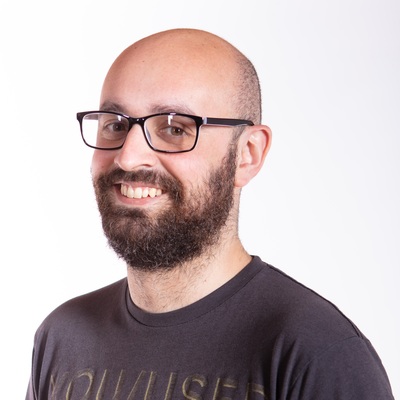
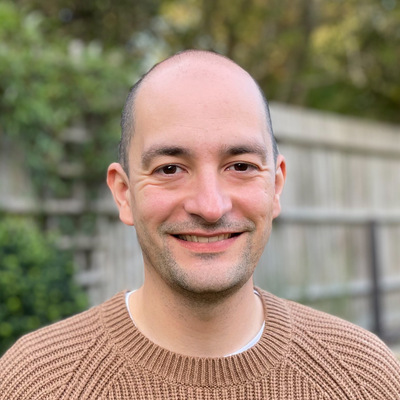
LauraBreimann

157 Followers
167 Following
21 Posts
Postdoc with Ting Wu at Harvard Medical School.
PhD with Stephan Preibisch at MDC - Berlin and
Sevinc Ercan at NYU - New York.
Interested in microscopy, image analysis, genome folding, and transcription regulation.

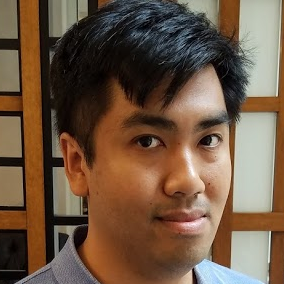
🚨 Job alert 🚨

We're hiring a postdoc (computational or wet-lab) to work on genetic diseases of chromatin! 🧬

Come work with us at the Centre for Human Genetics in the beautiful University of Oxford

🗓️ Closing date September 13th 2024

Further details at beagrielab.com/join

Pls boost!
#PostdocJobs #GeneticsJobs #genomics #cohesin

Not a bad grant writing spot- or how not to manage your time when you have to finish before the deadline 🙈

Today is day 1 of the Global Bioimaging Hackathon on deep learning models in bioimaging Java-based image analysis tools in Milan at Human Technopole.

https://globalbioimaging.org/news/gbi-hackathon-italy-2023

Global BioImaging is organizing a hackathon focusing on implementation of deep learning models in Java-based image analysis software tools | Global BioImaging

Global BioImaging is organizing a hackathon focusing on implementation of deep learning models in Java-based image analysis software tools Global BioImaging is…

Global BioImaging
Happy days in the @TingWu_Lab: our new @zeiss_micro Elyra 7 SIM is set up and ready to go!
Thank you so much Pietro Verzelli
@FascinoMaligno for presenting FINDER at the @TingWu_Lab journal club! Such a fun discussion! We will for sure explore the algorithm more with our data! https://www.nature.com/articles/s41598-022-27074-1
Unbiased choice of global clustering parameters for single-molecule localization microscopy - Scientific Reports

Single-molecule localization microscopy resolves objects below the diffraction limit of light via sparse, stochastic detection of target molecules. Single molecules appear as clustered detection events after image reconstruction. However, identification of clusters of localizations is often complicated by the spatial proximity of target molecules and by background noise. Clustering results of existing algorithms often depend on user-generated training data or user-selected parameters, which can lead to unintentional clustering errors. Here we suggest an unbiased algorithm (FINDER) based on adaptive global parameter selection and demonstrate that the algorithm is robust to noise inclusion and target molecule density. We benchmarked FINDER against the most common density based clustering algorithms in test scenarios based on experimental datasets. We show that FINDER can keep the number of false positive inclusions low while also maintaining a low number of false negative detections in densely populated regions.

Nature
Helping spread it out on Mastodon: the new "Image Processing with Python" curriculum from The Carpentries is finally out of beta! I'm one of the lucky folks that currently sit on the Curriculum Advisory Board. If you have suggestions for future releases, get in touch! https://carpentries.org/blog/2023/01/dc-image-processing-stable-release/
Launching Data Carpentry: Image Processing with Python

Announcing the stable release of a new curriculum teaching image processing skills. Sign up to host a workshop today!

The Carpentries
mRNAs have zip code sequences that ensure they arrive at the right location in the #cell. A method developed by Marina Chekulaeva (#mdcBerlin) and Igor Ulitsky (Weizmann Institute of Science) has identified new #mRNA zip codes, as the researchers report in Nature Neuroscience: https://www.mdc-berlin.de/news/news/decoding-cellular-zipcodes
Decoding cellular zipcodes

Researchers suspect that neurodegenerative diseases occur when messenger RNA (mRNA) goes astray in the neuron. With a new method, Marina Chekulaeva is able to identify “zipcodes” that assign a destination to mRNAs. She has now presented her method in the journal Nature Neuroscience.

Happy I was able to contribute some image analysis to this story! Check out this paper if you are interested in RNA localization in neurons:
---
RT @chekulae
Excited about our new story on #RNAlocalization elements coming out in @NatureNeuro!
with @SamanthaMendon4 @Laura_Breimann
@ILoedige @FrogToadson @IgorUlitsky and others

@BIMSB_MDC @MDC_Berlin

https://www.chekulaevalab.org/2023/01/16/a-massively-parallel-identification-of-mrna-loc…
https://twitter.com/chekulae/status/1615022587956060160

A massively parallel identification of mRNA localization elements in

Neuronal RNAs are made in the cell body and transported into axons and dendrites - how do these RNAs find their way to their final destination? Excited about our Nature Neuroscience paper, a joint

Chekulaeva LAB

Great summary of a really fun conference! And thanks for the shout out! 🤩
---
RT @HanaValenta
Happy to see this paper out! 🤩
In summer we organized YSN Imabio conference to gather early-career stage scientists around bioimaging 🔬and I think it was a great event! More of these!

👉https://journals.biologists.com/bio/article/11/12/bio059630/286144/Latest-trends-in-bioimaging-and-building-a

@GDR_ImaBio @Valerio_Laghi #conference #imaging
https://twitter.com/HanaValenta/status/1605860570112135168

Latest trends in bioimaging and building a proactive network of early-career young scientists around bioimaging in Europe

Summary: This Meeting Review highlights the latest trends in bioimaging discussed at the Third Imabio YSN Conference 2022 in Lyon which was organized by and dedicated to early-career young scientists.

The Company of Biologists
RT @preibischs
The amazing PhD work of @FritzPreusser now out as Open Access in @BMCBiology! It was so great to have you in the lab!
"Long-term imaging reveals behavioral plasticity during C. elegans dauer exit"
https://bmcbiol.biomedcentral.com/articles/10.1186/s12915-022-01471-4
@HHMIJanelia @BIMSB_MDC @MDC_Berlin
Long-term imaging reveals behavioral plasticity during C. elegans dauer exit - BMC Biology

Background During their lifetime, animals must adapt their behavior to survive in changing environments. This ability requires the nervous system to undergo adjustments at distinct temporal scales, from short-term dynamic changes in expression of neurotransmitters and receptors to longer-term growth, spatial and connectivity reorganization, while integrating external stimuli. The nematode Caenorhabditis elegans provides a model of nervous system plasticity, in particular its dauer exit decision. Under unfavorable conditions, larvae will enter the non-feeding and non-reproductive stress-resistant dauer stage and adapt their behavior to cope with the harsh new environment, with active reversal under improved conditions leading to resumption of reproductive development. However, how different environmental stimuli regulate the exit decision mechanism and thereby drive the larva’s behavioral change is unknown. To fill this gap and provide insights on behavioral changes over extended periods of time, we developed a new open hardware method for long-term imaging (12h) of C. elegans larvae. Results Our WormObserver platform comprises open hardware and software components for video acquisition, automated processing of large image data (> 80k images/experiment) and data analysis. We identified dauer-specific behavioral motifs and characterized the behavioral trajectory of dauer exit in different environments and genetic backgrounds to identify key decision points and stimuli promoting dauer exit. Combining long-term behavioral imaging with transcriptomics data, we find that bacterial ingestion triggers a change in neuropeptide gene expression to establish post-dauer behavior. Conclusions Taken together, we show how a developing nervous system can robustly integrate environmental changes activate a developmental switch and adapt the organism’s behavior to a new environment. WormObserver is generally applicable to other research questions within and beyond the C. elegans field, having a modular and customizable character and allowing assessment of behavioral plasticity over longer periods.

BioMed Central