@FieldsToBarrels

5 Followers
1 Following
16 Posts
Every place has its own story and Adelaide’s southern vales might feel like everyday suburbia, but if you look a little closer, you’ll find a patchwork of stories—pioneers carving out a life, families building communities, and generations leaving behind whispers of their time here.
Websitehttps://www.fieldstobarrels.com
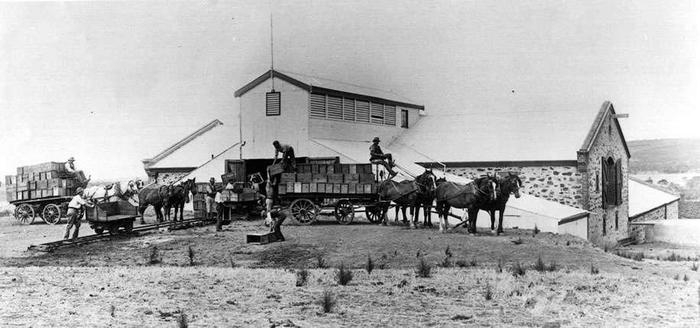
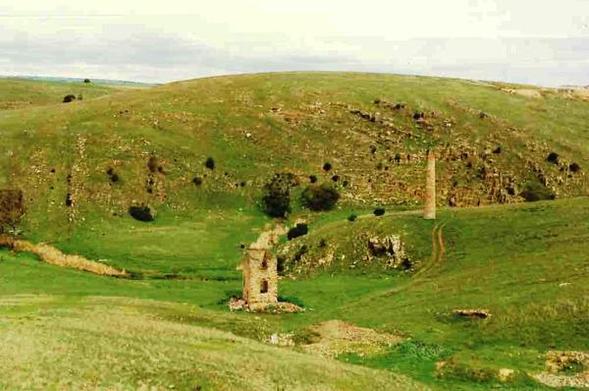
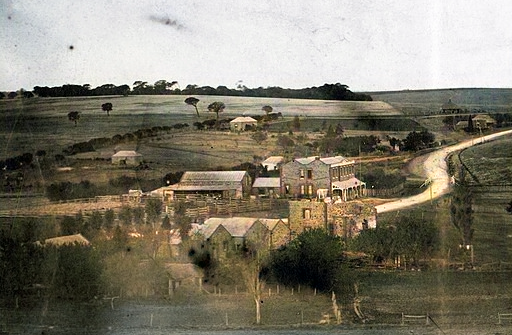
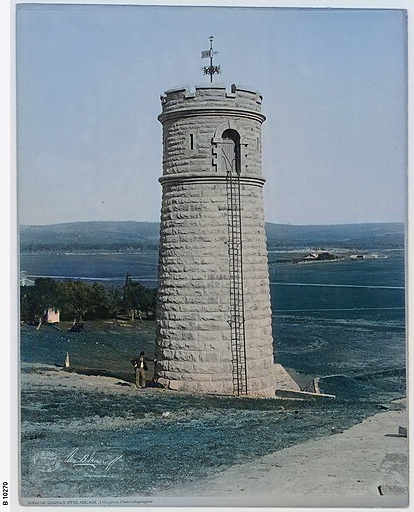
In 1849, the Worthing Mining Company was launched after copper ore was discovered on the property of Alfred and John Hallet. Driven by initial success, the next decade saw substantial construction and investment aimed at maximising yield. Miner's cottages, the captain's residence, a powder magazine, and a waterwheel was imported from Cornwall were erected. Ultimately failed to translate into profitable output, forcing the company to permanently cease operations in 1856.
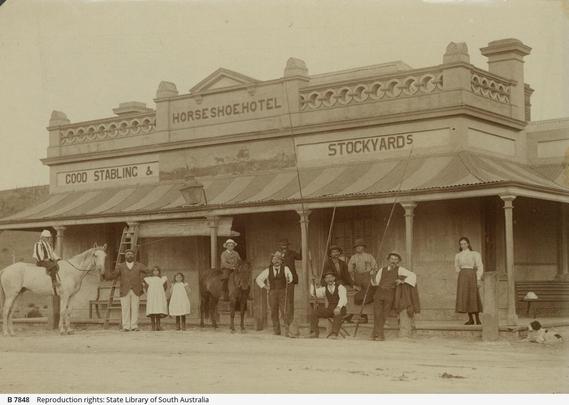
The Horseshoe Hotel in Noarlunga was established in July 1840 with C. E. Langdon as its first publican. Over time, it passed through many hands before being taken over by the Dungey family in the late 1880s till 1923. Later, the building was used as a petrol station before being renovated back into a hotel in the 1980s. The hotel was destroyed by fire on January 1, 1988. The site remained unused until it was cleared in 2007 and redeveloped into the Winnaynee Horseshoe Inn Reserve.
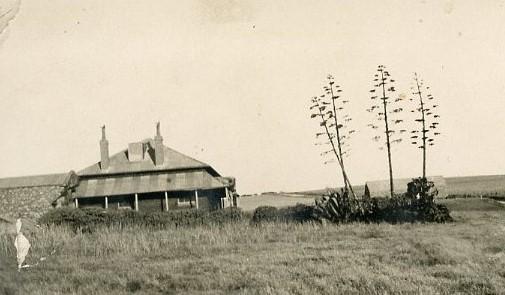
Andrew Harriott and his family migrated from Glasgow to South Australia in 1838. By 1850, they had settled at Dalkeith Farm in Noarlunga, a 400+ acre estate in present day Moana. For years rumours circulated that Harriott was involved in smuggling along the coast, with tales of a light in an upstairs window used to signal ships, possibly linked to the wreck of the Nashwauk. But as with many good stories, there’s no solid evidence! #southaustralia #localhistory #heritage #noarlunga
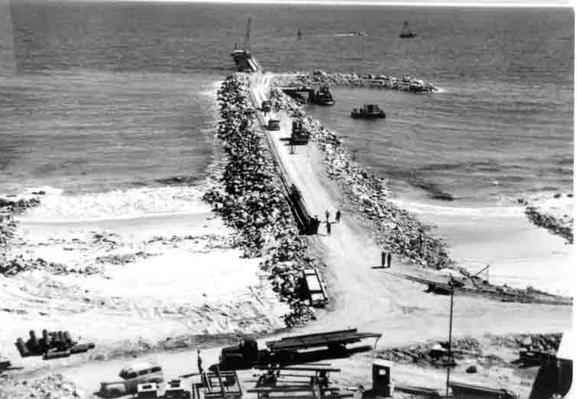
Port Stanvac, the oil refinery near Lonsdale opened in 1963. Built by Standard Vacuum (a predecessor of ExxonMobil), it was backed by the Playford government with special legislation that gave sweeping powers and public subsidies to the US company. The Act overrode local councils, waived rates, and exempted it from many state controls. Environmental concerns, union disputes, and oil spills plagued its history—despite its job creation and production.
#southaustralia #lonsdale #oil

In 1839, John Reynell bought then enclosed an 80 acre section of land south of Adelaide.

He would later issue a Notice of Sale, announcing the township of Reynella by releasing 40 acres into allotments (¼ to 2 acres), divided by the Great South Road.

By 1866, the town had grown with essential establishments: a steam flour mill, a hotel, a post office, a store, a school, and a chapel.

#SouthAustralia #History #Reynella #Australia #wine

Daniel Easton and Caroline Maybank arrived in South Australia on May 12, 1840, aboard the "Eliza," settling near Morphett Vale. Among Easton's many contributions as a mason and bricklayer, “Easton's Barn” stands out as a remarkable feat of early construction.

Spanning 12 by 6 meters with an unsupported curved, riveted galvanized iron roof, the barn is still standing on Woodcroft Drive.

#Heritage #MorphettVale #SouthAustralia

Happy Valley Reservoir built between 1892 and 1897 at a cost of £151,000 and became Adelaide’s third major water source after Thorndon Park and Hope Valley. The old township was relocated; its cemetery remains near the dam wall. Fed by a 5 km tunnel from Clarendon Weir, it began filling in 1896. Despite modest capacity, it supplies over 40 % of Adelaide’s water through the city’s largest treatment plant. #AdelaideHistory #HappyValley #SAWater #SouthAustralia #Infrastructure
Emu Wines began in the 1840s when Patrick Auld established vineyards at Magill, later moving to Morphett Vale where he added a distillery. Emu became famous for its ports and sherries, exporting globally. Hardys later acquired the brand, continuing its legacy. The Southern Districts Workingmen’s Club now occupies the original site. #MorphettVale #SAHistory #WineHistory #hardys #Reynella
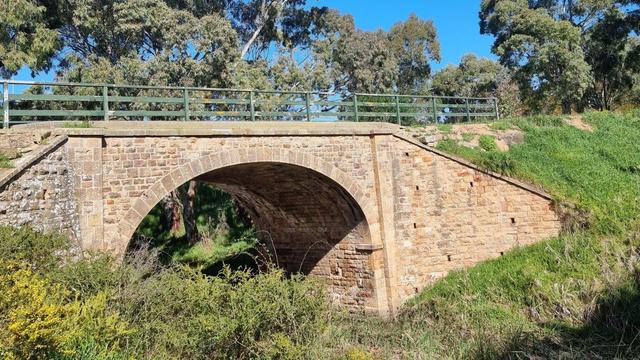
Hallett’s Bridge was completed in 1867 to fix one of the most dangerous sections of the old South Road near Reynella. The grade was eased from 1 in 11 to 1 in 18, and a new 30-foot stone bridge built with freestone from local quarries. At its opening, officials, Oddfellows and Foresters gathered as Miss Smith christened it “in the name of the Great Architect of the Universe.” The bridge still stands today, overlooking the old road rising toward Reynella. #Reynella #southaustralia #bridge

5AN (the forerunner to ABC Adelaide) began on 15 October 1937, transmitting from with in the central telephone exchange. The equipment later moved to Brooklyn Park (1944), then shifted again in 1952 to make way for the new Adelaide Airport. In 1959, a new 24 hectare site at Pimpala, Reynella was purchased, and the 172-metre red and white tower was officially opened on 20 September 1961. It is still broadcasting AM signals today under the ABC.

#Adelaide #Reynella #SouthAustralia @altbot