
I build and tinker a lot. Web, Mobile, and AWS.
Find me at New Relic
Find more at https://fallenstedt.com
Find me on 2m / 70cm KJ7QYK
| Website | https://fallenstedt.com |
I build and tinker a lot. Web, Mobile, and AWS.
Find me at New Relic
Find more at https://fallenstedt.com
Find me on 2m / 70cm KJ7QYK
| Website | https://fallenstedt.com |
I have been very busy, but I did build something cool, and I would like to share it with you.
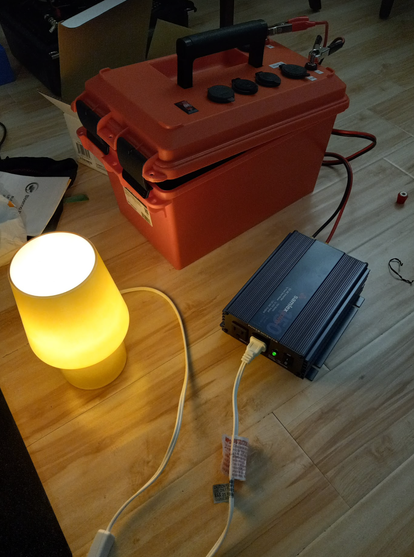
I made a power box which can be charged with solar panels. We had a power outage recently, and it sucked sitting in the dark.
I wrote up the components I used for the box here.
Under the hood, I am using a web worker for all network requests. I'm also using Apollo Server as the API layer, and DynamoDB for persistence.
So far, only dummy data is being used. I also need to read more on S3 to learn more about file permissions so users can manage their photos well.
I've been working on a PWA in my spare time. So far, the login screen renders, handles errors, and authenticates you well!
Too many green ticks on StackOverflow saying local/session storage is safe for storing access tokens. I'm taking the time to learn how to use HTTP Cookies well to manage access tokens, and will write a blog on it.
Storing session identifiers in local storage is quick solution, but it is a poor choice. If you would not want your tokens to be read in an XSS attack, why use session storage for access token management in the first place?
How does this work? I used a shell command to find my machine's ip address.
I then used an npm package called "qrcode-generator" to generate the qr code.
Need to see how your web app looks and feels on a mobile device? Encode the IP address and port of the machine hosting it and let your phone scan it.
Typing in the URL all the time makes me 🤪