#DoverNH
| Admin | https://mastodon.social/@bretcarmichael |

| Admin | https://mastodon.social/@bretcarmichael |

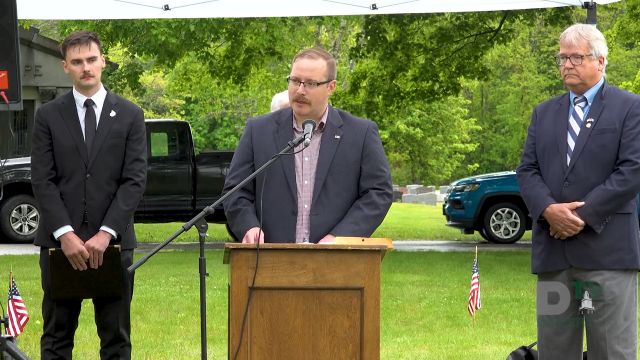
In this episode of the Dover Download podcast, Deputy City Manager Christopher Parker chats with Chad Kageleiry of Summit Land Development, the principal behind Sky Hill, a major project off Littleworth Road.Parker calls it likely the largest project Dover has seen, with roughly 600,000 to 800,000 square feet of commercial space and 600 to 800 residential units across about 200 acres. The plan separates a commercial and industrial component, surrounded by existing industrial parks, from a residential side that blends with nearby single-family homes. Kageleiry describes Sky Hill as building on lessons from Pointe Place, applying a suburban multifamily theme with boutique commercial space that brings convenience to a part of town that lacked it.The two trace the public-private partnership negotiated with the city back in 2022 and discuss the complexity of permitting at both local and state levels. Kageleiry explains his strategy of sequencing work, leasing larger industrial tenants rather than dividing the site, and bringing in trusted partners to handle single-family construction while he focuses on multifamily and mixed-use buildings.They also cover the lengthy state traffic review, the recent abutter meeting, and resident concerns about traffic. Kageleiry hopes to secure phase-one entitlements by Labor Day, begin road work this fall, and reach buildout over roughly 10 years.In This Week in Dover History, we revisit Dover's solemn 1923 Memorial Day observance at Pine Hill Cemetery, including the parade, the placement of 652 markers, and Dr. Louis Flanders' eloquent address honoring those who served.
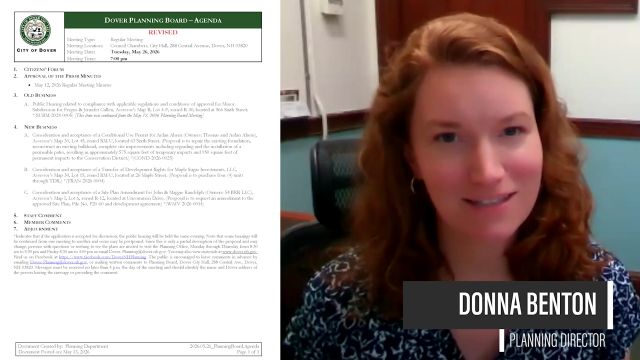
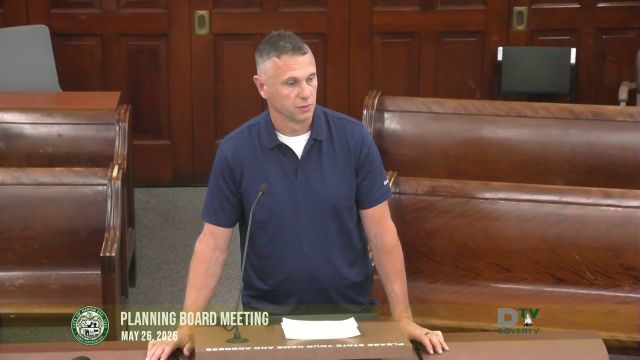
In this video, Director of Planning and Community Development Donna Benton reviews what's on the agenda at the next Planning Board meeting on Tuesday, May 26, 2026. The meeting begins at 7 p.m. in Council Chambers at City Hall. The meeting will be broadcast live on DNTV and streamed live online.

In this episode of the Dover Download podcast, Deputy City Manager Christopher Parker chats with Anne Hayes, executive director of Gather, a Seacoast-area food access and hunger relief organization.Hayes explains that Gather was founded in 1816 by women from Strawbery Banke to support fishermen's families and has evolved significantly since rebranding from Seacoast Family Food Pantry in 2016. Operating from a new community food center at 124 Heritage Ave. in Portsmouth, Gather runs a low-barrier pantry market designed like a small grocery store where members shop by choice and receive food for free. Eligibility requires only that visitors live or work in New Hampshire or Maine. Produce is unlimited, and the pantry stocks proteins, dairy, breads, pet food, personal care items, and accommodates dietary restrictions.Hayes describes Gather's two-pronged approach: "serving the line" through the pantry and roughly 40 to 45 monthly mobile markets (including three Dover locations and the refurbished "Gus the Bus" fresh food vehicle), and "shortening the line" through wraparound services, Cooking Matters classes, a teaching garden at the Seacoast YMCA, and the eight-week Fresh Start culinary workforce training program. A new production kitchen turns out about 3,000 prepared meals weekly, with a goal of 250,000 annually.Roughly 35 to 40 percent of food comes from grocery rescue, with additional supply from the food bank, USDA programs, and 70-plus restaurant and manufacturer partners. Funding is largely from individual donations. Gather has 37 staff and 350 to 400 active monthly volunteers.In This Week in Dover History, we learn that in May 1923, Foster's Daily Democrat announced plans for a special edition marking both Dover's 300th anniversary and the newspaper's own 50th.
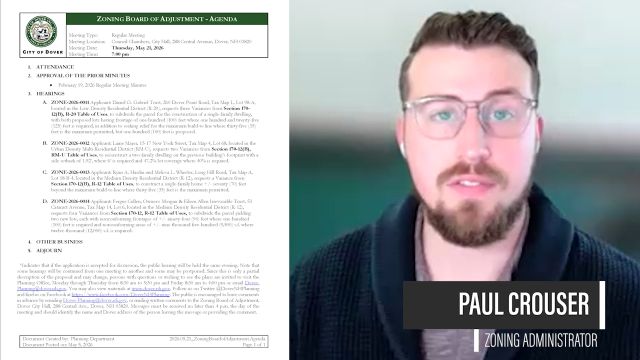
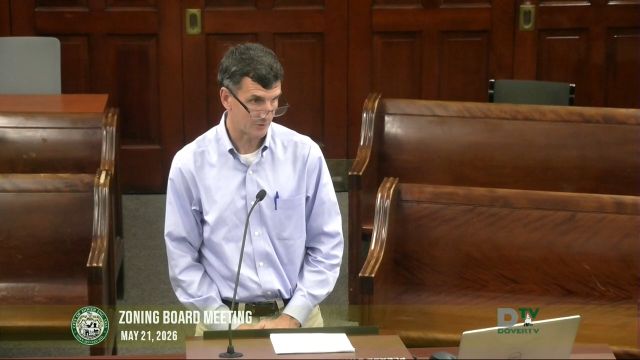
In this video, Zoning Administrator Paul Crouser reviews what's on the agenda at the next Zoning Board of Adjustment meeting on Thursday, May 21, 2026. The meeting begins at 7 p.m. in Council Chambers at City Hall. The meeting will be broadcast live on DNTV and streamed live online.