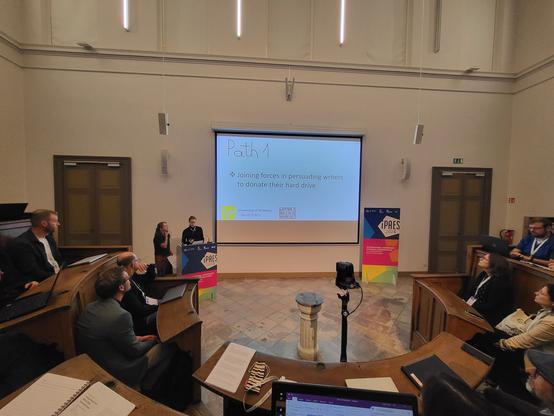
As part of my master’s thesis in Library and Information Science, I’ve asked archivists and librarians about the current state of email archiving from personal collections. The distribution channels were six relevant professional mailing lists of German-speaking countries. The aim was to reach at least members of the KOOP-LITEARA international network from Austria, Germany, Luxembourg and Switzerland. Thankfully, the survey was opened more than 180 times; 115 questionnaires could be analysed. Respondents worked in academic institutions, governmental institutions, etc. About half of the respondents stated that their institutions had a long-term archive for digital records in place. The five biggest challenges especially of email archiving, identified through qualitative methods (survey coding) were: the amount of data, legal issues and protection periods, the original structure of email archives, precustodial contact with records creators and setting up a technical infrastructure. However, one important challenge has rarely been addressed – communication with users. Restrictions on rights hinder accessibility, but couldn't at least pilot projects be launched to test working with email collections? Nevertheless, technology is on the move! 11 respondents reported that they are already working with specialised software such as ePADD. The time is ripe. This description also serves as the audio transcript of the mp3 file listed below.
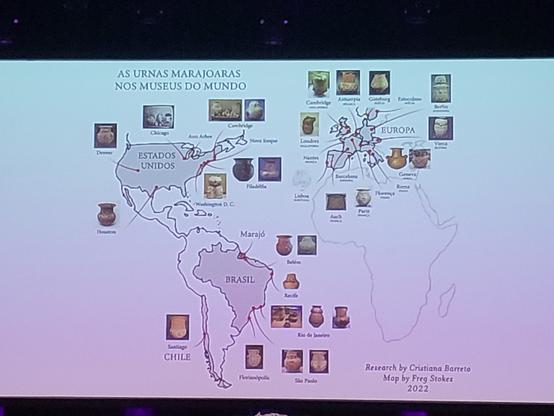
"Data Ghosts" (data from scans of museum objects) are all that remains after the September 2, 2018 fire destroyed 90% of the 200-year-old National Museum of Brazil's 20 million artefacts in Rio de Janeiro.
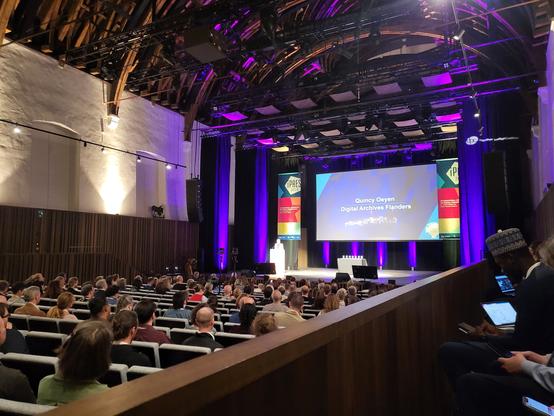
Keynote speaker Claire Warnier talking about the Atlas of Lost Finds https://www.lostfinds.org/
Wir eröffnen feierlich die erste Folge unserer neuen, 5. Staffel! In dieser Staffel sprechen wir mit anderen Wissenschafts-Podcastern und für die erste Folge konnten wir ganz besondere Gäste gewinnen: Carolin Hahn und Jens-Martin Loebel vom Podcast Digitale Wissenschaft. Carolin und Jens podcasten – wie wir – viel zum Thema Digital Humanities, aber sie interessiert, wie […]