🚨 How Social Media Algorithms Hack Your Brain
The Dopamine Trap:
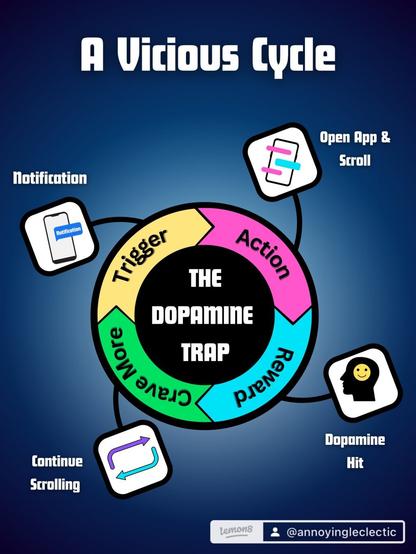
🔴 The average person spends 2 hours and 31 minutes per day on social media—that’s nearly 40 days a year lost to scrolling. 🔴 Every like, comment, and share triggers a dopamine hit, reinforcing the behavior. 🔴 Algorithms prioritize content that sparks strong emotions, like anger, excitement, and outrage to keep you engaged. 1. Dopamine-driven scrolling creates addiction. 2. The algorithm amplifies emotional content to maximize engagement. 3. You become a consumer product, shaped by corporate interests. Think of it like a slot machine; you keep pulling the lever (scrolling), waiting for the next big payout (exciting post), even when most of what you see is junk. It trains your brain to crave endless content, even if it’s making you anxious, unhappy, or less productive. Big Tech doesn’t just track what you like, it decides what you see, what you believe, and even what you buy.
The Hidden Dangers:
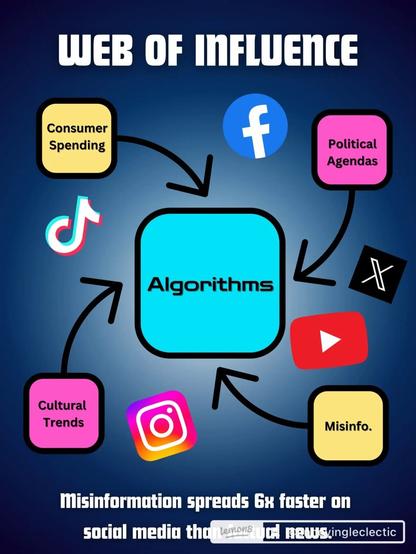
🔸 Political Manipulation – Studies show that outrage-driven content gets 5x more engagement, leading to polarization and misinformation. 🔸 Consumer Control – TikTok’s algorithm pushes trends based on what’s most profitable, not what’s best for you. 🔸 Addiction & Mental Health Issues – Studies show social media addiction increases anxiety, depression, and attention disorders. If you’re not choosing your content, the algorithm is choosing it for you. 💪🏼 How to Break Free & Reclaim Your Mind:
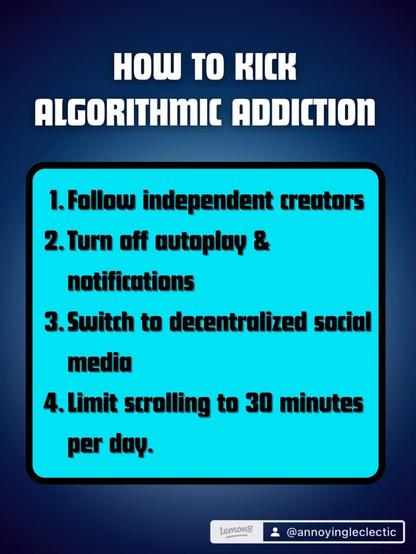
✅ Curate Your Own Algorithm – Follow independent creators, not just what’s recommended. ✅ Turn Off Autoplay – Don’t let platforms dictate what you watch next. ✅ Use Decentralized Platforms – Try Bluesky, Mastodon, Pixelfed, and Odysee instead of X, Facebook, Instagram & YouTube. ✅ Set Time Limits – Studies show that limiting social media use to 30 minutes a day improves mental well-being. ✅ Ask Yourself: Who Benefits? – Before clicking, think: “Do I want to see this, or was I manipulated into it?”
#socialmedia
The Dopamine Trap:
🔴 The average person spends 2 hours and 31 minutes per day on social media—that’s nearly 40 days a year lost to scrolling. 🔴 Every like, comment, and share triggers a dopamine hit, reinforcing the behavior. 🔴 Algorithms prioritize content that sparks strong emotions, like anger, excitement, and outrage to keep you engaged. 1. Dopamine-driven scrolling creates addiction. 2. The algorithm amplifies emotional content to maximize engagement. 3. You become a consumer product, shaped by corporate interests. Think of it like a slot machine; you keep pulling the lever (scrolling), waiting for the next big payout (exciting post), even when most of what you see is junk. It trains your brain to crave endless content, even if it’s making you anxious, unhappy, or less productive. Big Tech doesn’t just track what you like, it decides what you see, what you believe, and even what you buy.
The Hidden Dangers:
🔸 Political Manipulation – Studies show that outrage-driven content gets 5x more engagement, leading to polarization and misinformation. 🔸 Consumer Control – TikTok’s algorithm pushes trends based on what’s most profitable, not what’s best for you. 🔸 Addiction & Mental Health Issues – Studies show social media addiction increases anxiety, depression, and attention disorders. If you’re not choosing your content, the algorithm is choosing it for you. 💪🏼 How to Break Free & Reclaim Your Mind:
✅ Curate Your Own Algorithm – Follow independent creators, not just what’s recommended. ✅ Turn Off Autoplay – Don’t let platforms dictate what you watch next. ✅ Use Decentralized Platforms – Try Bluesky, Mastodon, Pixelfed, and Odysee instead of X, Facebook, Instagram & YouTube. ✅ Set Time Limits – Studies show that limiting social media use to 30 minutes a day improves mental well-being. ✅ Ask Yourself: Who Benefits? – Before clicking, think: “Do I want to see this, or was I manipulated into it?”
#socialmedia