Can you read German, access Die Zeit and like reading about models?
This is a related article in English: https://authors.elsevier.com/sd/article/S1364-8152(25)00114-8
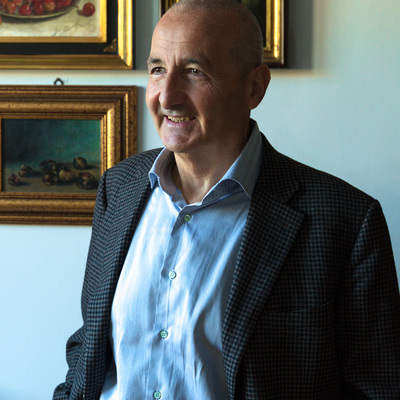
| My web site | http://www.andreasaltelli.eu/ |
| My ORCID | https://orcid.org/my-orcid?orcid=0000-0003-4222-6975 |
| My pre-prints in SSRN | https://hq.ssrn.com/submissions/MyPapers.cfm?partid=4146023&redirectFrom=true |
| My Youtube channel | https://www.youtube.com/channel/UCz26ZK04xchekUy4GevA3DA |
Can you read German, access Die Zeit and like reading about models?
This is a related article in English: https://authors.elsevier.com/sd/article/S1364-8152(25)00114-8

“society rightly distrusts the modeling done by a single mind”
....🤔 this chimes with some of the things I write about ... see this excellent piece from the New Atlantis
https://www.thenewatlantis.com/publications/the-new-control-society
https://www.nytimes.com/2025/01/12/opinion/ai-climate-change-low-birth-rates.html
Indeed if AI becomes better and better to pretend to be human it is only natural it will overcome humans doing the same things.

4/
@AndreaSaltelli noted [2]:
"where science is used to deal with plagues, pandemics, social and ecological problems related to our increasing impact on the planet and health, inequalities and human rights violations, the post-normal approach may be seen as natural"
"perspectives that tend to reduce the complexity of these choices to easy one-dimensional metrics and present these as the stark facts on which politics must act, are the ones that most tragically—often—lead to wrong choices"
5/
@AndreaSaltelli uses the #pandemic as an example [2]
"Will society adopt this different way of doing science? The polarization of the debate on how to tackle the pandemic is not encouraging [...]
It is imperative to reflect on the aspects of global governance, including scientific governance, that made the crisis possible and the solution difficult, despite the success of pharmaceutical technology that allowed the production of billions of vaccine doses in an unthinkably short time"
1/
The International Society for Ecological Economics on awarding J. Ravetz and @SFuntowicz (https://www.isecoeco.org/resources/boulding-award/ - noted by @AndreaSaltelli: https://mstdn.social/@AndreaSaltelli/113792259428531104):
"reflections on the quality of #science used for #policy, mostly concerning environmental and technological risks"
[...]
"in the context of the erosion of inherited certainties and of societal transformation. In an age of decline and demise of major social institutions of all sorts [...], what is happening to knowledge?"

The International Society for Ecological Economics Kenneth E. Boulding Memorial Award for Ecological Economics Kenneth E. Boulding (1910-1993) was a leading systems thinker who integrated social theory with the natural sciences and moral philosophy. He was an eccentric, provocative critic of the fragmentation that characterized modern scholarship. Yet his creativity, seminal ideas, and constructive engagement […]
https://www.isecoeco.org/resources/boulding-award/
The International Society for Ecological Economics' Kenneth E. Boulding Memorial Award for Ecological Economics
awarded to Jerry Ravetz and Silvio Funtowicz
The International Society for Ecological Economics Kenneth E. Boulding Memorial Award for Ecological Economics Kenneth E. Boulding (1910-1993) was a leading systems thinker who integrated social theory with the natural sciences and moral philosophy. He was an eccentric, provocative critic of the fragmentation that characterized modern scholarship. Yet his creativity, seminal ideas, and constructive engagement […]
New preprint with Alessio Lachi, Arnald Puy and Nate Breznau:
Leamer reloaded: a long-neglected suggestion is rediscovered to apply global sensitivity analysis to a quantification before publishing it


 Daniele de Rigo