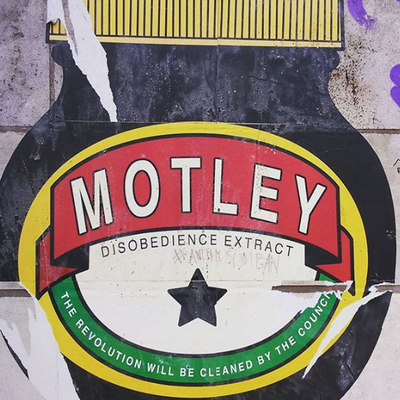
Alright! I'm listening to Neil Young and drinking the last of our christmas coldbrew.

I don't have to be at work for 1.5 more hours, and I've wasted more than a week thinking about and futzing with old computers.

I'm going to talk about priorities and goals for 2018 now. If you're not particularly interested in my goals and priorities for 2018, now might be a good time to mute me for 1.5 hours. :-D

I have four main themes occupying my mind in 2018. I'm using this tootstream to organize my thoughts and solidify them in to an action plan that will carry me through the next few months.

Themes:
- I'm buying a house and moving 600 miles and might need to find a job and AHHH! Stress! but also exciting and eventually good and relaxing.

- The modern web is a clusterfuck of bad choices. The modern internet is less safe with each passing day.

- Modern computing in general is kind of shitty, compared to even 10 years ago.

- DIY Media. We all gotta make stuff and support one another in making stuff. We gotta archive the stuff we make so that our movement, our history doesn't disappear.

I'm going to talk about DIY Media first, and then work my way backwards, and maybe pull some projects out of the aether.

DIY Media//Archive your shit//It's not just entertainment, it's a movement.

For a few months in 2015, I spent a lot of time trolling through scans of old punk zines and the noise-arch archive and various other sources talking about underground/independent music from the mid 70s up through the mid 90s.

You know what I found? Lots of really great music, and also many empty space.

When I say empty spaces, I mean I would read a review about a band, or an interview in a zine that would pique my interest. I'd start looking for more information about that band, or the members of that band, and build a little spiderweb of references that took me from scene to scene and show to show over a period of two or three years, almost invariably to end with

1) No Music still available through any sources I have access to

or more likely

2) No recordings ever made.

I can't tell you the number of times I'd see an interview with a band I respect the hell out of talking about how they took the majority of their inspiration from this other group.

And then I'd go dig for information on this other group and find 1) rave reviews 2) nothing else.

We owe it to ourselves, and to the future, to keep a physical record of the things that we do and to help one another in recording and archiving and documenting as much of each of our respective movements as possible.

It's not just music, either.

I'm talking about music because I was Close to music, and I watched these things play out in real time through lots of little decisions that seemed like the best idea at the time but that ultimately resulted in even our relatively recent scene being full of Empty Space where music should be.

But it's more than music. I've seen indie films at local festivals that, if you weren't in the room at one of those screenings, you'd never know existed. They're ghosts.

I have only my memories of them, and you don't even have that.

Or think about all the *Amazing* artists you knew on Tumblr who have completely disappeared, and taken their archives with them.

How many of those artists still even have copies of all of that work?

And, unlike in years past when, in order for something to stop existing it had to actually be destroyed, today things can just stop existing with the click of a button.

There aren't any physical artifacts tied to their existence.

This is not me railing against digital creation and distribution. Let me make that clear.

I love digital creation and distribution.

I honestly am growing to resent the oppressive size and weight of physical media. (Moving more than 1500 LPs from one building to another, to another, to another, to another 600 miles away, to another, and then back 600 miles again will do that to you.)

But we need to remember that the digital can be ephemeral, and make efforts to preserve our work.

Alright! So that was a rant about the preservation of DIY media. If this is a topic that you find interesting, I've written about it a lot (http://ajroach42.com/we-are-terrible-stewards-of-history/) and pretty much everything else I say is going to touch on this at least in passing.

But I'm moving on from archiving to creating for a minute.

We are terrible stewards of history

The only thing that remains of the silent film version of The Great Gatsby is the trailer. The movie came out in 1926, a year after the book pic.twitter.com/qsiPpJiImI— Silent Movie GIFs (@silentmoviegifs) January 12, 2017

In addition to all of these empty spaces caused by media which was no longer commercially available, there were also empty spaces caused by media which was never created.

Many bands never recorded even a single song.

Bands that everyone loved! Bands that packed houses! Bands that were called "the next thing" by the bands that actually went on to be the next thing!

In 1985 this was almost excusable, except that 4-tracks were affordable and cassette distribution was better than nothing.

Today, there is hardly an excuse.

If you do something creative, music, acting, writing, whatever take the time to preserve it.

The people like me in future generations will thank you.

If you keep waiting until you're "Ready" you might never release anything.

If the thing that is holding you back is financial, then (depending on your medium of choice) there are probably workarounds.

We set up a "recording studio" for $150 and released 6 or 7 albums out of it. Find some like minded folks, and create the scene.

Because in ten years, the only people that stand a chance of being remembered are the ones that we have proof existed.

If you don't write about your favorite local act, will anyone ever know about them?

If your favorite local act never releases a recording, will anyone ever care once they know about them?

What I'm saying here:

If you create things, release them in to the world. Archive them as quickly as you can. Make sure that those things will still exist in ten years.

If you consume things that other people create, Talk About Them in Public Places. Write those blog posts (and put your blog somewhere that it's archives will still be around in ten years.)

Write some damn Zines. Shamelessly promote the things your friends create.

And, when I watched this play out in real time, I saw people frequently choosing not to archive their content in highly public places out of fear that

- It wasn't good enough

or

- People would take it without paying for it.

And I guess either of those things might actually be viable concerns the day that you release the content, but I can't tell you how many of those things that folks decided not to make *too* available are just gone now.

This was 3 years ago! in 3 years, half the local music I listened to regularly disappeared.

And the people who made it, mostly, don't care anymore. They are parents with kids now, or they've moved on to other things.

3 years ago it was really important that no one heard their music that didn't pay for it. Now, you can't even pay for most of it.

So DIY media: Release the things and talk about the things and this is so important.

Print the zines. Release the CDs and the Cassettes, even though it's a pain in the ass. Archive that shit. Give it away. Ask people to pay for it, too, but focus on making something that will last first.

(Because for most artists the problem isn't piracy it's obscurity.)

Now, Keep that DIY media stuff in your head. It's going to come up again.

But first we gotta talk about computers.

Modern computers suck.

They do. They do too much, and they do it too fast, and there are so many layers between the user and the hardware that I can do things like boot up a chrome book, switch to a chroot, launch FreeDOS in qemu, launch VICE or PC64 in Freedos and have an emulated c64 running in an emulated x86 running in a guest OS on a real x86.

And it all mostly works! Except for some weird bugs that only exist because what I'm doing is ridiculous.

Plus we've made so many computers, and written so much software for those computers.

What do I do on Mastodon that I couldn't do on usenet?

How is mastodon different in principal than an evolution of the ideas of usenet?

I love mastodon, don't get me wrong! I think it's a nice incremental evolution over some ideas that we had a long time ago and abandoned for bad reasons in favor of centralized services.

But old software suffers from many of the same problems as other kinds of media but amplified by the fact that floppy disks and HDDs are less durable than the traditional methods through which we've distributed music.

And then there are compatibility issues. And then you get in to cryptography and... well, DOS was never meant to be used for more than 18 months, but I installed it in a VM on my chromebook 30+ years later.

There was a huge DIY software movement back in the 80s and early 90s that hardly exists anymore.

You could say that it has been supplanted by FOSS but you'd be partially right at best

Archive your software. Share your source code. Don't let things you've worked on die.

The internet is not the only way to archive things.

The internet is not the only way to distribute things.

The internet is not eternal. It may not last the rest of our lifetimes. It may be replaced. It may die.

Have a backup plan.

So, when I say computers suck, I don't actually mean that computers suck.

I mostly mean that they change too quickly.

I don't mean that modern software is bad, and old software is good as a rule.

I mean that some modern software is great, and some of it is horrible. And a lot of modern software is no better, or is actually worse, than some old software at the same tasks.

Lots of the software I use regularly was written 30 years ago and has hardly been touched since, except to keep it running on current OSs, or to repackage it with some kind of compatibility layer for modern computers.

Heck, there are a few scripts that I use literally every day that I wrote myself on a DOS machine when I was 12.

Some of them are still DOS batch files running in DOSEmu, but most of them were eventually ported over to bash or PHP or whatever.

I consider them the same, though, because they still do the same things.

Now, my software that I wrote for my own use isn't archived anywhere other than in nextcloud on my server and on some DVDs and flash drives stashed here and there.

That's Bad! I'm not eating my own dog food.

Some of that is because the software itself is trivial, or because it was never intended for distribution.

A lot of it is because I'm embarrassed to show the world code I wrote when I was 12 (or code that I wrote more recently that looks like it was written by a 12 year old)

So in the spirit of eating my own dog food, I'm going to start (slowly) releasing the software that I write for public consumption.

I'll self host a git repository somewhere, and put together some web pages about it all, and make sure that the binaries and the sources end up in the internet archive with good meta-data because that's the closest thing we have to a good future proof archival solution at the moment.

My blog is already public and archivable. I'll add it to the wayback machine, too.

The handful of computer games I started and never finished will get a final pass for QA and I'll put them up too.

I'm going to eat my own dogfood.

I'm going to upload PDFs of old issues of the AR magazine, too.

That's scary for me because there are lots of things in that that I wrote, or that @CaptainUnderpants wrote and, while they weren't particularly personal at the time, they are very personal in retrospect.

Lots of the people we talk about in those issues no longer talk to us for various silly reasons (and occasionally for some very good reasons.)

Those magazines are very much a product of the time that we wrote them, and largely no longer represent today.

That doesn't preclude them from being useful or valuable.

Most of the content in them is already archived in various places, but the magazines themselves should be (will be) as well.

That takes me through point 4 (DIY media) and point 3 (computers are bad) and touches point 2 (the internet isn't perfect.)

Let's focus on that for a minute.

The internet has problems!

The web also has problems!

The available replacements for the web (Gopher, DAT, IPFS) also have problems!

Let's talk about these things.

When I say the Web has problems, I mostly mean this: https://www.neustadt.fr/essays/against-a-user-hostile-web/

That's a long article, I'll sum up:

- Centralization is bad!
- Everyone is spying on you!
- You are executing arbitrary code every time you load a URL (Even Mastodon//Especially mastodon, although in Mastodon's case that code is open source and publicly audited.)

I'll add to that: most web browsers now have DRM in them, and that makes it illegal to do certain kinds of security research on them in many countries.

Against an Increasingly User-Hostile Web - Neustadt.fr

We're quietly replacing an open web that connects and empowers with one that restricts and commoditizes people. We need to stop it.

When I say the internet has problems, I'm mostly talking about a lot of technical mubojumbo that boils down to a few points:

The people who give us access to the internet don't always have our best interests at heart,

Further, the internet is used by governments as a tool of surveillance, and centralized identities through platforms like Facebook exacerbate this.

Also! Wired infrastructure is almost always owned or operated under exclusive contract by a big 'ol nasty corporation.

Most of the problems with the internet are super technical, or straight up legal issues.

And the solutions to them will be super technical, and also legislative.

The upshot, though, is that the modern internet is less free than it should be, and we should recognize that it can be abused, and have a backup plan in place in the event that something goes wrong with the net.

@ajroach42 in European countries, wired infrastructure is usually owned by what was fomer state controlled PTT (post, telegraph, telephone) administration, if privatised the company owning it will *always* have strong ties to the govt (usually the biggest and priority customer). In some countries (like DE, CH) the govt still has a substantial financial stake in it (30-50%) and there are modern EU countries like LU where its still fully nationalised!

 this never happened because I got a job in the industry and decided it would be dangerous to my career to release those things right now.

I should figure out a way to get passed that and do it anyway.

@ajroach42

I absolutely agree. It would be so wonderful to have the ease of use & utility of some of the older gear with today's power and storage.

@EuphoriaLavender That's what I'm trying to figure out.

@ajroach42

Wishing you lots of luck!, especially since you seem to be someone who will share the findings so others can benefit too.

@ajroach42 @vfrmedia This is super important; but, of course, physical media aren't forever either. (Personally I tend to go for online plus paper, and I try to make sure I'm not the only person with a paper copy.)
@ajroach42 @vfrmedia (And, of course, digital media *are* physical, whether online or offline. It's just that digital copying is trivial and the physical media are tiny compared to human-readable analogue formats like sheet music or Braille).
@ajroach42 @vfrmedia (Though some would argue with me over whether Braille is truly analogue.)

@artsyhonker @vfrmedia Oh for sure.

Physical media doesn't last forever any more than digital media does.

But if you have both, and in multiple places, there's at least a good chance the thing will still exist in 10 years.

@ajroach42 @artsyhonker @vfrmedia Maybe it's because I'm a classically-trained musician who grew up playing things composed by dead guys but I'm kindof hoping for at least 100 years rather than 10.

@artsyhonker @vfrmedia Certainly! But my point is that so much of what we create today doesn't even make it to 10 years.

How is it going to reach 100 if it can't make it to 10?

@ajroach42 @artsyhonker magnetic tape can last 30-40 years but needs good storage conditions for best quality.

Dead tree format is good for a lot of things, even then you have to be careful about what ink you use (fading etc), and even traditional pens and ink intended for permanency (irongall ink) can become acid that eats through paper (I think there have been problems with ancient music scores and religious texts being eaten away due to this). But those did still last some centuries..

@vfrmedia @ajroach42 @artsyhonker ...you mean, the ones that still exist lasted centuries. ;-)
@vfrmedia @ajroach42 @artsyhonker Maybe a good long-game strategy is to figure out who is going to have the equivalent of a rich monastery's or private collector's library, and make sure those people have my scores.

@artsyhonker @ajroach42 indeed a lot of stuff didn't make it through poor storage, accidental and deliberate fires, politics and war, but its a lot easier to duplicate stuff today than in previous centuries (even if its still at risk from the same non-human species as below)

https://medievalfragments.wordpress.com/2013/02/22/paws-pee-and-mice-cats-among-medieval-manuscripts/

Paws, Pee and Mice: Cats among Medieval Manuscripts

Today’s blog is a guest post from Thijs Porck, a lecturer in the Department of English Language and Culture, Universiteit Leiden. This week Erik’s tweet on cat-paws in a fifteenth-century man…

medievalfragments
@ajroach42 EVERYTHING IS not eternal.
Just have a backup plan. Period
Andrew (R.S Admin) (@[email protected])

46.6K Toots, 1.28K Following, 2.18K Followers · Server costs: https://www.patreon.com/ajroach42 https://ko-fi.com/ajroach I write and build stuff. Est. 1990. (He, Him, Etc.) http://ajroach42.com

@ajroach42

I prefer 2 GB Hitachi or HGST drives.

@ajroach42 Some things were lost, some things were gained.
On the flip side, nowadays most freeware is also Free Software that you can inspect and change.
Shareware used to be only free to use for 30 days.

@ajroach42 I think the net and the general availability might be a blessing and a curse. On the one side I get powerful software on my machine at the blink of an eye.

On the other hand comming up with your own solutions is discouraged, mainly by people shouting 'don't reinvent the wheel!'

That's one of the reasons I keep telling people to code it yourself.

http://pestilenz.org/~ckeen/blog/posts/ciy-manifesto.html

Thoughts On Programming (In Parentheses) - The Code It Yourself Manifesto

@ckeen @ajroach42 forthers_irl
@ajroach42 @ckeen and this is unironic tbh, since my impression (WARNING: ONLY FROM SHIT I'VE READ) is that forthers do tend to take a "rewrite it" approach

@a_breakin_glass @ajroach42 Yes, it is part of chuck moores corollary (sp?) to 'Keep it simple': 'do it yourself'.

Meaning you can only keep it simple if you truly understand your problem and choose a HW/SW combination (!) to solve it.

And of course the only way to do that is to do it yourself.

@ckeen @ajroach42 @a_breakin_glass It should also be noted that Chuck Moore had a library of routines that he regularly reused between projects.

The "write it yourself" mantra applies to when you're learning and/or developing something new. Once you've written it, you are free to re-use code YOU'VE written in a subsequent project, since:

1. You're in the ideal position to understand its tradeoffs, and,

2. You can fix and refine it effortlessly as needed.

@ckeen @ajroach42 Thank you for the link -- I've bookmarked it for future reference. I absolutely subscribe to this manifesto.

(even when I am not writing in Forth.)

@ajroach42 What would be the major differentiation between #DIY and #FOSS?

@duck57 scope and scale. DIY software is generally small, built by an individual or a very small group, designed to do a thing.

Much FOSS is huge in scope, and built by dozens or hundreds of people, with a whole community around them. Often with corporate sponsors.

FOSS can be DIY software, but it's often much larger than that.

DIY software can be FOSS software, but it isn't always open source.

It can also be a matter of tools. the simpler the stack, the more DIY it feels.

Eternal September - Wikipedia

@miwilc yeah sure, but that was a problem with one specific cluster of usenet servers, not with usenet as a concept.

Sure, that particular cluster of servers was *the* cluster, but my point is that very little that Mastodon does is substantively different from older technologies, even in that it is federated.

@ajroach42 that's interesting, since almost all current #social software seems to follow usenet's evolution bar centralized identity. Except for, maybe, #snapchat ?

@ajroach42 I too, have thought of Mastodon and some other Fediverse implementations as analogous to what Usenet was. And maybe before that *really* old school BBS's run by Sysops... (basically what Admins are to Mastodon Instances)...

https://www.theatlantic.com/technology/archive/2016/11/the-lost-civilization-of-dial-up-bulletin-board-systems/506465/

The Lost Civilization of Dial-Up Bulletin Board Systems

A former systems operator logs back in to the original computer-based social network.

The Atlantic
@Tchambers this thread is almost two years old, and I've said a lot on this topic since then. Rather than rehash all of that, I'll direct you to http://ajroach42.com/a-modern-bbs/ and maybe http://ajroach42.com/steps-towards-a-web-without-the-internet/
and probably other things, but I dunno.
A Modern BBS: Reviving the local, distributed, weird precursor to Facebook.

BBSs were a weird, wonderful facet of early computer culture, connecting community members in to a distributed, often free, local social network. I want to revive this almost forgotten concept, and find a modern spiritual successor.

@ajroach42 BTW, remembering it more now: BBS's had their own form of "the Fediverse" which was in it's day "FidoNet" -- including "Echomail" and "FidoNodes... and looking it up, this actually had 4 million unqiue users at one point. A bit bigger than the #Fediverse is now, by some estimates I'd seen. https://en.wikipedia.org/wiki/FidoNet
FidoNet - Wikipedia

@Tchambers Fidonet wasn't alone! There was also synchronet and a couple of other smaller bbs networks.

@ajroach42 Would be a really cool episode of this podcast to look at that, then looking forward to Federated #activitypub decentralized social nets....

https://podcasts.apple.com/us/podcast/the-secret-history-of-the-future/id1422830638

‎The Secret History of the Future on Apple Podcasts

‎Technology · 2019

@ajroach42 BTW, wonder if there are lessons to be learned as to what worked then that apply to current #Fediverse design questions now -- I don't remember how the old Fidonet/Sycronet/Echomail systems supported things like spam filtering, or content moderation of illegal or objectionable content to each BBS.

Wonder if there were lessons that might help next generation of #Fediverse learn from what worked, or didn't work then.

@ajroach42 you wouldn't like some of my ideas for my ideal, pie-in-the-sky os
@ajroach42 exokernel, transparent virtualisation, etc

@a_breakin_glass I don't actually dislike VMs and emulation and whatever.

I just ... Computers are too strong to be used how we use them.

@ajroach42 You know there’s a dude working on an Arduino OS, right?