 Charles 𝄢 Hutchins
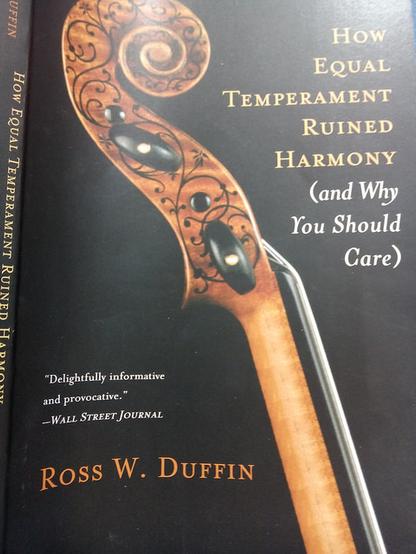
https://algonoise.social/attachment/2969 I'm reading _How Equal Temperament Ruined Harmony (and Why You Should Care) _. I'm only 35 pages in. It's readable and does a fair job explaining how tuning systems work. Oddly, it seems to be aimed at non-musicians. It's also, like all books on tuning, slightly reactionary. Although it's much less ranty than Harry Partch.
Here's an experiment you can try at home: Use MIDI to send a major third to your sine tone generator. The first time I tried this, I thought my synthesiser was broken.
Computer/electronic music is not actually limited by the constraints of trying to get a keyboard to sound right, and yet we often use #12TET (keyboard tuning) without thinking about it. What's your preferred approach to #tuning?
#JI #ET #JustIntonation #EqualTemprerament #Meantone #xenharmonic #microtone
Here's an experiment you can try at home: Use MIDI to send a major third to your sine tone generator. The first time I tried this, I thought my synthesiser was broken.
Computer/electronic music is not actually limited by the constraints of trying to get a keyboard to sound right, and yet we often use #12TET (keyboard tuning) without thinking about it. What's your preferred approach to #tuning?
#JI #ET #JustIntonation #EqualTemprerament #Meantone #xenharmonic #microtone