 Dr. Dan Killam
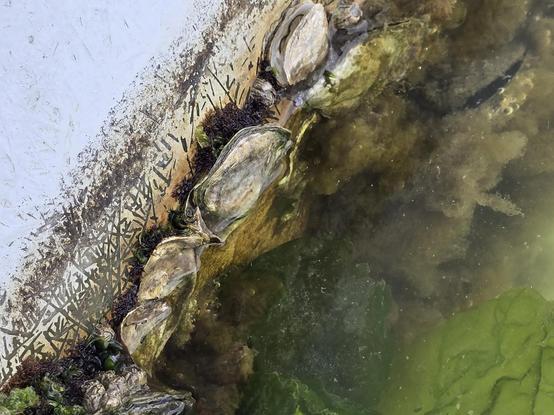
Olympia oysters (Ostrea lurida) are our native oyster in estuaries on the West coast of North America. They are marvels of evolution, able to survive extreme swings in salinity and turbidity often seen in their native environment. As another adaptation to their extreme habitat, they brood their young within their shell for a couple weeks to a month, to increase their chances of survival. Some years, they may be nearly wiped out by extreme high flow events, and they maximize their chances of finding a mate during the following interval by alternating sexes annually (sequential hermaphroditism). There were once billions of these oysters in SF Bay in huge reefs, where they were harvested sustainably for thousands of years by native peoples, who produced enormous shell mounds as ceremonial monuments to their relationship with the Bay. But in the era of colonization they were almost wiped out by overharvesting, introduced predators/diseases, pollution and habitat destruction. These days the vast majority of farmed oysters are Japanese oysters, which grow faster and reach much bigger size. Nevertheless, Olympia oysters persist and can be found all throughout the Bay in somewhat sparse concentrations, biding their time for when conditions are more to their favor. I have full faith they will inherit the Bay after we're gone! #clamFacts
 🇵🇸 em mohamed 🍉
 Greg Johnston