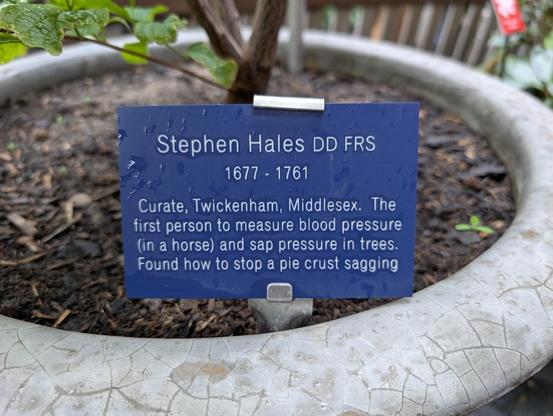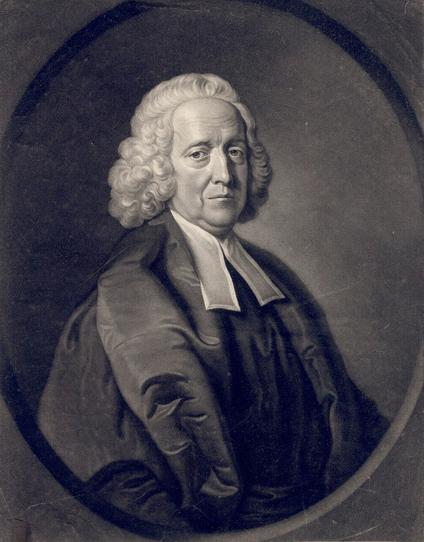
Life goal: Get a plaque this good
@jonty In his book ‘At Home’ Bill Bryson discusses how lots of interesting endeavours and discoveries came from clergymen, largely because they were a well-educated, wealthy group of people with lots of free time. They only needed to do one sermon a week and many of them just bought a book of sermons, so didn’t need to prepare any of their own. (I couldn’t help but think about basic income during this section of his book!)
@jonty Of note: Thomas Bayes (of Bayes’ theorem), Edmund Cartwright (inventor of the power loom), George Garrett (inventor of the submarine), Jack Russel (breeding small dogs), Thomas Malthus (population theory), William Buckland (first scientific description of dinosaurs), Octavius Pickard-Cambridge (spider expert), William Shepherd (wrote a history of dirty jokes), John Mackenzie Bacon (pioneering balloonist and aerial photographer) John Michell (devised a method to weigh the Earth)
@gammapeak @jonty Someone named Octavius studying spiders. The universe is having us on.
@gammapeak @jonty and Gilbert White, one of the first naturalists, who is on fedi here: @gilbertwhite

Small gentry who weren’t beneficed clergy would be a fair comparison group, I think. Probably someone has done the work of figuring out if the clergy were more likely to discover things than the equally rich otherwise idle.

@gammapeak @jonty

@gammapeak @jonty thank you for this conversation! I'm nowthoroughly enjoying the Wikipedia biography of Hales, who was a co-founder of the Royal Society of Arts

https://en.wikipedia.org/wiki/Stephen_Hales

Stephen Hales - Wikipedia