 inari
inari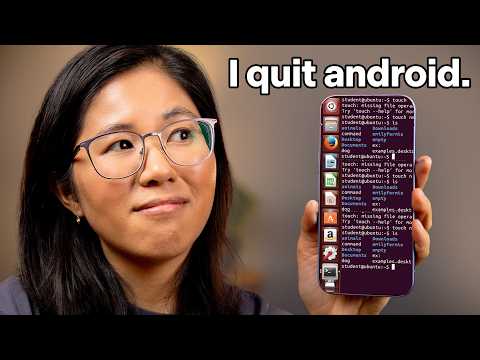
 whaleross
Unfortunately I need my electronic ID that only runs on Windows, Apple, iOS and the Google Android unless you can spoof it. Not even regular Linux or with Wine. And I use it near daily.
Boo Sweden.
Boo EU.
Unfortunately I need my electronic ID that only runs on Windows, Apple, iOS and the Google Android unless you can spoof it. Not even regular Linux or with Wine. And I use it near daily.
Boo Sweden.
Boo EU.
“There is no demand”
But only because Linux users don’t bother writing letters.
If a lot of people asked the banks for a solution, they would of course consider it.
BlackBerries were never really that large, but still many apps ran on them as well.
Yeah, that’s why it’s probably illegal. You could find people that cannot use it, due to a disability perhaps, go to court with them and force government and banks to behave.
If it is excluding people due to a disability, it surely is illegal.
electronic ID that only runs on Windows, Apple, iOS and the Google Android
Would Android running in an LXC conatiner suffice? That’s what SailfishOS offers, and many users report their ID apps working that way, also Swedes.
unless you can spoof it.
Not sure what you mean.
You could just install Waydroid. It’s recently become part of the Debian repos and supports armhf.
It should run fine with a fast microSD and nothing else running, considering the Pi Zero is a slow device.
You can get a physical one time code generator thing instead for the 2fa part of the digital ID. No phone required.
The one we have in Norway looks like this
Linux on a phone sucks too. Hopefully, it won’t one day but for it now, it does. To be fair, I’ve only used Ubuntu Touch and PocketBlue. Of those two, Pocket Blue was better, in my opinion. PostmarketOS looks promising but I don’t have a device that will run it well. Too many key features don’t work on my OnePlus 6t at the moment.
For now, AOSP with FDROID is where it’s at.
Jolla uses a downstream kernel and when the SoC manufacturer drops supports, usually after just a few years, you will no longer get updates with it.
That’s why devices with mainline kernel support are great, you can use them until they literally fall apart.
For example Fairphone has devices that are well supported with a mainline kernel and those are repairable as well.
Also, keep in mind there are very few SailfishOS apps, compared to just regular Linux apps that run well with Phosh or KDE Plasma Mobile. You can often just use the exact same software as on the desktop, which is neat.
On SailfishOS, you’d probably have to make extensive use of the prorietary Android app support, which is just an LXC container running Android.
That way you’d run a downstream kernel with a Linux userland and an Android container on top instead of just a regular Linux system.
Do you mean phones without unlocked bootloaders ? errrrmmmmmm you can’t
Check the LineageOS device suport list : if your device was ever supported, you cand build for yourself (provided you have enough horsepower), or request an unofficial build in the iodéOS forums
No, I am referring to iodéOS.
iodéOS official supported devices
I had asked here - feddit.uk/post/49734939
The models below are officially supported by the iodé team. Don’t see your device in the list? Don’t panic! We also support a iodéOS GSI. You can also find here a list of unofficially supported models by the iodé community. iodé is an open source community project, and relies heavily on your contributions!
The wording on that table can be confusing; “Bootloader locked?” Yes/No is referring to the ability of Iodé installer and ROM to have that device bootloader re-locked after installation.
I can garantee you pretty much all of them come with a locked bootloader from the factory/shop (even if they have a “no” on that page), and it needs to be unlocked to install a different rom from the stock one. Doesn’t matter what flavor of Android it is. It might be that IodéOS installer is doing it immediately after and so you’d think it wasn’t ever unlocked, but it was.
Woah, that’s a pretty hectic presentation style. I constantly felt an urge to slow down the video… and I’m used to podcasts at higher speeds.
Nice to see more people try something other than Google and Apple stuff, though.
I mean, she does well, I just wish she’d leave some time for the brain to process the information, this just makes it hard to get anything out of it, really.
I read this in Tom’s voice.
 Tlf
Tlf mumblerfish
 Anafabula
 Leon
Leon A_norny_mousse
 skankhunt42
 pipes
pipes StillAlive
 InfernoWarrior