
Introducing you to Peter Enis, my new cheap 32bit floating point field recorder.

Actually I haven't used 32bit float ADCs at all so far. In theory, these have a dynamic range of around 1680dB.

Yet 24bit int has a dynamic range of 144dB and to my knowledge there is no audio interface / ADC that actually provides this range. Because very quiet signals will drown in preamp noise and the mud of low integer resolution, while very loud signals will clip the converters.

32bit float audio as a data format could solve this, as very quiet and very loud signals all have the same precision, yet I doubt physics allows preamps with a noise floor at -1680dB.

So how are these cheap recorders doing the trick with the actual dynamic range? I'd really love to know.

The promise is obvious: No gain control needed, just run and gun, and it will never ever go into clipping.

I used to do #FieldRecording long time ago; https://freesound.org/people/DrNI/

#ZoomM3 #ZoomRecorder #Zoom #Recorder #Tontechnik #Atmoaufnahme #Audioengineering
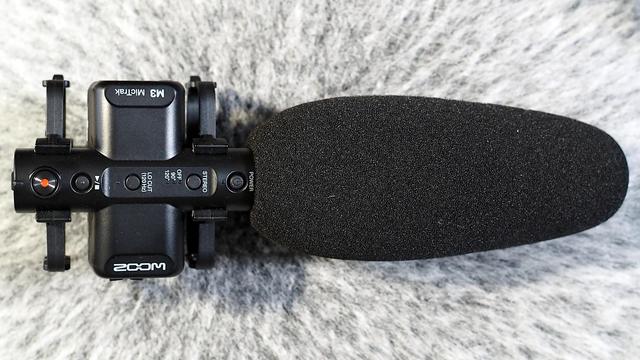
🧵 entering rabbit hole of 32bit floating point ADCs now. *swoooosh*

So, apparently 32bit float ADCs do not exist. This is why it is no use reading the advertisement lyrics of #Zoom or #Tascam here.

How it's done is that the electronics uses two 24bit int ADCs wired together, one for low gain, and one for high gain. One source* says, these are combined to 32bit int audio with a dynamic range of 192dB.

So, 32bit float audio is not a miracle cure. Every high-end 24bit preamp/ADC by RME or similar will still outperform any cheap 32bit float thingie – if set to the correct gain setting.

Which exactly is the point why in #FieldRecording, people like 32bit floating point… because if you've got only one shot at the airplane taking off, you can't do a correct gain setting in advance. So you'd better live with a little more noise than with clipping.

One source: https://www.boomlibrary.com/blog/demystifying-32-bit-float-audio/

Another one / *: (German): https://www.amazona.de/workshop-32-bit-float-audio-im-ueberblick/

#Recording #Tontechnik #Audioengineering

@nielso back in 2012 when Propellerhead did this on their Balance audio interface they called it "clip safe" and it felt a bit more honest than this "32bit float ADC" marketing

@ahihi

True, yes, I guess if you look closely they aren't saying "32bit float ADC" anywhere because it's not what happens. It's 32bit integer ADCs…

Actually the #Tascam #Sonicview mixing console also states "32bit ADC" without the float, I had been discussing this console with @mosgaard

So with what I've learned now it is even more unclear, if that interesting console is ā€œclipping safeā€. Even though clipping safe only means 192dB of dynamic range (32bit integer), which does still allow for so much headroom compared to the 144dB of 24bit that it is virtually clipping safe. I mean, if you exceed your gain level by 48dB, you're likely in trouble otherwise anyways.

The Tascam Sonicview series is one of the few digital mixing systems actually using 32bit ADCs, likely integer.

I just found there is an input module by Allen&Heath for their DX32 modular stage box that also does it: https://www.allen-heath.com/hardware/everything-i-o/dx32/prime-i-o/

Yet 32bit int mapped to 0dBFS would mean you'd need to give more headroom manually by lowering the gain.

PRIME I/O • Allen & Heath

Allen & Heath

@nielso @mosgaard and by lowering the gain you get closer to the noise floor, where 32-bit gives you plenty of headroom in terms of quantization noise, but then you still have thermal noise to deal with...

the PRIME datasheet lists "Noise at 0dB gain: -96.8dBu" which is equivalent to about 16 bits šŸ˜„

i wonder if the dual 24-bit ADC approach might actually be better

(i am not an electronics engineer, i just dabble)

@ahihi @mosgaard

Well, if I got this correctly, 32bit ADC means you're internally having dual 24bit ADCs.

It's quite hard to compare systems by data sheet.

E.g. the RME Mic12d preamp/ADC is specified with -125,5 dB(A) Equivalent Input Noise (EIN) at a 30dB gain setting with a 150 Ohm input load.

A&H PRIME Input specifies an EIN of 127.5dBu also with 150 Ohms, yet nothing about gain setting and also dbA vs dbU…

…things are getting complicated.

The Mic12d is a Dante-enabled preamp / 24bit ADC that could feed an A&H console, yet its gain settings cannot be controlled via the console. It's also quite expensive.