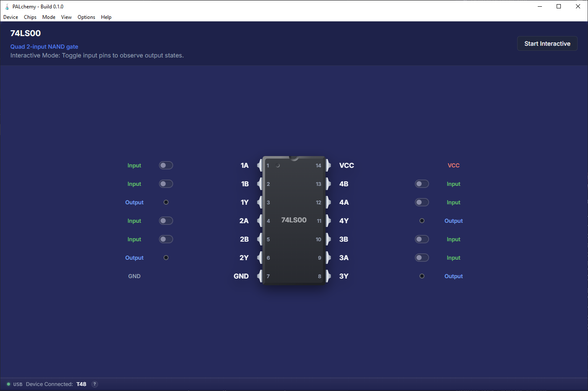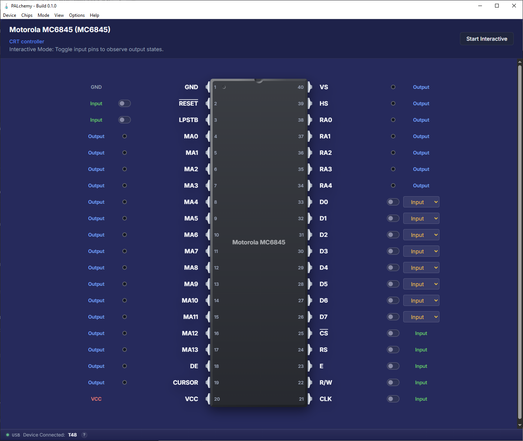
If you want to render your own SVG diagrams of DIP chips, I've unceremoniously dumped some code on Github that does that.

It's pretty awful but some people seemed to think they'd have a use for it, so knock yourself out.

https://github.com/dbalsom/PALchemy/tree/main/crates/dipsvg-rs
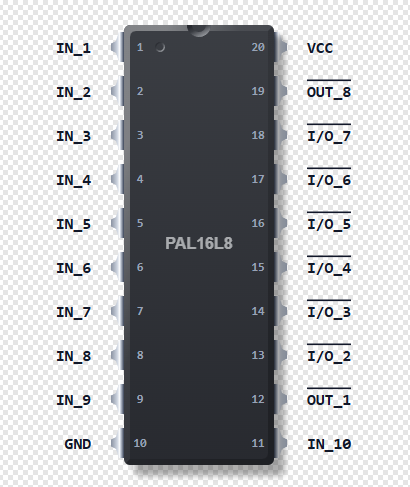
still on my TODO list:

  • responsive CSS so labels are visible regardless of light/dark mode

  • calculate gradient stops for the shiny-pin gradient based on the actual pin geometry values (it's faked right now, so if you change the pin geometry the gradient will not look right).

  • shading on the notch looks bad if you flip the chip upside-down (so don't do that)

  • more options for label colors, sizes, and style

  • automatic wrapping for chip name strings (so you can write "Motorola 6845" and have those be on two lines)

  • maybe some sort of layout specification so you could print text on a chip as it actually appeared on the chip. dat feature creep, tho

and i may have buried the lede a bit but there's an entire application in the base repo that will let you take a chip definition and put that chip in a T48 programmer and let you toggle the inputs and watch the outputs.

So that's a thing.

if you are fast enough with your mouse you can pretend you're a video card
you will not be fast enough
@gloriouscow u dont know me

@rotopenguin the 6845 has a minimum clock, but in theory, you could take a CMOS 8088 and manually add two numbers with just your mouse by laboriously feeding it the right opcodes and memory values.

... that might make a fun video

@gloriouscow @rotopenguin build the crankable 8088. one rotation = one cycle

then run Doom on it

@foone @rotopenguin

it should play some jaunty ragtime number while you're crankin'