Publishers choosing the nuclear option with James Patterson makes me think the recent library ebook bills are gaining real momentum and have a chance at succeeding.

They're sensing the tide is turning and are willing to risk their reputations to keep readers from having a consumer-friendly way to access ebooks that still makes them plenty of money.

If you're a publisher that doesn't support your primary political organization's agenda, now would be a good time to speak up.
#cmonson #ALAAC26

re: ☝🏽

"That development prompted bestselling author James Patterson to publish an op-ed in the Providence Journal blasting the Rhode Island bills and library ebook legislation more generally."

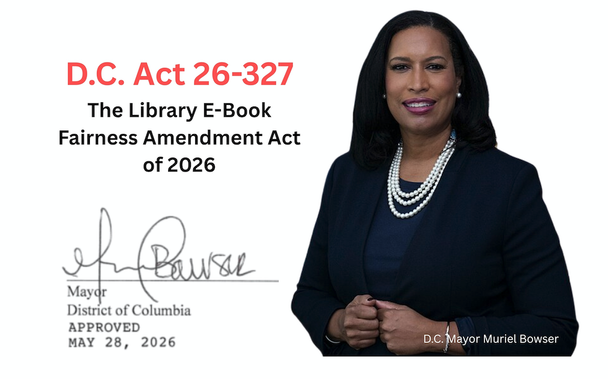
https://www.wordsandmoney.com/district-of-columbias-library-ebook-bill-is-signed-into-law/

District of Columbia's Library Ebook Bill Is Signed into Law

The District of Columbia is now the second state or municipality to pass a reworked library ebook law. Meanwhile, a similar bill in Illinois will have to wait until legislators return in the fall, while Rhode Island's effort could head to the floor next week.

Words & Money

Maybe it's a complete coincidence that the AAP, AG, and James Patterson have simultaneously declared war on libraries — at a time libraries are fighting to defend the freedom to read — but it feels weird, no?

Y'all still gonna chase ARCs at #ALAAC26, though? 🫠

https://www.publishersweekly.com/pw/by-topic/industry-news/publisher-news/article/100605-authors-guild-survey-looks-at-why-author-incomes-are-in-decline.html

Authors Guild Looks at Why Author Incomes Are in Decline

A survey commissioned by the Guild found that only 25% of print books and e-books read in the past month were bought new or through a paid subscription, with readers increasingly turning to low- or non-royalty generating channels to access authors’ wor

PublishersWeekly.com

Is THIS finally the moment that librarians embrace their power to influence the demand curve, and start changing their approach to collection development and patron communications?

There was a brief moment in 2020 when some stood up to Macmillan (kinda), and they've happily kicked Hoopla in the shins, but the opportunity is so much bigger than that.

https://loudpoet.com/2024/01/17/on-library-ebook-licenses-patron-demand-and-power-dynamics/

On library ebook licenses, patron demand, and power dynamics | As in guillotine...

Until more public libraries prioritize sustainable digital collections over temporary access to bestsellers, it's a stalemate.

As in guillotine...

@glecharles I don't think James Patterson knows how many copies of his books libraries buy.

I don't think many authors actually understand how much libraries are probably propping up the entire publishing industry.

If they really want to push this, libraries should organize a boycott of any author that signs on to it, and really show our economic muscle in this area. We've had to explain harder things to patrons than why we don't have a certain author's new release on the shelf.

@fskornia I actually think Patterson knows better than most because he's in the very small subset of authors whose physical sales actually are being replaced by library borrowing, and there's no way his speaking out now isn't coordinated. The AG survey even notes it, obliquely, but it's something I've known since my Panorama days. No one will go on the record, though, because it reveals they're screwing libraries to defend the 1% of authors and big pubs' core business model.

@glecharles

"The survey also found that the readers earning more than $75,000 a year were most likely to borrow a book from a library instead of buying it."

I'd be buying so many books if I had that kinda money...never made more than 25-30k, but buy half as many books that I borrow from libraries.

@alkaid I suspect book buying scales with income, and avid readers all spend more than a reasonable percentage on books!