 Cassana 🍻
The conch horn is likely the oldest labrophone or lip-reed #instrument. It's used around the world for communication, timekeeping, #Music and social and religious functions. Only medium to large shells can be played like a horn. Smaller ones can be whistles though. Being a tightly-coiled helix, the internal tube is around 3x the shell's length. The sound is resonant and powerful. Here's me playing mine. . #Ethnomusicology #WorldMusic (1/6)
Re #History. The Marsoulas conch (France) dates to almost 18ka and is the oldest extant blowing conch. Its use of a mouthpiece hints at still older conch horns. The oldest extant animal horn labrophone dates to 600 CE (Visnum, Sweden), though attestations of blowing horns go back to around 5ka. That said, animal horn instruments before the domestication of cows, sheep, etc. seems unsupportable. (2/6)
Sadly, various large conch species are endangered or locally threatened due to over-harvesting, habitat loss, etc. alongside poaching and illegal trade; and Often confirming the source isn't possible. There are various projects trying to bring numbers back up. Here's a documentary about a Queen conch hatchery. Also, it features conch music by Don chlton. #Ecology https://www.youtube.com/watch?v=FEDSXfYs9c4 (3/6)
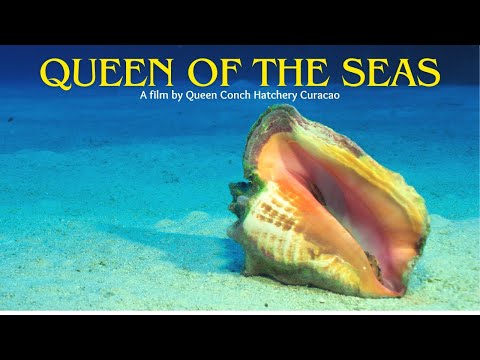
Queen of the Seas - English - 4K
Another thing that is important to highlight is that the conch horn's usage across many countries and cultures speaks of its importance, yet for many people it's not an instrument, merely an every-day sound tool. It's that integrated into the social soundscape. I would almost call this "ubiquitous invisibility", similar to church bells and fog horns, which fulfil similar functions. (4/6)
Modern conch horn #Music is typically linked to (free) jazz, or as a texture instrument in soundtracks, though people are actively exploring it in many genres. Some musicians use a variety of different conches to cover a wider tonal range, while others try to get as many notes out of a single conch as possible. Here's The Passage from the Alien #Soundtrack, in which conch is played through Echoplex. https://www.youtube.com/watch?v=j-oK0klLhgM (5/6)
Alien Soundtrack Track 6 "The Passage" Jerry Goldsmith
I was planning to do an extended thread, but there's a truly ridiculous amount of stuff to say about these instruments. For more information on the conch horn and it's various uses and traditions around the world, I recommend Jeremy Montague's "The Conch Horn" (2018), in which he summarises his 6-decade-long fascination and research. It can be downloaded here as a free PDF, ePub or Kindle. #Book https://jeremymontagu.co.uk/Books.html#ebooks (6/6)
 Claire Barnes
@cassana The book's fascinating - & thanks for highlighting a website of many treasures on #EarlyMusic from that wonderful scholar, the late #JeremyMontagu.
(Editing to add hashtags because I can already see much to investigate!)
(Editing to add hashtags because I can already see much to investigate!)
@cassana One anecdote of my own on conch history: when excavating the 'Avondster', wrecked in Sri Lanka in 1659, we found 3 conch shells, & records of the same ship carrying ~100,000 to Bengal a year earlier.
https://www.maritimeasia.ws/maritimelanka/avondster/finds.html#areca
@cassana From Jeremy Montagu's book (p57):
"Even the normally coiled shells are said by Hornell to be sufficiently sacred that if holy water should be required, a chank can be used to dip water from a bucket or any other source, and the touch of the shell renders the water holy."
"Even the normally coiled shells are said by Hornell to be sufficiently sacred that if holy water should be required, a chank can be used to dip water from a bucket or any other source, and the touch of the shell renders the water holy."
@ClaireFromClare Excellent! Happy to hear you’re enjoying the book. Jeremy Montagu is a name I’ve encountered regularly in organology (the study of musical instruments, their development and surrounding culture/traditions), which is one of my own specialisation areas within ethnomusicology.
Also, a wonderful personal conch history anecdote there. I suppose we don’t know anything about possible usage context?
Also, a wonderful personal conch history anecdote there. I suppose we don’t know anything about possible usage context?