RE: https://sauropods.win/@futurebird/116557781352191773

I had the WRONG ID on these ants.

To make an excuse I fist saw this colony two years ago when I wasn't as good at identifying ants (this implies that I'm good at it now, I'm not, I'm just much better)

Any way this is isn't the chestnut carpenter ant. It's Formica pallidefulva.

And I'm mad since It was staring me in the face. Her antennae are too close to her clypeus and her back isn't enough of a "hump"

Formica pallidefulva comes in a bunch of different colors just to be confusing.
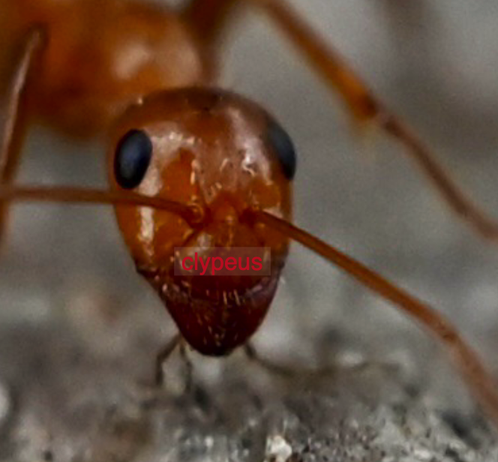
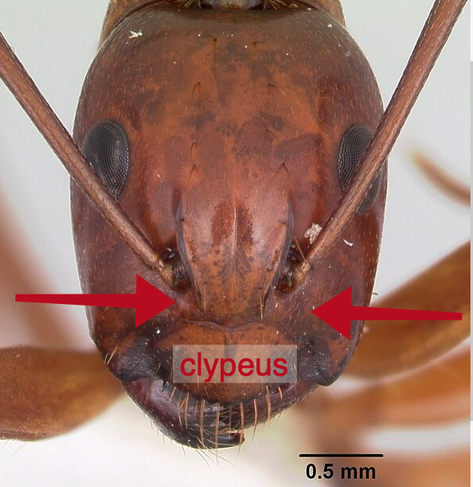
Here is one reason I know the Camponotus ID is wrong. You see the "clypeus" is basically the ant upper lip? The plate right above the mandibles.

In carpenter ants the antennae are set a bit above it. There is a gap. Makes them look a bit like cabbage patch kids.

But in the ants I was observing look? No gap at all. Her antennae are attached right to the top of the clypeus.

Now we can all avoid this mistake in the future.

There are a bunch of other reasons but this is what I learned while reading "The Carpenter Ants of the United States and Canada" which is a pretty good book that goes into detail about what makes a "carpenter" a carpenter.

"There is a generally gradual color change-over along a north-south cline. The dividing line between the color morphs seems to be just south of the St. Louis, Missouri area."

LIES LIES LIES

Why is the bright yellow one all the way up in NYC? These ants come in a bunch of "color morphs" and it's very confusing.

Color isn't a good way to tell ants apart... except when it is.

Any time you see "-- group" or "-- species complex" you are in for a baaaad time trying to identify a bug.
@futurebird
The first law of taxonomists: Each generation of taxonomists shall create far too much work for the succeeding generation.