https://toobnix.org/w/752ix2RNx5BijosuYtSGCv #archive
In about 24 hours from this toot
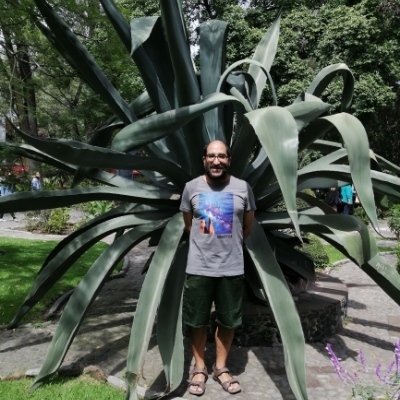
@oantolin
https://www.matem.unam.mx/~omar/
https://github.com/oantolin/embark
will be on the Tuesday-night-in-the-Americas #lispyGopherClimate on anonradio (archive still https://toobnix.org/a/screwtape/videos ) to talk about

#emacs #embark <edit>

- actually, I am not a user (yet) but I am interested in other #lisp community takes on embark's #DWIM plementation (well known in #interlisp https://interlisp.org/software/using-medley/#getting-started for example). The theme viz @chiply last weekcont.

@oantolin @chiply alright, it is that time!

https://toobnix.org/w/752ix2RNx5BijosuYtSGCv New extended cut archive !

#Live #interview with Omar about #emacs #embark + #lisp ..

#RSS subscribe to the recent #archive https://toobnix.org/feeds/videos.xml?accountId=580185 #peertube ! (I am told "use the peertube app").

#climateCrisis #haiku from @kentpitman and slak of #lambdaMOO . #chat in https://lambda.moo.mud.org/ as always using your favourite #mud client !

#lispGames #springLispGameJam @mdhughes

@nosrednayduj is busy squaredancing tonight.

#Emacs #Embark with Omar Antolin, Ramin Honary and Kent Pitman #lisp and more #interview #lispyGopherClimate

PeerTube
@oantolin
By the way, can one view emacs as having a topological model? Or is this an even worse question than what-are-things-like-climates-like-topologically?
@northernlights @chiply @kentpitman @mdhughes @nosrednayduj

@screwlisp @nosrednayduj @mdhughes @kentpitman @chiply @northernlights I don't really see how to relate Emacs specifically to some sort of topological space that somehow captures essential features of emacs (what would the points be?, when is a point near a set of other points?), but I will point out that topology can be used to study computer programs! My colleague Sergio Rajsbaum¹, for example, uses topological methods to analyze distributed algorithms. He wrote a book² with Maurice Herlihy and Dmitri Kozlov on the topic.

¹ https://www.matem.unam.mx/~rajsbaum/
² https://www.sciencedirect.com/book/monograph/9780124045781/distributed-computing-through-combinatorial-topology

Sergio Rajsbaum's Home Page

@oantolin @screwlisp @nosrednayduj @mdhughes @kentpitman @chiply @northernlights

That’s a great book! Herlihy, a leading light in distributed algorithms, explains how you can talk about a protocol as a continuous transformation on simplicial complexes.

Each vertex of the collection represents a (node, state) pair. An asynchronous message arrival creates more (node, state*) pairs, but in an additive sense (the old/original state persists in the collection, too, because the message maybe just hasn’t arrived yet).

A CGI analogy: a message arrives, and the vertex turns into more polygons, the image gets more detailed. But! “more detailed” has a couple of constraints: you don’t see a hole that wasn’t there before, and a void that was there doesn’t get filled in, and a gap or crack doesn’t appear between your new polygons. The topological structure doesn’t change.

So: basically, you produces impossibility proofs by showing that the starting algorithmic state represents one structure (a connected one, for example) and the end state represents a different structure (disconnected). There’s no set of transformations (corresponding to messages) that can get you from one structure to the other.

This turns the states reachable by distributed algorithms into topological structures, and algebraic topologists have all kinds of tools to help you.