 Steve Costa
Updated star and planet information will soon be available on Starcarta from the latest astronomy data.
On what major feature to add next. One of the current issues I have is that multiple star systems in app look like this.
Updated star and planet information will soon be available on Starcarta from the latest astronomy data.
On what major feature to add next. One of the current issues I have is that multiple star systems in app look like this.
A loose association of Stars, which are put into Star Systems together based on multiple name designations, proximity, and hierarchy in the Simbad database. This works fairly well, but I’ve been looking for a much more accurate database of Star relationships.
So let’s talk about the WDS Catalogue.
The Washington Double Star Catalog, created in 1963 and maintained by the US Naval Observatory, contains 157391 systems with 37707 physical systems, which is what we’re looking for. Working with this (https://www.astro.gsu.edu/wds/Webtextfiles/wds_precise.txt) gives us data like:
System AB
System AB, C
System CD
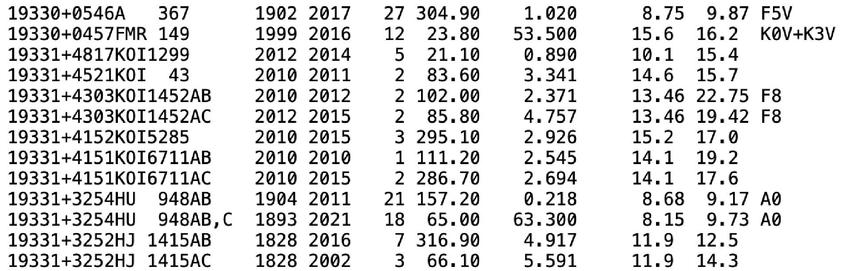
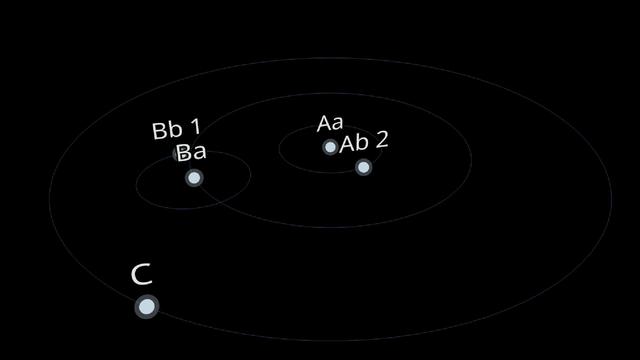
That’s the missing hierarchy that I was looking for once the Systems have been assembled by the pre-parser. And the result should be something like this.
Next steps are to incorporate this into the main app and figure out how to render planets in there without crowding.
In the meantime, check out https://starcarta.app to explore the nearest 200 ly of stars and planets on the web, always ad-free and no subs. And if you’re @nasa, @canadianspaceagency, @pbs or a science educator and want to partner with me, drop me a line!
