THREAD
The Great "Should We Even Be Going to Space" Debate
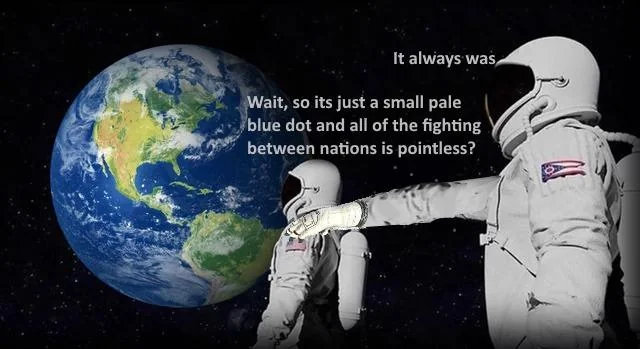
One of the sizeable reactions to space missions is "We shouldn't even be going to space. Let's fix earth first. Priorities!"
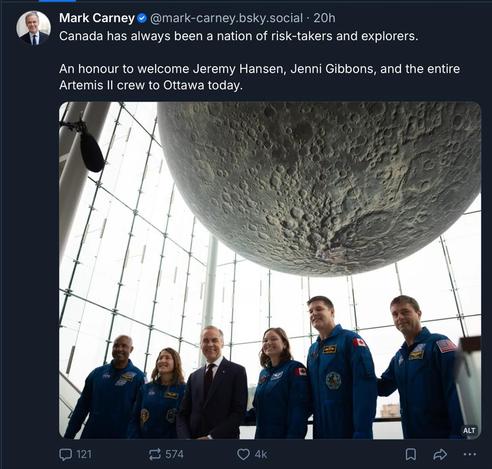
And when Artemis II circled the moon in April, it was no different.
So today we ask:
1/20
One of the common assumptions made by detractors is that the vast costs and effort we put into space travel would be better spent on making earth cleaner and more equitable.
But this misses a fundamental benefit of free inquiry and research impact: knowledge transfer across domains.
2/20
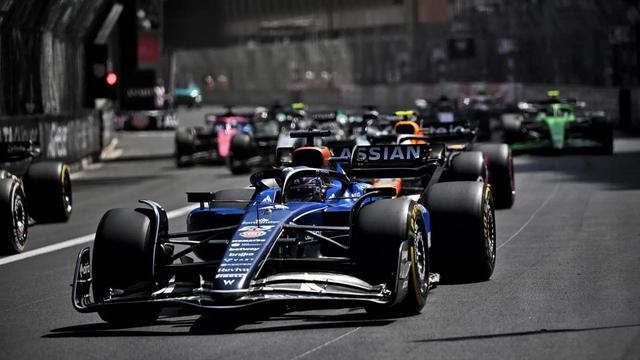
Let's make the same argument about F1 racing for a sec: "Just a bunch of rich athletes driving hypercars round closed tracks in upmarket locations for hours. Who cares? We should be supporting healthcare!"
Except F1 did that already.
3/20
In 1999 hospital staff at Great Ormond Street Hospital (GOSH) noticed that the most dangerous moment for children after cardiac surgery wasn't the op itself, but the handover from surgery to the ICU. They saw a Ferrari F1 pitstop on TV, realised it was the solution, and met the team.
4/20
Once GOSH had developed their F1-inspired handover protocol, the results were clear:
Technical errors dropped from 5.42 to 3.15 per handover. Information omissions fell from 2.09 to 1.07. Overall handover quality improved by over 50%.
onlinelibrary.wiley....
5/20
Patient handover from surgery ...Considerably north-west of GOSH is Birmingham Children's Hospital (which is in Birmingham btw).
Their own staff had also noticed the technological innovations within the racing arena, particularly the 300+ real-time monitoring sensors which could predict an engine is about to fail.
6/20
They asked themselves: if McLaren can monitor an F1 car's 300+ sensors in real time and predict when an engine is about to fail, could the same approach predict when a child's condition is about to deteriorate?
Spoiler alert: yes.
www.nature.com/artic...
7/20
Wireless monitoring and real-t...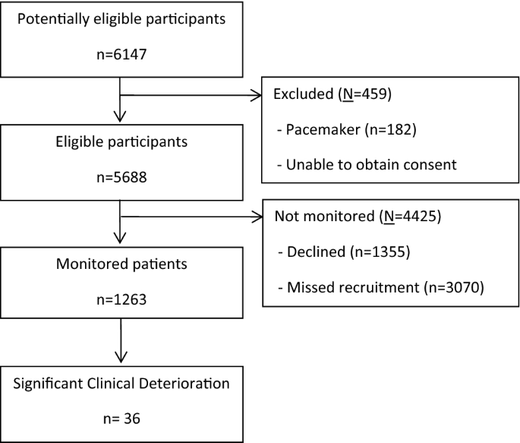
Wireless monitoring and real-time adaptive predictive indicator of deterioration - Scientific Reports
To assist in the early warning of deterioration in hospitalised children we studied the feasibility of collecting continuous wireless physiological data using Lifetouch (ECG-derived heart and respiratory rate) and WristOx2 (pulse-oximetry and derived pulse rate) sensors. We compared our bedside paediatric early warning (PEW) score and a machine learning automated approach: a Real-time Adaptive Predictive Indicator of Deterioration (RAPID) to identify children experiencing significant clinical deterioration. 982 patients contributed 7,073,486 min during 1,263 monitoring sessions. The proportion of intended monitoring time was 93% for Lifetouch and 55% for WristOx2. Valid clinical data was 63% of intended monitoring time for Lifetouch and 50% WristOx2. 29 patients experienced 36 clinically significant deteriorations. The RAPID Index detected significant deterioration more frequently (77% to 97%) and earlier than the PEW score ≥ 9/26. High sensitivity and negative predictive value for the RAPID Index was associated with low specificity and low positive predictive value. We conclude that it is feasible to collect clinically valid physiological data wirelessly for 50% of intended monitoring time. The RAPID Index identified more deterioration, before the PEW score, but has a low specificity. By using the RAPID Index with a PEW system some life-threatening events may be averted.
So yeah let's maybe keep F1. So what about Space?
Well, firefighters for one are pretty happy with the fruits of space research. Both the fire retardant in their clothing and the oxygen tanks on their backs are direct cross-pollinations from space research.
spinoff.nasa.gov/Spi...
8/20
Polymer Fabric Protects Firefighters, Military, and Civilians | NASA Spinoff
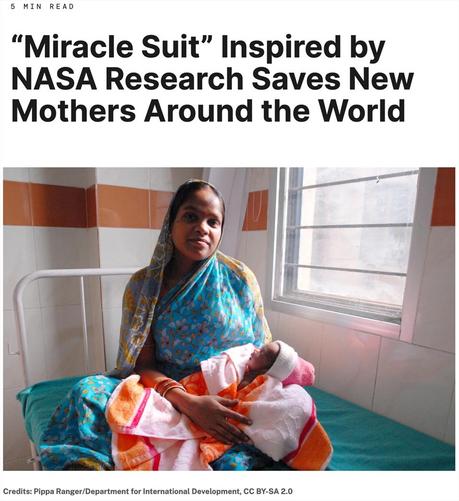
Astronaut G-suits that prevent them from blacking out have been adapted into the LifeWrap garment that reduces postpartum haemorrhage deaths by 50%. Costs $1 per use. Recommended by
@[email protected]
Massive impact of an unrelated research area.
70K women die from obstetric haemorrhage annually.
9/20
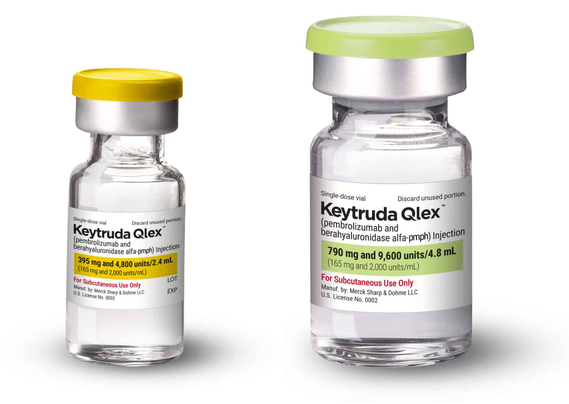
Keytruda is a vital cancer immunotherapy drug. Administration was until recently exclusively a 30-min IV infusion every 3 weeks. Merck wanted to create a subcutaneous injectable form but here on earth gravity doesn't let you grow protein crystals that fit in a needle.
10/20
Merck collaborated with the ISS to grow protein crystals in space uniformly, and then reverse engineered the compound so it can be replicated on the ground. a 30-min IV is now a 1-min injection.
"We are star stuff, injecting more star stuff." - Carl Sagan (probably)
www.nature.com/artic...
11/20
Pembrolizumab microgravity cry...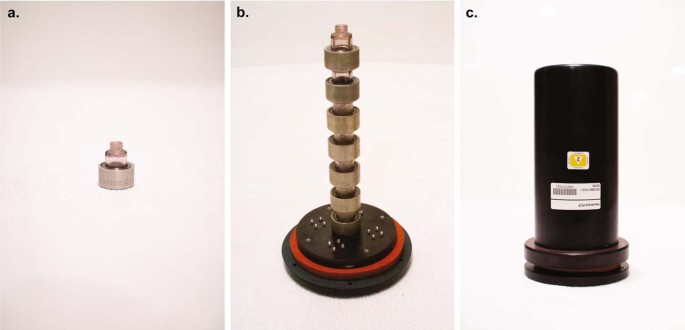
Pembrolizumab microgravity crystallization experimentation - npj Microgravity
Crystallization processes have been widely used in the pharmaceutical industry for the manufacture, storage, and delivery of small-molecule and small protein therapeutics. However, the identification of crystallization processes for biologics, particularly monoclonal antibodies, has been prohibitive due to the size and the flexibility of their overall structure. There remains a challenge and an opportunity to utilize the benefits of crystallization of biologics. The research laboratories of Merck Sharp & Dome Corp. (MSD) in collaboration with the International Space Station (ISS) National Laboratory performed crystallization experiments with pembrolizumab (Keytruda®) on the SpaceX-Commercial Resupply Services-10 mission to the ISS. By leveraging microgravity effects such as reduced sedimentation and minimal convection currents, conditions producing crystalline suspensions of homogeneous monomodal particle size distribution (39 μm) in high yield were identified. In contrast, the control ground experiments produced crystalline suspensions with a heterogeneous bimodal distribution of 13 and 102 μm particles. In addition, the flight crystalline suspensions were less viscous and sedimented more uniformly than the comparable ground-based crystalline suspensions. These results have been applied to the production of crystalline suspensions on earth, using rotational mixers to reduce sedimentation and temperature gradients to induce and control crystallization. Using these techniques, we have been able to produce uniform crystalline suspensions (1–5 μm) with acceptable viscosity (<12 cP), rheological, and syringeability properties suitable for the preparation of an injectable formulation. The results of these studies may help widen the drug delivery options to improve the safety, adherence, and quality of life for patients and caregivers.
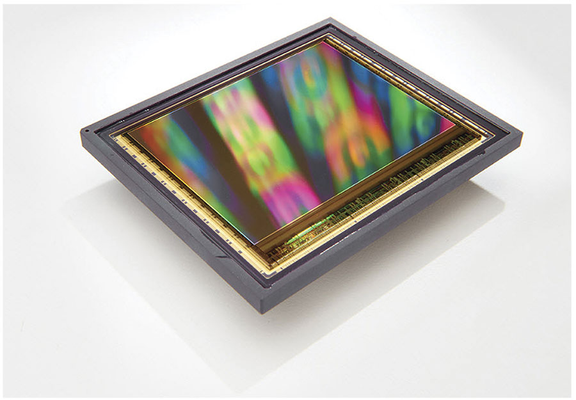
Hey, are YOU a fan of taking photos of your family on holiday? That smartphone camera works because of CMOS sensors, another invention of Space origin.
And clean water? Count me a fan. Silver ionisation water purification is also a boon of the so-called boondoggle projects of space.
12/20
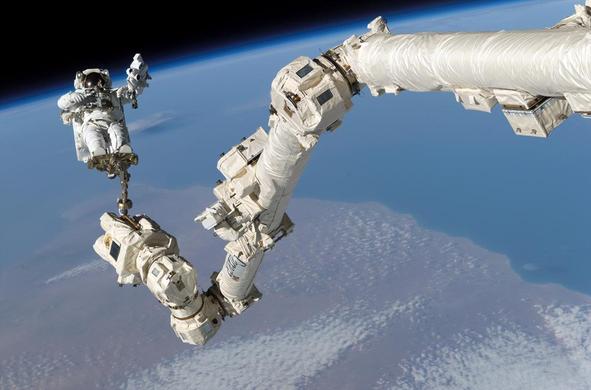
The infra-red in-ear thermometer, remote patient vitals sensors, robotic arms that perform previously impossible brain surgery; ALL come from humanity's quest for the stars.
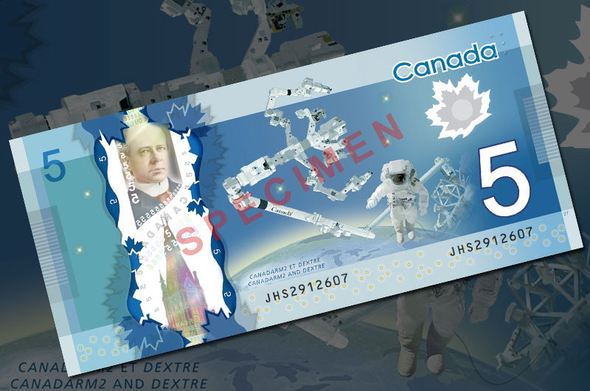
Canadarm, the robotic arm attached to the ISS, is even featured on Canada's money!
13/20
Inventions and their technological applications to human society don't all emanate from predictable domains. This is why back in 2024 we defended the Ig Nobel Prize awardees somewhat. We don't know what zany off-the wall idea might be relevant in a different field.
bsky.app/profile/alt...
14/20
RE: https://bsky.app/profile/did:plc:lf4a2b6djtuv5l3lz7ffsyv4/post/3l6o6ndu3h32q Altmetric