 Rxiv mechanobio
https://doi.org/doi:10.1007/s10103-026-04884-7
https://pubmed.ncbi.nlm.nih.gov/42113054/
#CellMigration #Cell
Evaluation of the effects of different irrigation activation techniques on the surface roughness of dentin and blood clot in regenerative endodontic models - Lasers in Medical Science
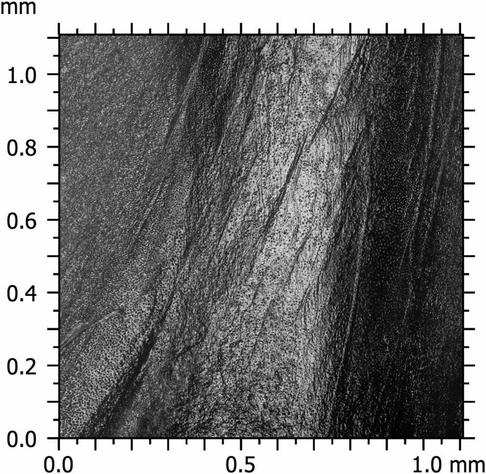
Regenerative endodontic treatment (RET) is a biologically based approach aiming to restore the pulp–dentin complex in immature permanent teeth with necrotic pulps. In this procedure, a blood clot is induced within the canal to serve as a scaffold supporting stem cell migration, and its stability and regenerative success are closely linked to dentin surface morphology. This study focused exclusively on the quantitative assessment of surface roughness, without evaluating biological outcomes such as cellular response or long-term clot stability, and aimed to evaluate the effects of 17% EDTA activated by conventional needle irrigation (CNI), passive ultrasonic irrigation (PUI), EDDY, and SWEEPS on dentin and blood clot surface roughness using widefield confocal microscopy (CM). Seventy-five single-rooted maxillary incisors were decoronated and standardized to 11 ± 1 mm root length. Following instrumentation with VDW Reciproc R40 files and apical enlargement to 1.3 mm using Gates Glidden drills, canals received 20 mL of 17% EDTA for 5 min. In the activated groups, 1.5 mL EDTA was activated for 1 min, whereas the control group was irrigated with 20 mL saline. Specimens were split, and Sa values were measured on dentin and post-blood-clot surfaces using widefield CM. No significant differences were observed between canal regions for any technique regarding dentin and clot surface roughness (p > .05). SWEEPS and EDDY produced higher Sa values on dentin surfaces than CNI in middle and apical regions (p < .05). After blood application, the control group showed significantly higher Sa values, especially apically (p < .05). Activation of EDTA using PUI, EDDY, or SWEEPS enhanced dentin surface roughness, which may influence clot adhesion and stability in RET.