 Bart Veldhuizen 🚀
 Ciara
CiaraPeople keep sharing an image of a bird with a drop of water bursting on its head like a crown. It's AI, but people share it in good faith, believing it’s an amazing photo by a human of a real bird in a real moment of time. Meanwhile, humans who have taken amazing photos of real birds captured in real moments of time, like a hummingbird in ballet with a butterfly, get questioned in good faith by people who are tired of being cheated by AI-deceit. The way AI has broken social trust is distressing.
It's not, of course, generative AI that's deceiving people. It's the humans using AI to generate fake images and the humans who pass the fake images off as their own photos who are deceiving other humans.
A few people have questioned whether I am right to say that the image of a drop of water bursting on a bird's head like a crown actually is AI-generated. They think I may be wrong. That it is not faked. That it is real.
If I'm wrong, if it really is an unmanipulated photo by a verified human photographer, please do let me know so that I can correct myself and my toot.
(All this uncertainty is part of the whole problem. We all spend so much human time & energy trying to act in good faith.)
 groff 🇺🇦
@CiaraNi I haven't seen the picture but water drops only form crowns when they hit a body of water, not when they hit a surface.
 Licho
Licho@CiaraNi no, it's fake, look at the right feet, look at the feathers. I'm shocked I got fooled. It's not even particularly good "ai" pic. I must have been distracted.
@licho I did think it looked like a real photo, in the technical sense. I didn't see obvious at-a-glance technical signs of photo manipulation. But the drop of water didn't seem right or natural and the foreground and background focus seemed too smooth. No verified source has been forthcoming, despite discussion in the thread under the photos.
 S.T. Veje
RE: https://eldritch.cafe/@lynatic/116439531277946968
@CiaraNi It is apparently watermarked by the AI that generated it (though I haven't checked this myself). I'd consider that pretty strong proof, since I can't imagine why anyone would add an AI watermark to a real, non-AI picture (but then again, people do lots of things I can't imagine people doing)
https://mstdn.social/@lynatic@eldritch.cafe/116439531501647616
@stveje Oh, so there is an actual AI-watermark. What a vicious circle all of this runs in. And such a terrible waste of all our human time and energy. I'd prefer to look at those real, non-AI pictures too!
"Worst part is there doesn't seem to be any solution."
Agreed. It makes it extra exhausting. There's no end in sight.
 Fredrik Graver
@fgraver @stveje If I am wrong, I will rush to correct myself. But all signs point to it being faked. I don't know how we 100% irrefutably prove something was AI-manipulated, as some have requested, but a verifiable original source of a real image would at least disprove it. But there is none so far.
 Andreas K
@CiaraNi
Actually there is.
AI is a tool like others.
Now the AI hype (centered on the USA) is an ugly scam, but luckily it seems to lose a bit steam. Or as I call it the times of free handouts from your drug dealer are coming to an end. Claude code has been dropped from pro, max users suddenly running out of quota. GitHub stopping signups and rumours that they want charge by the token.
Three good times where the bullshit machines were free are coming to an end.
@stveje
@yacc143 @CiaraNi Alas, just because something is no longer free doesn't mean people won't use it, especially people with more money than good sense/scruples. Or that the technology itself just goes away. And all the slop that's already been generated will continue floating around, getting into everything like digital micro plastic and forever chemicals.
Even if the bubble pops tomorrow, we haven't seen the end of this. Not even close.
@stveje
Certainly, but the point is, it will be scrutinised more heavily.
Let me put it like this, my dear colleague and CEO who prefers coding (C.S. by education) was quite happy with his effectiveness. Till I pointed out that his estimate how long this would take in a classical commercial development team setup to develop versus how long it did take him, was surprisingly exactly the range academic papers in the past decades have reported for choosing @CiaraNi
efficiency between the highly efficient and to the (politely) not so efficient.
And commercial development generally has to live with the developers that you can acquire.
While my dear colleague is IMHO is a little overachiever with insomnia. So the AI might have helped him out not, but that speed up of factor 8-10x if a highly talented, highly motivated does a project just for the fun of it is completely in range for humans.
@CiaraNi @stveje
@stveje
Notice also, very good developers might not deliver 10x as much output as the low end developer all the time but they are capable of needed and the produce better code, better architecture, etc. While the payment structure is literally so that they earn seldom significantly more than the other guy who has problems to create a hello world program that compiles.
@CiaraNi
Notice also, very good developers might not deliver 10x as much output as the low end developer all the time but they are capable of needed and the produce better code, better architecture, etc. While the payment structure is literally so that they earn seldom significantly more than the other guy who has problems to create a hello world program that compiles.
@CiaraNi
 CAWWW
CAWWW Ahmet Kamil Keleş 🎃🖥️
@CiaraNi I don’t remember the “artist” that was given credit for that image, but her “portfolio” was shared in a discussion about the image. The “portfolio” was full with AI images presented as normal photos.
@ahmetkkeles That seems likely. I did see some other images that seemed to not be her own work, several of which seemed to be AI, presented as real photos.
 James
James@CiaraNi I fell for AI images several times and it has brought me to a place where I question everything that isn't from one of the photographers I know. I hate all of this.
@DrJLecter Seconded, agreed, yes - this is how I feel too.
 jack
jack@CiaraNi I think the people boosting the post are acting in good faith... the poster however doubled down when called out
 Matthew Miller
The version I saw said it was from Facebook, with some specific names. Which I didn't bother to look up, but on doing it now, looks like bullshit. So, at some point along the way it picked up a caption intentionally designed to deceive.
And you're right — looks like AI, probably AI, but makes it really hard to believe anything. Worse, makes it easy to deny anything you don't want to see.
@mattdm It does seem deliberate, the choice to give it a pair of untraceable names as apparent sources. I was sure and am sure it is manipulated and fake. I just don't know how to 100% prove something is manipulated, which some people would like. A verifiable source of the original photo would prove it is real, but none has been forthcoming. You are right about the other major problem - making it easy to deny stuff you don't want to see. These are serious problems we have now.
 JWcph, Radicalized By Decency
@CiaraNi It just so happens that GenAI is the absolutely perfect tool for people who want to deceive other people...
@jwcph It is, and it makes it easy to deceive, but I don't think that absolves people from being responsible for deciding to use it to deceive. I hope we don't get to the stage where it's normalised completely or just shrugged at by a few.
 Amorpheus
@Amorpheus @jwcph I think both parts are deception. Even without text explicitly claiming it was a photo, the person posting knows it is being presented as a photo and will be seen as a photo of a real moment in time.
@CiaraNi @jwcph True. Still, the impact of the actual lie carried significantly more weight to it than the image itself.
I first just saw the image and thought... "this looks way to perfect". Then I read the text and went to "unbelievable... what are the odds for such an event". Now I am like... "the written word seems to have more impact on my plausibility control than my imagery vision".
@Amorpheus @jwcph Agreed. That's true. The use of text further manipulates us
@CiaraNi @Amorpheus indeed - the deliberate deceit is what cements the harmful effect; the most insane things are possible, if unlikely & it's taking away our capacity for wonder. Remember this pic? That's real, however fake it looks & it's flippin amazing - we should enjoy those things, not immediately assume they're part of somebody's malice.
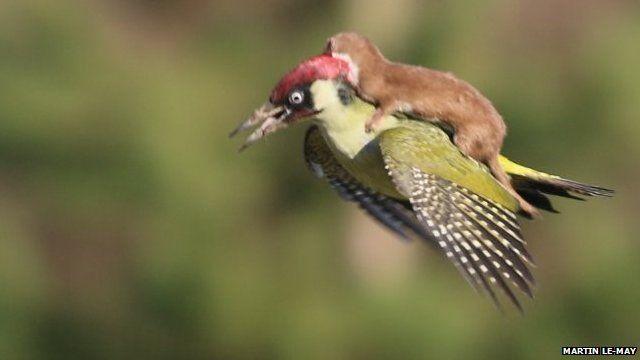
@jwcph @Amorpheus Yes - this is a great example of what made me start moaning about this in the first place. It is upsetting to see fake images getting attention while the humans who took real amazing photos of real amazing moments of life on earth get asked if they used AI.
"We should enjoy those things, not immediately assume they're part of somebody's malice" - in an ideal world, yes. But the relentless AI deceit has left us in a situation where it's fair to wonder.
@CiaraNi @Amorpheus Yes, we have to, but the AI-fueled deceit is forcing us into a skepticism overload that can very easily make us cynical & suspicious.
Just earlier today I had to verify this pic & honestly I'm still not entirely sure of it (see the thread) - but it's clearly the sort of thing where, before AI, I would not assume that anyone would go through the trouble of photoshopping it, so I would have just taken it at its pretty cool face value...
@jwcph @Amorpheus Snap! I saw this image early and it felt 'off'. After a quick look, I moved on without interacting it. It felt like AI, it felt manipulated, but we can't be investigating every one. When in doubt now, I ignore and scroll on, muttering under by breath. (I only tooted about the 'water crown on bird' one because I saw it amid other toots where really good human photographers were being asked by unsure people if their real photos were AI. It was an awful contrast.)
 Ovidi Nawer
@CiaraNi "it's the human who shoots the gun"
As for right now (and forever and ever, by the very nature of it) the main purpose of AIgen is to make things quick without effort. The only constant and without a sliver of doubt purpose is what things it does, which is generate very accurate images of something that doesn't exist, without effort. Making images for something that doesn't exist in a quick and easy way is, quite literally, the wet dream of scammers.
As for right now (and forever and ever, by the very nature of it) the main purpose of AIgen is to make things quick without effort. The only constant and without a sliver of doubt purpose is what things it does, which is generate very accurate images of something that doesn't exist, without effort. Making images for something that doesn't exist in a quick and easy way is, quite literally, the wet dream of scammers.
@CiaraNi If the machine was a thing that reads your dreams, or the images you make on your head, and puts them on a screen, this would be a very different story.
But nope, this machine isn't about "looking at what is in your brain and taking it out into the real world" just like a gun isn't a "defensive tool". You can only ask to get a thing, a random,fake thing. You can only shoot people. You don't even have to imagine something, it's a tool doing it's wonky, useless to anything but harm, work.
But nope, this machine isn't about "looking at what is in your brain and taking it out into the real world" just like a gun isn't a "defensive tool". You can only ask to get a thing, a random,fake thing. You can only shoot people. You don't even have to imagine something, it's a tool doing it's wonky, useless to anything but harm, work.
 Brian Johnson
@CiaraNi Absolutely. This reminds me immediately of how certain politicians lie continually. They don't expect to be believed, necessarily: but they aim to break down trust; to make people think that *all* politicians lie continually; and then they come along with their answers to everything.
@brianjohnson Yes, a fine comparison. That's what it feels like.
 DarlavdRiet
@CiaraNi I fell for this one too, even though I had doubts about whether the image was possible in reality. But the description made it sound so plausible, and I was too ‘lazy’ to do the research before sharing a simple photo of something joyful and fun.
The talk of fake references on research papers did have me thinking how exhausting it must be nowadays to verify anything… and it’s sad that all that extra work also applies to sharing something nice on the web 😔
The talk of fake references on research papers did have me thinking how exhausting it must be nowadays to verify anything… and it’s sad that all that extra work also applies to sharing something nice on the web 😔
@DarlavdRiet It's getting harder and harder to spot the fakes. And we can't research every passing kitten. As you say, It's exhausting and it drains the pleasure of something joyful and fun.
"and it’s sad that all that extra work also applies to sharing something nice on the web" - hear, hear! Agreed.
 Lord Caramac the Clueless, KSC
@CiaraNi Back in the early 1990s when SuperVGA cards that could do 1024x768 in true colour became widespread and image manipulation software became popular, I already knew that it would be only a matter of time until everyone could manipulate any image or video, or perhaps even generate images and videos from scratch, which looked convincing enough to be accepted as real by the audience. For decades, it still took a considerate amount of of knowledge, skill, time, and effort, to make something convincing, but since the 2010s, it rapidly became easier and faster to do, with more and more AI powered filters and tools built directly into Photoshop (like content-aware fill). Now there are AI models like Seedream, Flux Kontext, Flux 2, Qwen Image, etc., which not only generate images from text prompts (and painting over a provided seed image while maintaining the overall composition), but which also can do things that Photoshop or Gimp can do, using multiple start images, rearranging and recombining elements as described in the prompt. You can do things with these models as if you were talking to some graphic designer using an image manipulation application.
"Take the overall scene from the first image as a basis. Put the brunette woman from the second image on the empty chair. Make her face look a lot angrier. Make the man on the right side look afraid." --In mos cases, this will just work fine and give you exactly the result you're looking for. Of course you can still turn a photograph into an oil painting or vice versa, add completely new elements to the image generated out of random noise, all the things you can do since the very first diffusion models like Dall-E arrived in the late 2010s. What's new is that even the open source models for which you don't need to pay anybody, which you can download and run on your own PC locally if you have a powerful NVidia GPU with enough VRAM, and which therefore can be used unfiltered and uncensored by any commercial platform (most don't allow any kind of erotica, for example), generating anything you like.
That stuff is never going away as long as the age of personal computers isn't over. Nobody can keep you from running any code you like on your own machine, and the models are out there where you can find and download them. Some models have had their training data censored by click workers going through all the images and sticking modesty stickers on all the nudity, all the nipples and genitals, but you can find LoRAs made by all kinds of hobbyists which uncensor the models again, people have been using their own GPUs to retrain existing models to add the missing nudity, because that's what you can do with open source software.
As long as there are people who can afford powerful PCs with decent graphics cards and enough memory, image and video generators will be here to stay, and the uncensored models out in the wild will be shared among users even if the big players do everything to stop those, just like video and audio streaming platforms haven't stopped "piracy". More people consume popular media through Bittorrent than through legal streaming platforms, and just like torrents, GenAI isn't going away. What's going away is our trust in images, but we shouldn't have trusted them in the first place. As long as humans have been making images, they have also used them to deceive and to manipulate. The art of manipulating photos was invented shortly after photography, just look at all those old photos from the Stalin era where people had been erased from official Soviet history by deleting them from photos. With every new technology, it became easier. The airbrush. Industrial Light & Magic. Photoshop. The GIMP Animation Package. Seedream. That one new video generator (can't remember the name right now) everybody on 4chan keep using to turn old TNG and DS9 scenes into porn, like Troi suddenly undressing and performing oral sex on Riker. This is our world now. The commercial generative AI businesses in the West might run out of money soon, but there are already powerful tools that don't need external computing centres to run. Some even run on a Raspberry Pi.
 ratiogeraet
@CiaraNi It takes the joy out of watching interesting pictures and cute dog videos for me. Just one more reason why AI sucks.
@ratiogeraet Agreed. That's it - it takes the joy out of it. We can't just look and be delighted by something on the spur of the moment.
 Eggs now in different baskets.
@ratiogeraet @CiaraNi It is not just that.
Making people distrust their reality is part of the fascist playbook currently in use by many of the worlds despotic regimes.
There is an article (in German) on Republik at the moment that deals with this very issue.
The alt-right benefit from this method much more than left wing groups.
The article is subscribers only but the author has co-written a book on the same subject
Link to the article:
https://www.republik.ch/2026/04/08/wenn-faelschungen-politik-machen
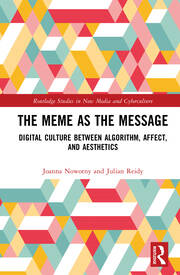
The Meme as the Message: Digital Culture Between Algorithm, Affect, and Aesthetics
This book sheds light on the phenomenon of memes, covering everything from pandemic humour to far-right propaganda, from feminist memes to algorithmic censorship. Memes are far more than light entertainment - they are complex cultural artefacts that play a role in politics, in art, and in platform economics. Taking a cultural studies perspective, the authors analyse individual memes in entertaining case studies, systematising their findings in order to redefine this digital form of communication
@the_wub @ratiogeraet Yes, it's a known strategy
 Petra van Cronenburg
@the_wub Oh yes, and facts about nature/climate are one their (techbro fascists) big targets.
 My camera shoots fascists
I saw that bird with drop of water picture and knew instantly, as anyone who is familiar with birds and rain and nature would know, that it was machine generated. The drop is way too big and the bird would have flinched in that split second. Birds react fast!
Machine slop will probably have an insidious, long-term effect of decreasing people's appreciation of nature because everything will be thought to be fake. In fact, nature is replete with incredible beauty that you won't know about if you spend all day slop-scrolling
@Mikal Same here. It was well done in the sense that you couldn't see obvious technical signs of AI. It did look like an actual photo. But the shape of the drop was too obviously not real. Or so I thought. Lots of people believed it. But nature is incredible, so no doubt some other time I'll see a photo I trust as an amazing Wildlife Photo of the Year that someone else spots as fake.
"Nature is replete with incredible beauty that you won't know about if you spend all day slop-scrolling" - yes!
 bit101
@Mikal @CiaraNi The other aspect that bugs me about it is that those who do point out that it's generated are usually met with an overly harsh response. I've seen threads get really heated. It goes beyond whether or not the photo is real; anyone who mentions that it's AI is immediately labeled as a toxic troll.