OKAY.

the moment i have dreaded for so long has come.

sxpp is implemented and nearly complete.

nudl is implemented and nearly complete.

now i'm going to implement tukan in nudl.

nothing is done yet.

i'm not going to use dear imgui.

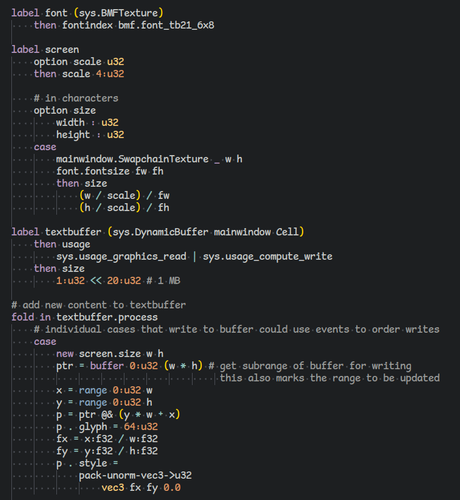
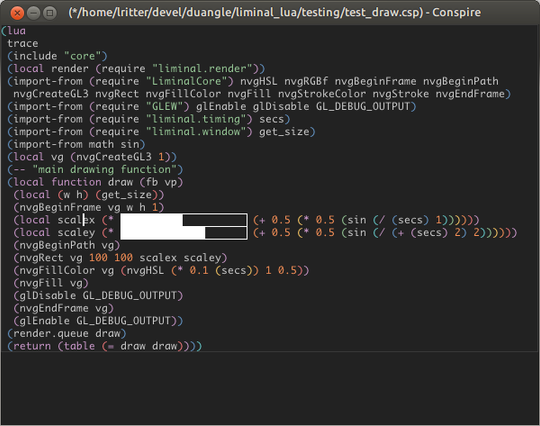
instead i'm going to bootstrap visual editing from structured text editing (similar to our 2015 IDE prototype written in Lua, see screenshot).

the first thing we do is solve text rendering. we need to display *a lot* of fixed width text.
#devlog #tukan

took a breather today for reorientation, you probably noticed.

checked that i haven't forgotten anything.

we're definitely going to go the text IDE route first: start as a humble editor for nudl code. then add texty features. more texty features.

but then the first in-editor written slider widget to control float values. the limitation is that the widget can not appear in its own source code - but that's fine.

from then on it's mostly obvious i hope.

#devlog #tukan

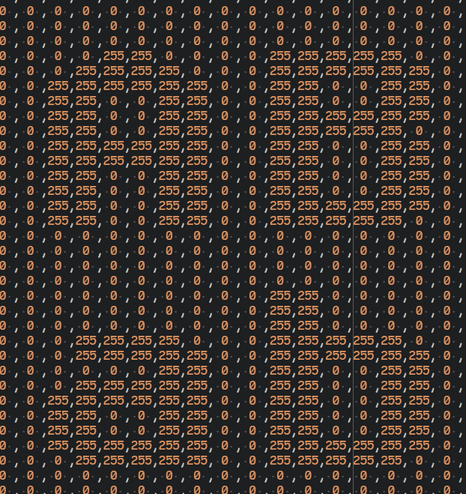
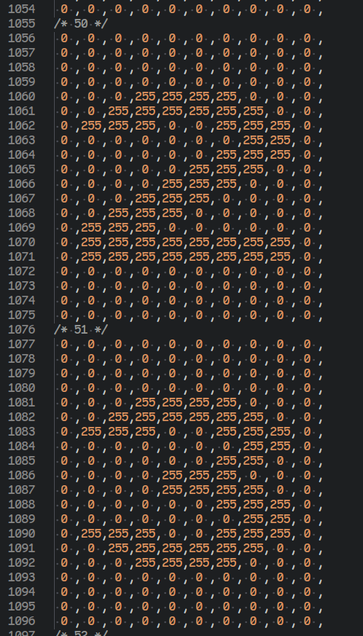
i picked a few old classic computing bitmap fonts as possible bootstrap fonts and generated C arrays to embed them directly into the main executable.

#devlog #tukan

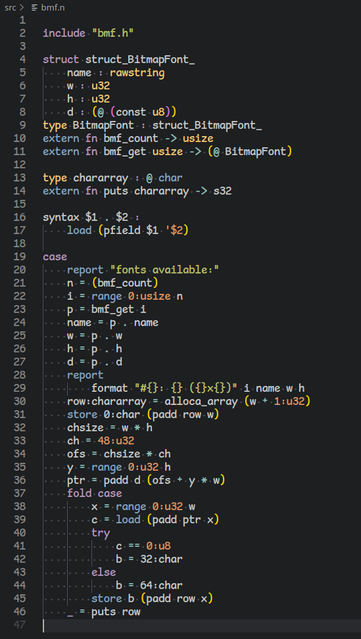
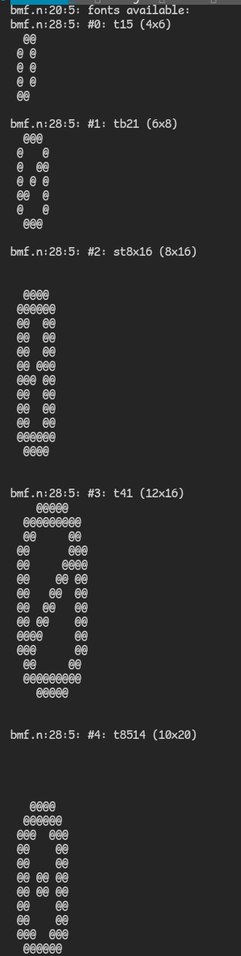
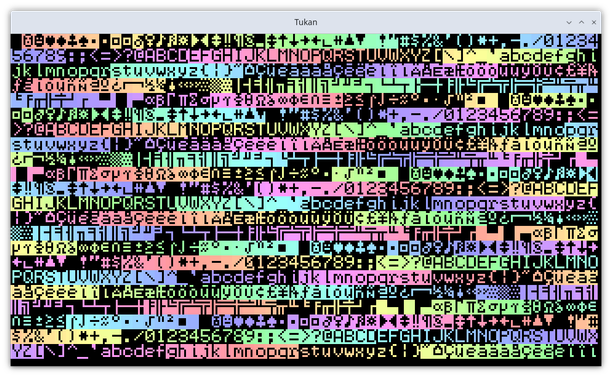
quick verification that it all works...

#devlog #tukan

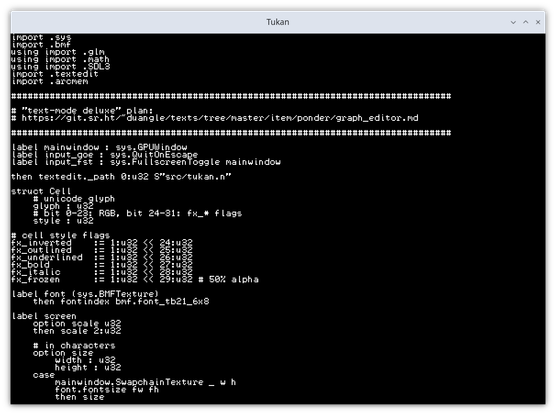
worked over my "text-mode deluxe" plans and figured out a pipeline.

https://git.sr.ht/~duangle/texts/tree/master/item/ponder/graph_editor.md

idea here is that only 2 pages are needed for classical text. more pages needed for graphical widgets, drag & drop animations, smooth scrolling, etc.

#devlog #tukan

still learning my own programming language. it's exciting, not always knowing how to do a thing.

#devlog #tukan #nudl

and we have a complete per-frame pipeline from textbuffer to screen.

#devlog #tukan #nudl

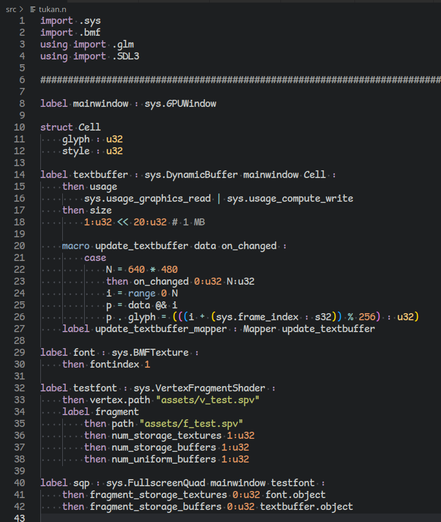
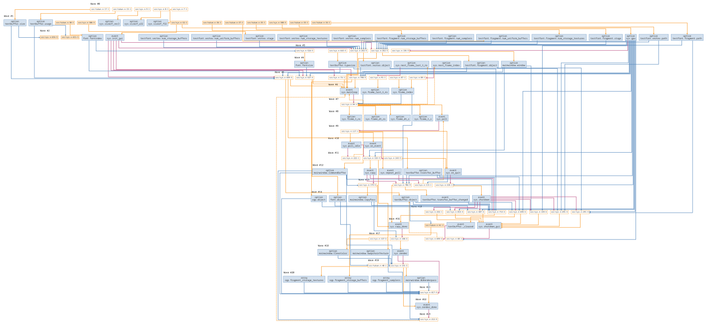
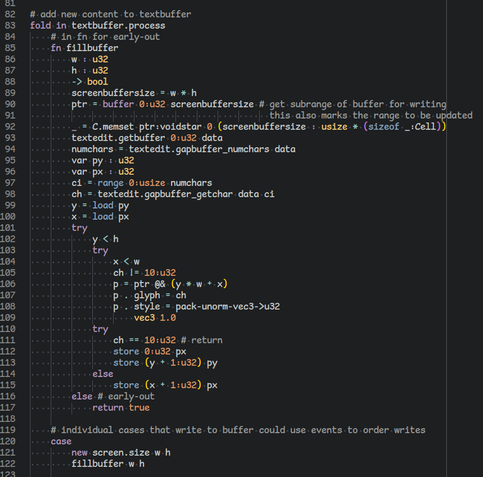
this is the source code for this program (without shader), and the generated data flow

#devlog #tukan #nudl

per-glyph style (RGB, inverted) is now also translated

looks like it's time to do actual text logic now.

#devlog #tukan

nudl's logic/reactive nature leads to variables updating only when a dependency has actually changed.

left is the relevant listing, right is a video of the resulting runtime behavior

(the slow window performance is due to x11/vulkan/SDL internals. it's much faster on wayland.)

#devlog #tukan #nudl

been mulling over whether to do structured text editing over an AST like structure or something more plain, and plain text won out, because it's just ubiquitously more useful.

so how do we get widgets in the text window? like this:

#devlog #tukan

got loading text -> gap buffer done, which involves a UTF-8 -> UTF-32 conversion.

also added a bunch of other editing operations.

https://git.sr.ht/~duangle/tukan/tree/master/item/src/gapbuffer.n

what's not clear yet is how to build the interface for this. particularly "read value then change value" moves against DAG scheduling (change value then read value).

#devlog #tukan

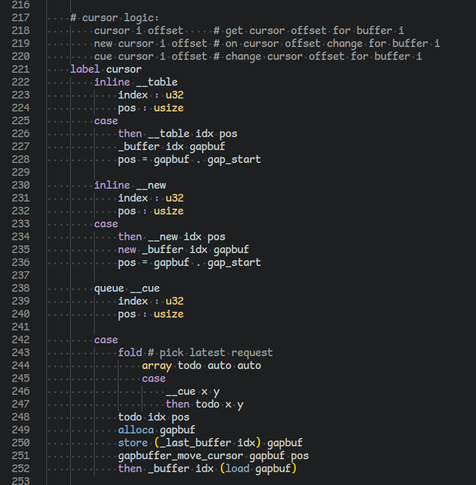
took a while to figure it out but now i have something nice to query, observe and change cursor offset. it's done with a virtual table (not the same as a virtual table in C++).

#devlog #tukan

a very emotional experience, this.

as long as i struggle to express a concept and find bugs on top, i'm feeling like "perhaps all this was a fatal mistake and i am a deeply flawed human being"

but then the bugs are fixed and i also end up with something elegant and feel instant relief and redemption.

and repeat.

which is no way to be. it's nerve wracking.

#devlog #tukan

we are now rendering a text document from a gapbuffer to the GPU. it's a direct stream-and-parse, there is no line analysis or anything.

presently, it happens only when the window is resized, because we're not interactive otherwise.

#devlog #tukan

we have a cursor and it can be moved around.

it emulates monaco behavior: the cursor is vertical and blinks at a change rate of 0.5s. blinking resets on movement. horizontal movement sets an implicit ruler that vertical movement attempts to match when switching lines.

#devlog #tukan

more navigation, text input, selection...

small refactoring feels fine so far, but i haven't had big challenges yet.

#devlog #tukan

mouse selection

#devlog #tukan

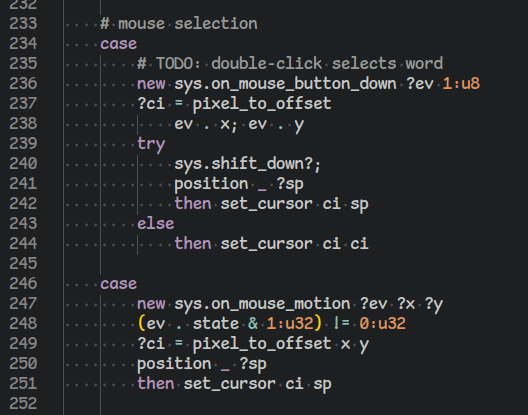
this is the event handling code for mouse selection.

#devlog #tukan

@lritter one byte per pixel is a bit wasteful isn't it? ;)

I did the same thing in sokol_debugtext.h (actually extracting the font data from various home computer ROM dumps), but with 1 bit per pixel. Fits into 2 KByte per font for 256 chars:

https://github.com/floooh/sokol/blob/2356d22badb8b02b5b4fc745216023a2a699d840/util/sokol_debugtext.h#L828-L2376

Looks like this when rendered:

@lritter ...just remembered that in a much older version I also used the more visual 'one byte per pixel' storage format :)

https://github.com/floooh/oryol/blob/master/code/Modules/Dbg/private/debugFont.cc

oryol/code/Modules/Dbg/private/debugFont.cc at master · floooh/oryol

A small, portable and extensible C++ 3D coding framework - floooh/oryol

GitHub

@floooh i didn't want to have to mess with masking and then later the same thing on the GPU side, and i wanted the visually legible format, so it's this now.

once i am sure that i can reliably support # embed (my distro isn't on gcc 15 yet), i might use something else anyway.

@lritter

I am not very happy with imgui, as it is not declarative enough for me... but it does allow me to target audio pllugins, Android, etc.

maybe... this needs an abstraction

@gbraad dear imgui is very good, but it is written for C++ control flow. i don't have those limitations anymore.

@lritter right, not a huge fan of C++ either.

What other options exist? I am actually curious and looking for something declarative or something more designable.

@gbraad Qt :-) but the problem is in the way languages are structured. controlling a GUI only stops being a problem with reactive programming.

@lritter

I feared you would suggest Qt.

@gbraad there is no faster way to break a programmer's spirit than to mention Qt