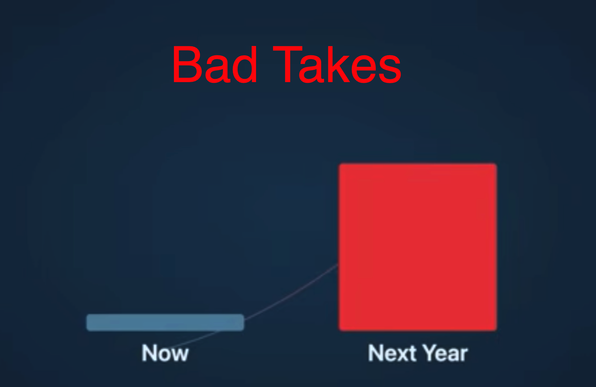
I don't trust Nate B Jones at all. This guy has a podcast about AI for CS people and I think it's propaganda designed to bring the doubters back. All of his podcasts lead with validating some problem we've all noticed with the way AI has been implemented, but then it pivots to "but it's not really as bad as you think."

This gives the illusion of balanced reasoning. Considering both sides.

But the real reason I don't trust this guy is he put up a graph like this:
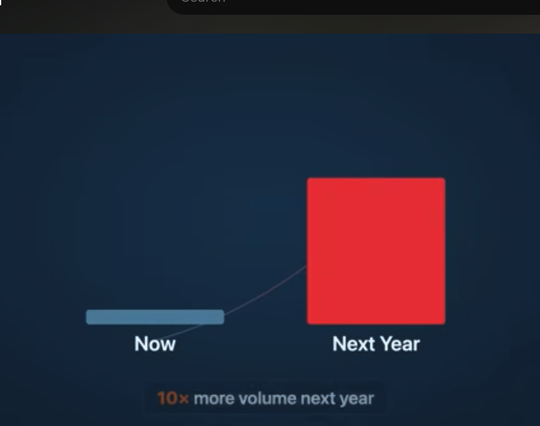
@futurebird we should make that graph a meme.

@FeralRobots

I'm always in favor of making fun of anyone who uses 'graphs' like this.

@FeralRobots

The more I think about it the more annoyed it makes me. When graphs are abused to lend a patina of scientific rigor to mere opinions and "hot takes" ... they steal that valor from the real graphs, the graphs based on data that help expose important insights that weren't visible until someone did the hard work of collecting data and doing real research.

This is why you can show some people data, and they dismiss it, because anyone can make a graph.

Stolen scientific valor!

@futurebird @FeralRobots I'm thinking of that pie chart spoof labeled "this" and "this. But in red"

@futurebird @FeralRobots

If science was credible because it's using graphs (or equations, or jargon, or is in a paper, or any other superficial sign of sciencyness), then it doesn't deserve the credibility at all.

I think this is fine. The problem is that people think plots = science = trustworthy.

Just like scientist is not any person wearing a lab coat, scientific opinion is not any opinion presented with plots.

People should know that and we should tell them (and repeat it often).

@janbogar @futurebird @FeralRobots Both can be true: that people should be better educated to defend against fraudsters, and that fraudsters should be yeeted out of the solar system.