 Reading Recluse
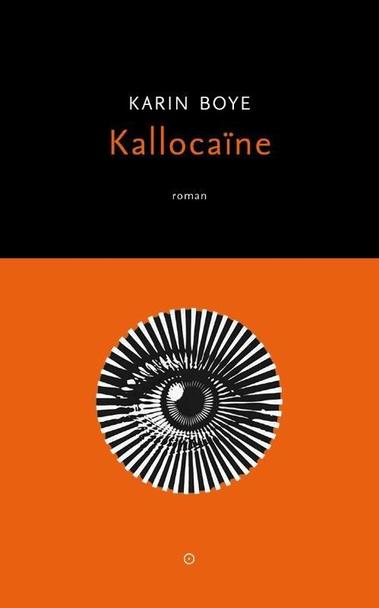
📘 "Kallocaïne" by Karin Boye, translated from Swedish into Dutch by Bart Kraamer
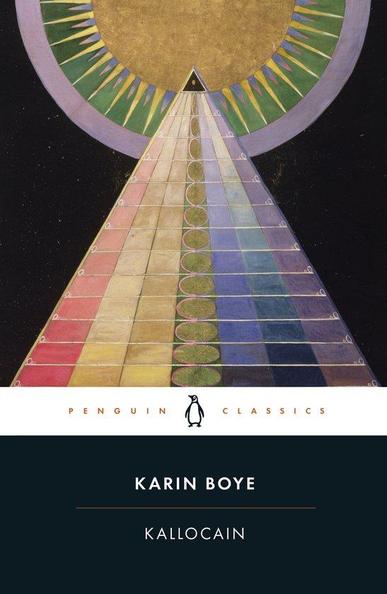
Available in English as "Kallocain", translated by David McDuff.
Although I wish to spread the love of reading all the time, sometimes it's difficult. Especially now, when books feel simultaneously more important than ever in this fascist landscape, but also frivolous to focus on when war is waging. I've also been distracted by a new health issue that sadly requires some medical attention (I'm fine), filling my head with new questions like "will there still be gas to drive to the hospital?" and "what if the bomb drops when I'm under sedation?". Every day I feel overwhelmed, scared, angry and upset.
Instead of screaming about the US and Israel and their allies and all of the horror that they've been causing, and all the other countries who passively stare at it all (please EU, just follow Spain's lead), let me just scream about this book instead of spiraling even more. This novel that unfortunately fits so well in this terrible year.
I was surprised that I had never encountered this book before, since it's a dystopian classic that could (should!) be as well-known as 1984 and Brave New World, but sadly isn't (yet!). In it we get to read the written report of a chemist, living in a totalitarian state that is supposedly at war with a neighboring state. It's a collectivist society with long work hours and barely any opportunity for free will. The protagonist has just invented a serum that forces people to express their true inner life, effectively making thought crime something that can be acted upon.
This is obviously a sad book, but it has so many strong points. Despite its deeply developed, bleak world, there's no info dumping. As the reader you slowly learn about how the state is run throughout the novel, and every time you realize something new about its inner workings, no matter how much it's in line with everything, it's still shocking. The protagonist is just as interesting as the worldbuilding: utterly convinced of the righteousness of the state, proud to be a cog in the machine, yet ever so self-centered and hypocritical. What an interesting, complex combination of a personality.
There was one scene that I can't get over, it was so artfully done. Being vague to avoid spoilers, it's essentially a scene in which the protagonist thinks he'll gain total power over another person. But it plays out differently, in such a way that the power dynamics completely switch around, and the protagonist is the one figuratively stripped naked and vulnerable. I was just as surprised as the main character was at that point. Loved it. People could be writing 20-page essays about just that one scene.
In an odd way, I think the book is not only depressing, but also hopeful. Not in a pushy way, but... a truth serum could be a double-edged sword. What if everyone's truth in a bad regime is that they're afraid, tired and miserable? What does this knowledge do to another person, especially if you're used to a world that's so dangerous that you've never been able to know anyone's true thoughts besides your own? Food for thought (secretly, in the privacy in your own head -for now).
Kallocain was written and published in 1940, clearly inspired by the war, by Hitler and Stalin, maybe even by their divvying up of parts of Europe. Dark times, not unlike now. The author committed suicide in 1941. Reading that made me sadder than reading the book. Do you feel like this too, like we're always losing the good ones, the ones who understand and can pierce through the nonsense of this world, the ones who are needed the most?
I feel like after all that heaviness, I should conclude with something optimistic, but I can't think of anything right now. Maybe people will come to their senses. Maybe something good will come of resisting. Maybe certain people will have a deadly heart attack soon. Maybe we'll encounter the man in the high castle, and he will ask us to transport a tape, and on that tape we'll see...
A girl can dream.
 Mlie Reads
 Mlie Reads