When someone utters the phrase, "The brain is of course just a computer"

This tells you two things:

1. This person doesn't actually know that much about the brain/body/consciousness/etc.

2. You might also want to be suspicious about this person's thoughts on how computers work, too

All analogies break down at a certain point

All of them

They're all simplifications or extrapolations that are meant to make a point or emphasize something

And so when someone says "X is like Y"

You should figure out 1. what point they're trying to make with the analogy, 2. whether it actually is similar in those respects, and 3. where the analogy breaks down, and whether this is a problem for the argument at hand

@researchfairy analogies are on a spectrum of strong to weak in my understanding. Useful as a rhetorical device for persuading your assessor of your point but not good for proving it.

I get tired of the โ€œbrain and computer are sameโ€ argument analogy. Same with โ€œLLM is a power tool.โ€

@researchfairy trying to get it to fit, you end up in the world of analog computing and trying to wrap your head around a multi-input analog bit (chemical and electrical signaling) while also no discrete bits and no structured programming...

I mean, we do have the hardware/software dichotomy. When you have a brain problem, it has to be broken down into ether a neurological problem or a psychological problem.

But like, we don't think in math exactly. A computer needs math exactly.

@researchfairy
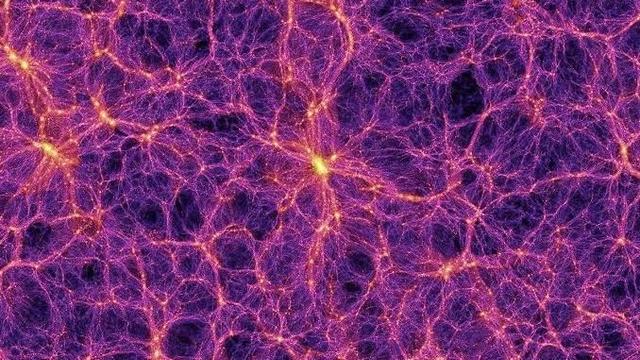
๐Ž๐ฎ๐ซ ๐”๐ง๐ข๐ฏ๐ž๐ซ๐ฌ๐ž ๐Œ๐ข๐ ๐ก๐ญ ๐๐ž ๐š ๐†๐ข๐š๐ง๐ญ ๐๐ซ๐š๐ข๐ง, ๐€๐œ๐œ๐จ๐ซ๐๐ข๐ง๐  ๐ญ๐จ ๐๐ž๐ฐ ๐“๐ก๐ž๐จ๐ซ๐ข๐ž๐ฌ

https://discoverwildscience.com/our-universe-might-be-a-giant-brain-according-to-new-theories-1-397374/

Our Universe Might Be a Giant Brain, According to New Theories - discoverwildscience

KristinaThereโ€™s something quietly unsettling about placing a photograph of a human neuron next to a simulated image of the large-scale cosmic web. The two look almost identical: delicate, branching filaments connecting dense clusters, with vast open spaces in between. One fits inside your skull. The other stretches across billions of light-years. The resemblance is hard ... Read more

discoverwildscience
@researchfairy They demonstrate only ignorance. Robert Anton Wilson's take on this in Prometheus Rising, whilst not scientistic in nature, was pretty clear that the brain isn't a computer. It may resemble one, but this is largely only because individual components of a modern computer system are patterned after the nervous system but only to a small extent. There's no true analogy. They are committing a category error. The view has no place in rational theory, and neither does behaviourism.
@researchfairy I've read that throughout history, people have always compared the brain to whatever technology was most complicated at that time. Like, plumbing used to be a common analogy. This seems to mean we don't understand brains very well.

@researchfairy when they say that exact phrase, I don't trust them on which end of their digestive tract does what

(maybe I'm too mathsy, but if you use "of course" and "just" in the same sentence and it's not "of course, they're just full of it", there'd better be proof)

@researchfairy the brain, of course, is just like a computer

in that people tend to both wildly underestimate the complexity, yet consider themselves more knowledgeable about it than they really are

@researchfairy my brain is like an intel pentium in that it sometimes does math wrongly

@researchfairy the universe is a computerยน so everything in it is too. it's saying nothing.

ยน almost a turing machine

@researchfairy As my philosophy and biology teachers used to say (each quoting the other):

If our brains were made so simple that we could understand their inner workings, we wouldn't be able to...

@researchfairy I can confirm I know nothing about either 1. or 2.