mpweiher
Seven countries now generate 100% of their electricity from renewable energy
https://www.the-independent.com/tech/renewable-energy-solar-nepal-bhutan-iceland-b2533699.html
Seven countries now generate 100% of their electricity from renewable energy
https://www.the-independent.com/tech/renewable-energy-solar-nepal-bhutan-iceland-b2533699.html
> Albania, Bhutan, Nepal, Paraguay, Iceland, Ethiopia and the Democratic Republic of Congo produced more than 99.7 per cent of the electricity they consumed using geothermal, hydro, solar or wind power.
Let's head to electricitymaps.com !
Albania (https://app.electricitymaps.com/map/zone/AL/live/fifteen_min...)
- On 2026-04-12 16:45 GMT+2, 22,67% of electricity consumed by Albania is imported from Greece, which generates 22% of its electricity from gas. Interestingly, Albania exports about as much to Montenegro as it imports from Greece.
Bhutan:
- 100% hydro, makes perfect sense
Nepal:
- 98% hydro, a bit of solar for good measure
Iceland:
- 70% hydro, 30% geo
Paraguay:
- 99,9% hydro
Ethiopia:
- 96,4% hydro
DRC
- 99.6% hydro
So, the lessons for all other countries in the world is pretty clear: grow yourselves some mountains, dig yourselves a big river, and dam, baby, dam !!
(I'm kidding, but I'm sure someone has a pie-in-the-sky geoengineering startup about to disrupt topography using either AI, blockchain, or both.)
I guess somewhat of a fun fact: Albania has rented(!) two floating(!) oil-powered power plants near the city of Vlöre that are there in case of emergency. The last time they were really needed was in 2022 (if I remember correctly), but these days they're not turned on any more than they need to be to make sure they're operating properly. That very expensive backup system is basically the only non-renewable source in the whole country, and most of the time it's just sitting there doing nothing.
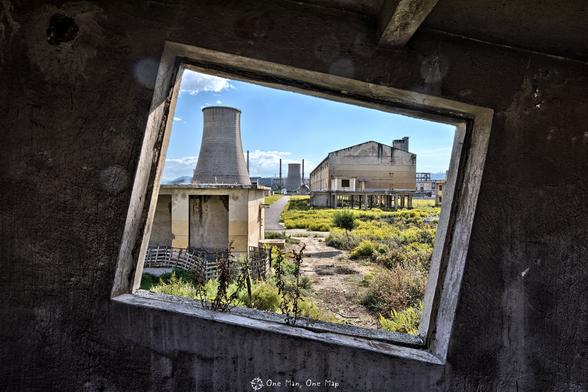
Being powered almost entirely by hydro means that the system is highly susceptible to droughts, so then they either have to spin up those oil plants from time to time or import electricity from abroad. I think it's also worth pointing out that nothing really changed because of climate change, the decision to rely on hydro was made in the 90s. The country used to have its own oil power plant that it heavily relied on before that decision, which slowly produced less and less until it was shut down for good in 2007. Some images of it from 2019: https://www.oneman-onemap.com/en/2019/06/26/the-abandoned-po...
No. Cooling french nukes was never a problem. In that period France was net exporting 14GW. Cooling in general isn't a problem - some modulation is done just to save fish.
Maybe you are confusing with 2022 when half of french fleet was shut down to check for potential pipe cracks/corrosion esp in one of their reactor designs due to poor geometry. But that's unrelated to droughts
That said, cooling does have an effect on ecosystems. Not the worst energy plant impact on that regard, but still not like it's all environmental friendly.
And of course, there is the what to do with the waste dilemma. And at least with current French park, there is a dependence on the rarer kind of uranium.
You don't need battery storage if you've got hydro.
You need solar. Make hydro the backup, fill reservoirs as your reserve and sell extra energy when they're nearly full.
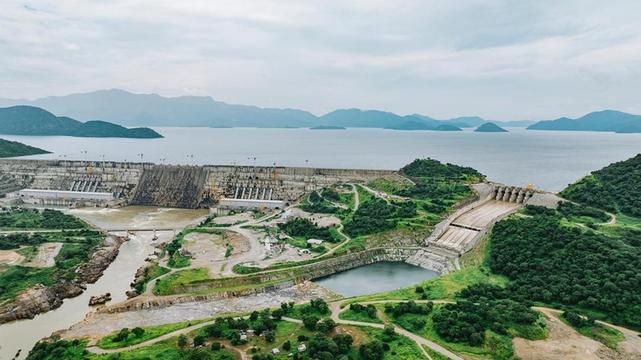
Except that in many cases there's people living downstream doing agriculture using that water for irrigation. There's just this tiny dispute about that in the nile delta between Egypt and Ethiopia
https://en.wikipedia.org/wiki/Grand_Ethiopian_Renaissance_Da...
The definition of “major accident” used in nuclear is orders of magnitude more strict than in any other industries though, which distort the picture.
The worst nuclear accident involving a nuclear plant (Chernobyl, which occurred Ina country without regulation for all intent and purpose) killed less people than the food processing industry cause every year (and I'm not counting long term health effect of junk food, just contamination incidents in the processing units leading to deadly intoxications of consumers).
In countries with regulations there's been 2 “major accidents”: TMI killed no one, Fukushima killed 1 guy and injured 24, in the plant itself. In any industries that would be considered workplace safety violation, not “major accident”… And it occurred in the middle of a tsunami which killed 19000!
I'm actually happy this regulation exist because that's why there ate so little accidents, but claiming that it's still hazardous despite the regulations is preposterous.
> They take too long to build and cost too much.
The global average to build one is ~7 years. People have been saying they take too long to build as an excuse for not building them for what, two decades or more? It seems to be taking longer to not build them than to build them.
> By the time a new plant is ready, alternate sources (likely solar + battery and long-distance HVDC) will have eaten its lunch.
Neither of those have the same purpose. Solar + battery lets you generate power with solar at noon and then use it after sunset. It doesn't let you generate power with solar in July and then use it in January. More than a third of US energy consumption is for heating which is a terrible match for solar because the demand is nearly the exact inverse of solar's generation profile both in terms of time of day and seasonally.
HVDC is pretty overrated in general. It does nothing for the seasonal problem and it's expensive for something that only provides a significant benefit a small minority of the time, i.e. the two days out of the year when the local grid has a shortage but a far away one has a surplus. It's also hard to secure because it inherently spans long distances so you can't have anything like a containment building around it and you end up with an infrastructure where multiple GW of grid capacity is susceptible to accidental or purposeful disruption by any idiot with a shovel or a mylar balloon.
Nuclear seems to be the worst option:
You can't quickly change the amount of power it generates. Which is what you need if you want to use it together with dirt cheap solar.
It's very expensive. In fact, noone knows how expensive it will end up being after a couple thousand of years.
It's dangerous. For millenia. Vulnerable to terrorism. Enabler of nuclear weapons.
It takes a long time to build and bring online.
It doesn't scale down.
Finally, Kasachstan is the major producer of Uranium. Yay?
> It's dangerous. For millenia.
See https://www.jlab.org/news/releases/jefferson-lab-tapped-lead...
> Partitioning and recycling of uranium, plutonium, and minor actinide content of used nuclear fuel can dramatically reduce this number to around 300 years.

Particle accelerator technologies, such as this niobium-tin particle accelerator cavity, are inspiring efforts to reduce the radioactivity of nuclear waste while also using it to generate electricity.