 Shadow79
Does this explain why there are no bullet trains in the USA?
 AzuraTheSpellkissed
Short answer: The automobile lobby prevents it.
Owning a vehicle is already a necessity. That and trucking make a lot of the highway infrastructure needed already so there’s less incentives to invest elsewhere.
Also can’t really think of many places a large number of people over the day need to transit back and forth. And if there are cases - there might already be a train or bus route.
It’s less about size and more about population density.
Japan is 338 people per square kilometer en.wikipedia.org/wiki/Demographics_of_Japan
China is 147 people per square kilometer total en.wikipedia.org/wiki/Demographics_of_China
The US is 36 people per square kilometer www.census.gov/data/…/density-data-text.html
The US could build long distance high speed rail like Japan and China, but the ridership level would be rock bottom due to the low population density.

Those statistics are misleading. China’s population is very unevenly distributed between the east and west, but Western China is still serviced by high-speed railway.
The 1786km Lanzhou–Urumqi HSR serves three Western Chinese provinces: Gansu (57.7 people per sq km), Qinghai (8.2) and Xinjiang (15.8).
wouldn’t being bigger make more sense to have bullet trains. the faster you go the less often you want stops.
Population density is not really a problem: Most of the country is virtually empty, but there are a series of urban agglomerations that have incredibly high density overall. The North-East corridor (DC to Boston, more or less) is the most obvious one, but Chicago and environment or Coastal California are great options, too.
The “secret” reason why it’s not happening is public indifference and corporate sabotage. A campaign of decades of worsening public transportation has made people convinced that a high speed train would be just for poor people, which they imagine to be someone else. Also, eminent domain land seizures are slow, environmental impact studies slower, and both force costly changes from original plan that the public hears about as cost-overruns.
Final nail in the coffin: in America, for bizarre reasons, passenger rail has lower priority than freight rail. The freight rail companies don’t want to give up the privilege, and obviously you can’t have a high speed service wait on freight trains bumbling by.
The reason for the freight priority is because freight companies own the rails and contractually de-prioritize Amtrak
which they imagine to be someone else.
Every poor american is a temporarily inconvenieced millionaire, according to their own mindset.
 HatchetHaro
my guy, the usa was built on the shoulders of a robust railway infrastructure.
the reason why it wouldn’t work is because the automotive industry has absolutely ruined everything and people have been conditioned over many years and multiple generations to regard any form of public service and infrastructure as “bad”, “pointless”, and “for poor people”.
 WhatsHerBucket
California was working on a bullet train (California is pretty big, bigger than Japan). The politics killed it and then they ran out of money, so they gave up.
The US can barely keep bridges from falling apart. The roads are equally as bad. But we can definitely spend money on ball rooms and bombs.
 southsamurai
Ehhhh, I tend to think the distances are less important than the fact of the infrastructure being prohibitive to set up.
Trains like that can’t just be dropped onto the existing rail network. I mean, even if the rails p tracks we have would allow them to operate at speed, it would be a nightmare getting them to mesh with existing rail traffic. You’d lose the high speed factor, defeating the purpose.
So, even in individual states, where the distances are closer to what you’d see in japan, it’s not a net practical solution without some serious rejiggering.
You could likely get some lines done anyway, like from D.C. to a few major cities on the east coast. But would there really be a benefit? Would it reduce highway traffic significantly? Would it be safer and more efficient than existing passenger rail? I genuinely have no idea, but there would be a need for that kind of thing to make it worth building out. If it’s just shifting a small fraction of city-to-city commute, I don’t know that or would be worth the massive project it would take
No. There are no passenger trains worth speaking of in the USA because the car industry likes it this way.
China is a very similar size to the USA and has an excellent and extensive high-speed rail network.
The USA could have this too, if it wanted to, but it doesn’t.

Nope
It’s all car lobbies, corrupt politicians, people doing everything possible to get rid of trains for people, get rid of bicycles in cities, everything needs to be designed for cars first, then whatever, turning every US (And Canadian and Mexican) city in a car park.
Hell, jaywalking as a concept was invented by car manufacturers because cars were killing so many people. Instead of doing something about the cars, we now just blame it on this invention from cars manufacturers.
Anything to push cars
Take a look at the Netherlands. It’s been working on less car for decades. It’s enormously densely populated and we simply don’t have the space for ginormous car parks and clogged road arteries. Back in the 1960’s they stopped the carification of cities and pushed for bicycle use and public transportation. Cars can get to most places still, but everything is principally designed for pedestrians, then cyclists, then cars. Most city centers block even bicycles, allowing people to walk only
The result? Moving about in the Netherlands is super easy, and the cities are amazing and safe. There are bicycle freeways, the cities are much quieter, the air is cleaner.
Other European cities finally followed suit in the past decade, with great results
Canada is trying a little bit of this in Vancouver, with mixed results because a lot of the designs they’re trying are designs everyone knew were bad and dangerous since back in the 1980s, but good on them for at least trying.
I know, you were talking about trains, and keep talking about bicycles, but it’s relevant. The two go together and should be implemented together.
Short distance, < 1 kilometers, people can and should walk. < 10 kilometers, bicycles. More than that, you use trains in between cities and busses for the less urban routes and inside the cities.
This is how it should be. People cycling are healthier. It generates less CO2, it pollutes less. Similarly, trains are way WAY more energy efficient and way less polluting than all those cars.
It’s just the politicians who keep being paid and lobbied to make sure car manufacturers can fill their pockets. Electric cars won’t change most of this, they only sort of solve the CO2 problem
Why compare to Japan when you can compare to China?
 morgan423
There are plenty of bullet trains in the US, shootings happen on them… like, all the time.
Oh, wait. You meant… nevermind.
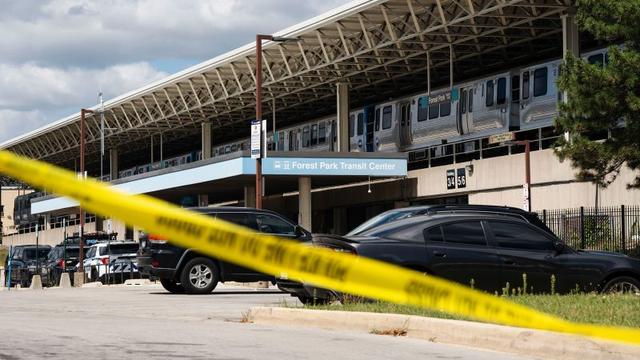
Murder suspect in Chicago train mass shooting is ordered held without bond. ‘This defendant defines violent,’ judge says
The Chicago man who was charged with murder in the fatal shootings of four Chicago train riders earlier this week was ordered held without bond at his first court appearance Wednesday.