
You shouldn't expect centralised organisations, be it companies or governments, to be good at implementing or even supporting decentralised solutions. That's just Conway's law [1] at work.

That's why decentralised solutions are shared, implemented bottom-up by communities of practice.

This is also why decentralised solutions are hard to monetise.

TL;DR: Decentralised solutions work best when they are open source, open hardware, run in cooperative ways.
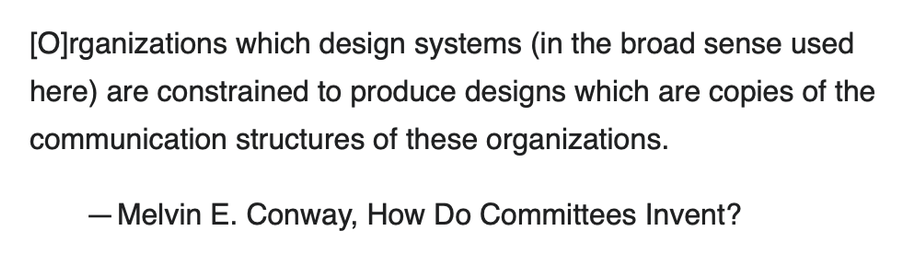

[1] https://en.wikipedia.org/wiki/Conway%27s_law

The impact of Conway's law is often underestimated. It's a dilemma. On the one hand you want organisation, authority because it seems to be a good thing. But that always leads to centralisation.

But embracing the chaos, infighting and ego fights that unavoidably comes with decentralised, leaderless approaches feels unnatural. But trust me on this. In the end chaotic systems work better.

I know. It feels weird. Take your time. Let it sink in. Don't "yes, but" immediately, just this one time :)

So if you wonder why (centralised) electricity grids don't seem to be able to cope with (decentralised) solar and wind electricity, here's an important factor.

And that's just one example. You'll start to see the pattern at a lot of places.

And here's the real task. How do we find ways to productive coexistence? Where are the translators between these two very different worlds? Because cooperation beats confrontation. That was always my hope for the Open Source movement. To be that translator.

@jwildeboer

I think one skill we need to (re)learn is that we don't have to perfectly align to collaborate.

It is OK to have different but overlapping goals, it is OK to have different interests and priorities, And we can still collaborate with all that.

The wide open Internet gave us the opportunity to reach to many like-minded people, which is really cool. But it also gave us the way to too easily escape the need to cooperate with people who are not as like-minded.