 tlayoyo
LØL
@tlayoyo
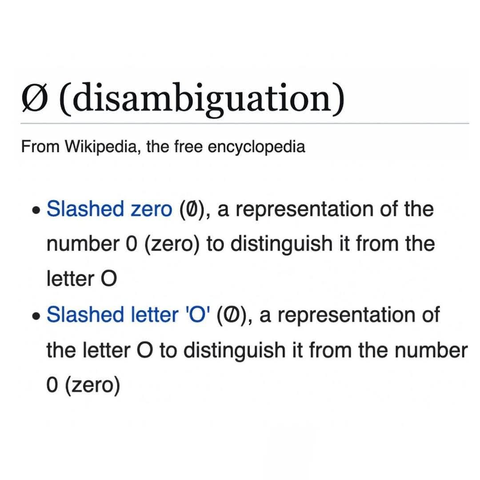
ICL Computer punch card operators expected slashed Oh O Ø, but other computer system operators (reading handwritten coding sheets) assumed it was a slashed zero 0. I can type Ø (The Scandi letter) on Linux but not slashed zero, though there may be a method.
The ICL made somewhat more sense as the Ø Character existed before computers, Except it's a Runic / Nordic / Scandi O, not the English O with a slash.
The Wikipedia disambiguation is 100% correct!
@tlayoyo
or capital I and small l on sans.
The 1, I and l are not ambiguous in many hand scripts. The 1 in some countries is like a closed up 7 and 7 often has a stroke. The l would have a slight tail.
The default sans-serif fonts are terrible.
Though many typewriters, especially portable. had no 0 and 1. Also the " and ' was invented for typewriters. You could create characters by backspace and overprint and this was on Wordstar etc.
userContent.css fixes, on the smartphone I’m SOL@tlayoyo imagine the chaos back in the day if you needed to type out your alphanumeric password one of these typewriters.
https://www.daskeyboard.com/blog/why-did-old-typewriters-not-have-a-number-one-key/
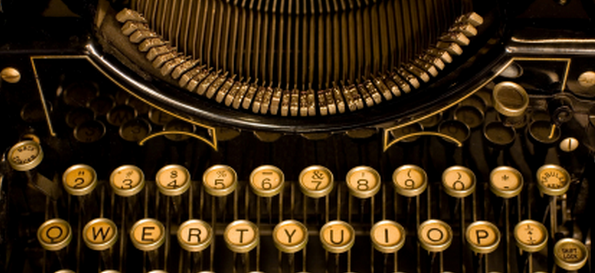
When looking at old typewriters, you’ll notice the key for number one is missing. It’s not because someone took it out or because it broke. Here is another one: So did you find out why the one key is missing? Here is the answer: the number one key was not implemented by design. Instead, the...
 Ray McCarthy
 mirabilos
 Mike Gerdts