@pomarede bisschen teuer und aufwändig, um ein Bild in einer besseren Qualität zu bekommen ;)

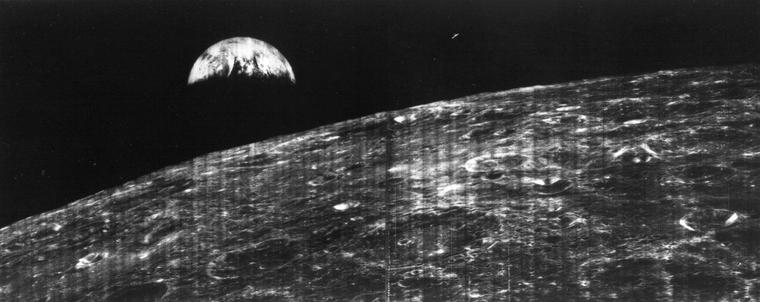
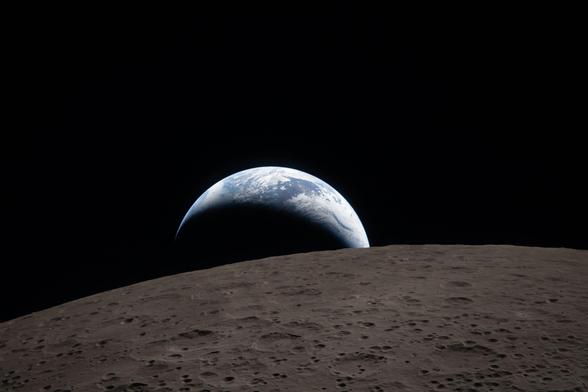
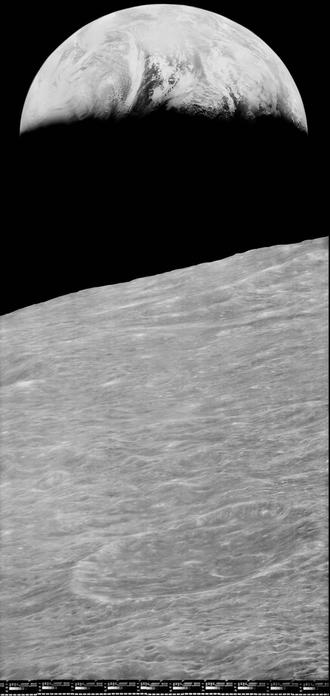
@pomarede by the way... the Lunar Orbiter images were deliberately downgraded for public release, presumably to obfuscate the available quality of American spy satellites imagery of the era:

https://en.wikipedia.org/wiki/Lunar_Orbiter_Image_Recovery_Project

https://rarehistoricalphotos.com/first-photo-earth-from-the-moon/

So the actual photo on the left should be:

@xChaos
What? No, it was not deliberate. The picture you show was digitaly enhanced 40 years later, in 2008. It’s in the links you have.

@pomarede

@eriksandblom yes, it is true, that it was digitally enhanced. But not from the level, which was published in 1960s. I have read some article claiming, that the fax-like feeling of the original published image was not the original available resolution, which was kept secret at the time. But I cannot find the source now, which is of course problematic.

The quality available for planning of Apollo landings was probably something in between - probably not as high, as digitally processed restored data, but still much better, then what was released to the public in the 1960s. It is quite likely considered, that the camera used was secret military grade technology (of the era).

@pomarede

@eriksandblom

It is complicated story and most of the news are from 2008 about re-processing of lost tapes by amateur enthusiasts, etc.

I found at least this mention:

http://astronautix.com/l/lunarorbiter.html
"The lunar orbiter used a film scanning process taken from a classified program and returned high-resolution images of the surface back to Earth."

Keeping the scanning process used by surveillance satellites secret would make perfect sense. But now I really feel bad, that I cannot find the original source of the story. I really don't want to seed misinformation.

https://www.kcra.com/article/60-years-before-artemis-ii-mcmoon-history/70945079
The tapes contained the data that would be decoded by what was called a de-modulator. That technology, however, had been classified during the cold war.

The spy satellite system was called SAMOS. I am really not sure, if NASA had access to better resolution internally and just could not publish tem, or if the better resolution would be available only to intelligence agencies. But the story of classified technology made available to civilian space agency is real, and the pressure to keep the existence of the technology classified seems real. There seems to exist book written about it.

@pomarede

Lunar Orbiter

Lunar Orbiter

@pomarede
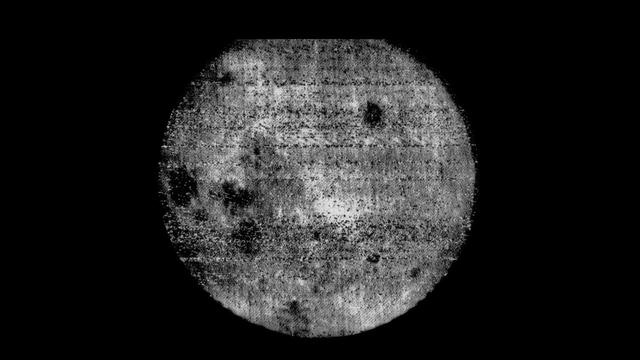
See also NASA comparison of 1959 and 2009.
https://science.nasa.gov/resource/first-photo-of-the-lunar-far-side/

Do we really need to send people?

First Photo of the Lunar Far Side

In October of 1959, the Luna 3 spacecraft launched from the Baikonur Cosmodrome in Kazakhstan. Luna 3 was the third spacecraft to reach the Moon and

NASA Science