 Hänzi Pōtter
the current closure of #StraitOfHormuz due to #USA #Israel #war on #iran (aka #IranWar) has shown that, #oil is embedded in every critical part of the whole global system, ranging from transportation (obvious) to food security, and even #semiconductor & other industries. it also shows that, as always, current movements of "#StopOil" & co miss the bigger picture(!) presenting #EVs *the solution* for #ClimateCrisis as to "end dependence on fossil fuels" is kind of "great leap forward" thinking
I still remember when #berlin decided to phase-out #coal mining, turned out there would be shortage in fresh water. this is because coal mining companies used to pump out water from coal mines into rivers. this was done because of coal economics. once mining stopped, pumping water is no longer feasible. go figure how to provide fresh water to the capital city (!) #Unintended_Consequences
 Matt
Matt@hszakher That's not an argument for continuing coal mining though, is it? Of course it's *feasible* to continue the pumping, it just wouldn't be paid by the coal mining companies any more but would have to be funded by someone else, likely the communal water works. Cheating yourself by hiding part of your water bill in the heating bill is not all that smart.
@hszakher The reason simply replacing ICE vehicles with #evs is not a good idea has less to do with oil and more with traffic collapse. If you look at the fractions created from a quantity of average crude, it's easy to see that the vast majority is created just to burn them. Obviously getting rid of those won't immediately make the world independent from petroleum extraction, but it goes a long way as fuels are by far the biggest problem. Turning fractions into plastics or fertilizer, while not completely CO₂-free, also produces a lot less of it than burning it.
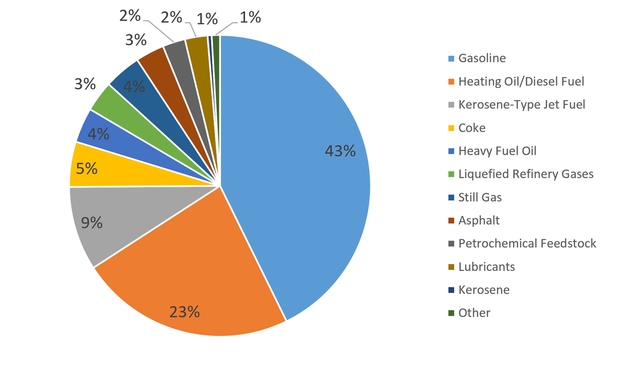
@menos I think the problem is in presenting fossil fuels exclusively as energy source. if you replace them with other "clean" sources, the problem is then solved. however, what the current crisis proved is, fossil fuels are also "raw material" and they are critical to wide range of industries and products with deeper impact (from fertilisers to semiconductors) beyond transportation and heating. you can replace energy sources, but you still, for now at lease, need them as input raw material.
@hszakher OK, regarding the single Fediverse account that regularly uses this hash tag, I can actually believe he's not aware of all the other uses of oil 😅 I do think most people more or less are though, and the ones who take a bit of an interest in reducing petroleum use even more so.
@menos 😅 I think there is still A LOT of education to be done. for example, a common(?) (mis)understanding of using #photovoltaik for electricity at home is that it would give you "independence". the reality is, in common household setup, you can only use it when you're actively supplied power from the grid. if the grid is off, your solar panel won't supply you with electricity. this can of course be adjusted, but at much higher cost...etc. point is, it's borderline false advertising
@hszakher While living in Sri Lanka, I had a system that was deliberately crippled by the electricity company so as not to be able to do this even though technically it could; that was frequently very annoying when the power went out in full sunshine and with several dozen kW of panels on the roof. It's no more expensive, every cheap UPS basically does the same. In a country like Germany with very very few power cuts that's more an academic distinction anyway. As long as you need only some negligible amount of *power* because the AC *voltage* is all you really need to sync to the grid, you can charge your car or whatever without paying your electricity company, and that's the "independence" people are looking for.