 JB Lièvremont
 James Bennett
New blog post: I got tired of having repetitive arguments explaining why I think it’s OK to be skeptical of LLMs for coding, so I wrote six and a half thousand words on the topic that I will be referring people to from now on.

 Needs Fixin'
 Steffi
@ubernostrum why do you even have to make the case for being sceptical? I haven't heard a single valid argument why it is ethical to use LLMs. There is not a single thing that can be done with LLMs, but can't be done without them. Why do we even have to argue against something, when there is no good argument in favor of it?
 Dr. Doro (she/her)
@stefanie @ubernostrum I hear a lot of claims like "I work so much faster with AI!" and "Without AI, I would just not have managed to do this" etc. - So I'm afraid this case has to be made...
@ditsch42 @ubernostrum on the one hand, there is already a study that shows while people report feeling more productive, they are in fact less productive.
But besides that, it's not even about being faster.
A chisel is a tool, it allows you to carve stone, which you can't do without it.
Is there anything that AI allows you to do that couldn't be done without it?
The answer is: no.
But besides that, it's not even about being faster.
A chisel is a tool, it allows you to carve stone, which you can't do without it.
Is there anything that AI allows you to do that couldn't be done without it?
The answer is: no.
 Agnès H.
@ubernostrum thank you.
 Benoît Régent-Kloeckner
@ubernostrum Great post, thank you!
 Strypey
Side note:
@ubernostrum
> the dot-com bubble drove mass adoption of the web
This is often assumed but I think its ahistorical. What I remember is that it was touchscreen mobiles in the late 2010s that drove mass adoption of the web. Along with the mass adoption of apps and social media platforms.
All the DotCom bubble produced was a massive concentration of ownership in the online tech industry.
 Mateusz 🏳️🌈
@ubernostrum Very interesting and insightful 👏 Thanks for not overusing the term "AI" (I tend to avoid it too)
I find Dijkstra's note, linked near the end, particularly interesting. It's something that I had on mind for quite some time that formality and precision of programming languages is actually their advantage over natural languages. It seems, that someone has already made that observation 50 years ago…
In addition to that, I'd like to point out that LLMs are stochastic models, as opposed to deterministic programming languages compilers. That's IMHO another one advantage of programming over prompting, underestimated by "AI" evangelists.
"I’ve thought several times that we really need some sort of cute portmanteau of 'LLM' and 'Gell-Mann Amnesia' for the way a lot of LLM-related discourse seems to be people expecting LLMs to take over every job and field except their own."
@ubernostrum, 2026
https://www.b-list.org/weblog/2026/apr/09/llms/
@pluralistic you've written about this a few times, and you're good with neologisms, what you got?
 Su-Shee
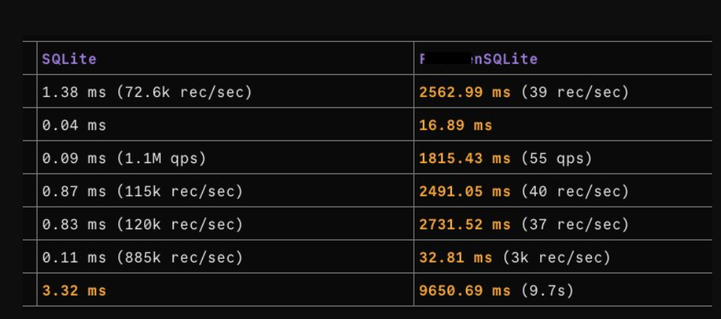
@ubernostrum I believe this article might shed some light on the dissonance between "code quality" and "still just not right". it has the right code on a low level and some of the right primitives but it's put together badly - the elusive "good design" somewhere between code and architecture: https://medium.com/coding-nexus/your-llm-doesnt-write-correct-code-it-writes-plausible-code-cd910b4cd210