
I am indecisive about this post: https://solar.lowtechmagazine.com/2020/12/how-and-why-i-stopped-buying-new-laptops/

On the one hand, it does make sense to buy used high-quality repairable machines instead of new replaceable glued garbage.

But, on the other hand, does it really make sense buying an extremely old laptop AND two more for spare parts because getting these parts is hard? This feels like an unnecessary multiplication of e-waste to me.

My approach is: I’m using my extremely underpowered 2020 Lenovo Thinkpad for the longest possible time and then I get an X220 from 2011, because that’s the last model with a good keyboard that’s still relatively powerful enough to handle my type of computing, and roughly the same specs as the current one, in fact. But it’s a hard sell even to me, because computing is heavyweight in a general case. Might be quite inconvenient with such a laptop, especially in two or three years from now.

Time for a SIMD-powered application stack anyone?
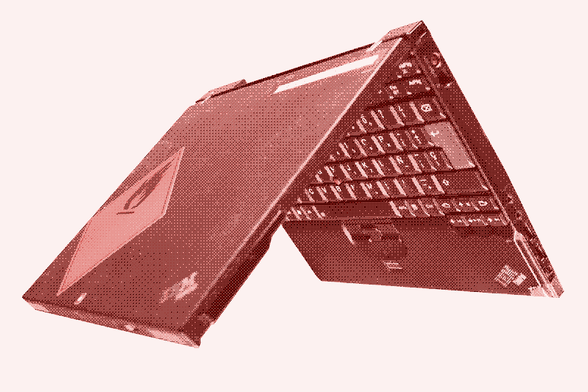
How and Why I Stopped Buying New Laptops

As a freelance journalist – or an office worker if you wish – I have always believed that I should regularly buy a new laptop. But older machines offer more quality for much less money.

LOW←TECH MAGAZINE

@aartaka

I'm a black hole for old computer junk so I usually just fix old laptops

@hairylarry that’s a circumstance that factors in it, for sure. My case is different, thus the worry 😅

@aartaka

When I do need a powerful computer for a specific task I usually buy an HP workstation, used.

I like both the towers and the small form factor computers.

The last laptop I bought was an Acer I used for live streaming. Now I use it for my composition and arranging lessons.

It's on win 10 because of finale, my notation software, but usually I run Xubuntu.

@aartaka If you're concerned about e-waste and the ability to repair, desktop machines seem better in every single way. The parts are all standardized and can be swapped out piece by piece rather than having to throw it all away or hunt for obscure replacement parts. Even the computer case itself can last a lifetime, which can't be said about laptop enclosures.

Of course, recent reality has gotten in the way of this a bit. If you need modern ram and modern SSDs for the desktop, you're financially fucked.

I don't know if you specifically need a laptop though, or if you already have a desktop and you're specifically wanting to talk about laptops.

@zyd your points about desktops are totally valid—they are much more standardized and repairable. I mean, even the CPU used to be swappable at some point in history?

Though yeah, I’m looking for laptops exclusively, as emigrating with (even a mini-) desktop would be hard.

That’s why I’m eyeing old Thinkpads—a lot of parts are standardized and replaceable without sacrificing the laptop nature of the thing. Not sure if there’s a better combination of these qualities than these Thinkpads (besides fash Framework laptops, but oh well.)

@aartaka

I mean, even the CPU used to be swappable at some point in history?

They still are! That's actually the norm. Example, I went from a Ryzen 3 1200 to a Ryzen 7 3700x. Massive upgrade, same motherboard (until I needed to replace it, died at some point). Swapped out the GPU too. All these upgrades were bought second hand, because while they were upgrades to me, they're a couple generations behind the "latest and greatest", so its cheap and beneficial (putting used hardware to use).

Though yeah, I’m looking for laptops exclusively, as emigrating with (even a mini-) desktop would be hard.

I feel that, even though I don't move countries. I was extremely nervous about even building a desktop machine again because of worries about moving. I try to minimize as much of my life as possible so at any moment I can comfortably live out of a dufflebag. A bit extreme but what growing up below the poverty line does to ya.

@aartaka I sort of get the vibe of where you're coming from I think but how can it be a multiplication of e-waste when you're taking something that many would already consider to be e-waste otherwise and giving it a purpose?

@plungepool @aartaka Same question!

While the replacement parts (in form of second laptop) are inside your closet — they are not a e-waste, they are very necessary and important spare parts for computing!

@aartaka Every piece of electronic becomes e-waste in the end. The only way to reduce e-waste is to discourage the production of new devices.

From that perspective, the question is if three old laptops bought by one person to serve as one reduces production more or less than three old laptops bought by three people for independent use. Which is a question I cannot answer!

@khinsen right, this is a valid argument! It’s just that the mantra is Reduce, Reuse, Recycle, in this exact order. So buying less things, even if used, is better than buying too much and reusing. But it’s complicated in this particular case, true.

@aartaka I'm curious what kind of computing can be done on such old hardware? 2011 is almost 15 years old, surely nothing modern can run on that?

I am honestly curious.

Where I do buy used devices often, I tend to buy barely used ones that are released within the last year or two, and then use them until they break.

Basically saving them from landfill.

I've not used something from 2011 in a very long time.

@r3spawndbae @aartaka the most modern laptop I have is an x230. It runs #alpinelinux (one runs #voidlinux) easily (lots of free RAM and low CPU usage) with a Firefox clone, Libreoffice, fullscreen video, even Roblox via a Flatpak with ease. It is 100% repairable with lots of spares available. For most/many users, that's all they need.
@EF @aartaka This sounds very good. I've not tried Alpine Linux, but I'll give it a look, as I'm thinking of probably moving to Linux from macOS when I buy my next computer.

@r3spawndbae @aartaka Anything 64bit and multi-core is fine within the limits of expectations. Adding an old, cheap dedicated GPU and RAM (old architecture so not expensive) adds a lot of life to these old machines.

I have old HP 8200/8300 Elite computers that are still ticking over fine (when turned on - they burn power).

Of course, if you don't have hardware in hand, buy the newest that is affordable.

Choosing a light operating system and desktop environment helps but is not totally necessary - within reason.

@RootMoose @r3spawndbae yeah, doubling that. Moore’s law slowed up in the last decade, so the older CPUs are not significantly slower frequency-wise. Multi-core perf and RAM are slightly worse, though. SSDs speed up a lot of things. So, overall, using 2011 laptop with a lighter OS and desktop environment should be mostly fine, unless you run 10 Docker containers, video editing software, or 100 Chromium tabs. Which I don’t.
@aartaka @RootMoose this sounds cool to be honest and kind of awesome that older stuff like that can still be useful.

@aartaka I recently bought a new Macbook after having my last one for 6 years. The one before I had for 10 years. 10 years should be the minimum for any new device imo, unfortunately the 6 years one (the last of the Intel Macs) was abandoned by Apple from the start and was very cumbersome to work with.

I feel pretty bad about buying a new one. I finally caved in because of the extremely bad performance and stuttering when running ”modern” software required for my contract work. I currently need to run MS Teams and the rest of the MS suite of online tools and Unity, and it’s frustratingly slow on everything except the latest. For my own work and when I can decide, I’ll make sure everything works on 25 year old hardware, but for running ”modern” software that may or may not be forced upon you, you pretty much have to choose between suffering and paying the environmental/monetary software tax in my experience :/

That this tax is present for office/communication level software is mind-boggling to me and something I desperately want to change in the future.

@gustav yes, I had to request a work laptop for the heavyweight software the company used. So yeah, many modern and collaborative workflows are super resource-hungry. A shame.
@aartaka Lenovo bita from yesteryear can be passed on or sold. Certainly not ewaste.