 Joshua Barretto
Okay, I just came up with a ridiculous #rustlang trick that... somehow works.
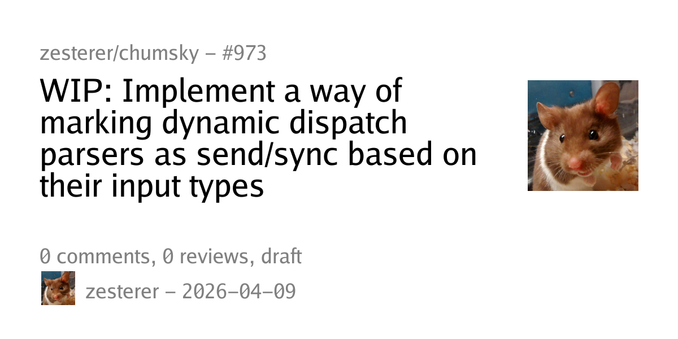
You know how building an API on top of trait objects (like `dyn Fn`) usually requires you to 'commit' to a pre-defined set of marker types (like Send/Sync), breaking any clients that want to use another set of bounds?
It turns out that you can abuse the specialization feature to 'smuggle' these marker traits into the final type without mentioning the type they're originally derived from, making it possible to write code that does dynamic dispatch without sacrificing the flexibility of user-defined marker traits.
Here's an example of the horrible hack in action: https://play.rust-lang.org/?version=nightly&mode=debug&edition=2024&gist=f323d504bef9daca9e61d0b07c29b082
 Marsh Ray
 Grégoire Locqueville
 Shane Celis