 GreenSupplyChain DIH
One analysis estimated that if 10.000 actinomycetes were screened, 2.500 would produce antibiotics💡
.
.
Γνωρίζατε ότι πολλά αντιβιοτικά προέρχονται από μικροοργανισμούς του εδάφους;
Μια ανάλυση εκτίμησε ότι αν εξεταστούν 10.000 ακτινομύκητες, 2.500 από αυτούς θα παράγουν αντιβιοτικά💡
https://www.linkedin.com/posts/e-spfdigit_%F0%9D%97%97%F0%9D%97%B6%F0%9D%97%B1-%F0%9D%98%86%F0%9D%97%BC%F0%9D%98%82-%F0%9D%97%B8%F0%9D%97%BB%F0%9D%97%BC%F0%9D%98%84-many-of-the-activity-7430551835494576128-gL4g?utm_source=share&utm_medium=member_ios&rcm=ACoAACcmbCYBCukF73CwAXB4AAJkSjFrBt8bVuY
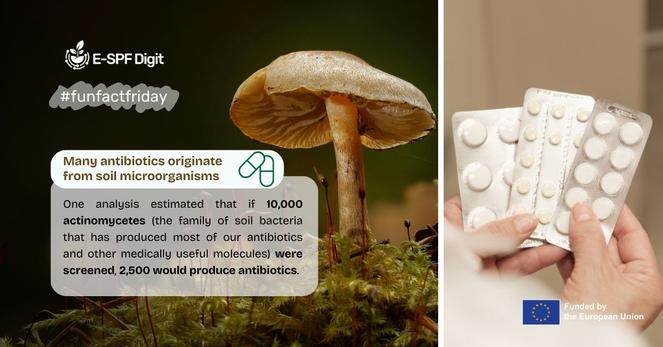
🧪🌍 𝗗𝗶𝗱 𝘆𝗼𝘂 𝗸𝗻𝗼𝘄? Many of the antibiotics we rely on today originate from soil microorganisms. One scientific analysis estimated that if 10,000 actinomycetes (a major family of soil… | E-SPFdigit
🧪🌍 𝗗𝗶𝗱 𝘆𝗼𝘂 𝗸𝗻𝗼𝘄? Many of the antibiotics we rely on today originate from soil microorganisms. One scientific analysis estimated that if 10,000 actinomycetes (a major family of soil bacteria) were screened, around 2,500 would produce antibiotic compounds. 🔎 𝗛𝗼𝘄? Actinomycetes live in competitive soil environments where producing bioactive molecules gives them an advantage over other microbes. Over decades, scientists have isolated these naturally occurring compounds from soil and developed them into antibiotics and other life-saving medicines. 𝗪𝗵𝘆 𝗶𝘁 𝗺𝗮𝘁𝘁𝗲𝗿𝘀? This highlights soil as a hidden reservoir of medical innovation. Protecting soil biodiversity is not only an environmental priority. It is essential for future drug discovery, public health resilience, and tackling antimicrobial resistance. 📖 𝗦𝗼𝘂𝗿𝗰𝗲: Demain, A. L. & Sanchez, S. Microbial drug discovery: 80 years of progress. https://lnkd.in/gfVVP-sC 🌱💡 Explore our project to see how we’re combining ecological knowledge and digital innovation for healthier soils and societies: https://lnkd.in/dq8sbhn5