 Laura G, Sassy 70’s
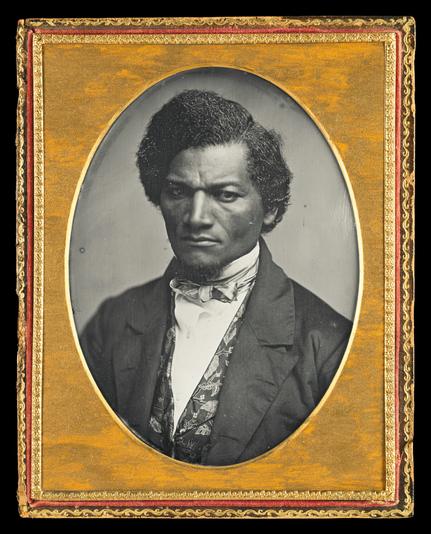
Your photography history post for today: this daguerreotype of Frederick Douglass (1818-1895), ca. 1847-1852 by Samuel J. Miller (1822–1888). #photography #vintagephotography #blackhistory
From the Frederick Douglass National Historic Site: ‘As the most photographed man in America during the 19th century, it was no accident that Frederick Douglass amassed more than 160 photographs and portraits. Douglass knew that pictures allowed him to present himself as a person worthy of respect and dignity equal to any white man, and to challenge slavery and the era’s racist social norms…
The commercial photograph called a daguerreotype was invented in 1839 by Louis-Jacques-Mandé Daguerre. Douglass spoke highly of Daguerre as an inventor who brought forth the advancement of society through his invention. He acknowledged the growing popularity of photography and its capability to connect with its viewers. Douglass said that “Men of all conditions may see themselves as others see them” (Stauffer et al. 2015).
Through self-representation, Frederick Douglass took control of his own narrative. He powerfully conveyed the qualities and attributes that enslaved Blacks were denied since their arrival in America. Considering the American social landscape in the 1800s, the confidence he showed in early photographs helped build such a strong reputation that some people questioned if he was ever a fugitive slave (Picturing Frederick Douglass with John Stauffer 2017).
Ultimately, Frederick Douglass’ legacy shows hope for the future with technology as an aid to freedom and true equality in America. He said, “It is evident that the great cheapness and universality of pictures must exert a powerful, though silent, influence upon the ideas and sentiment of present and future generations” (Stauffer et al. 2015).’