
Not only is there a general problem in the way graduates' student debt is handled (hardly ameliorated yesterdays bounce interest rate cap at 6%), there is also a clear gendered dimension, perhaps most obviously demonstrated in the continued accrual of debt during maternity leave... once again raising the cost of motherhood.

Its a problem entirely the result of a (wilful) political misunderstanding of the social purpose of university education.

#graduates #politics

https://www.linkedin.com/pulse/90000-later-what-student-debt-really-does-women-amy-brooker-hvcze/
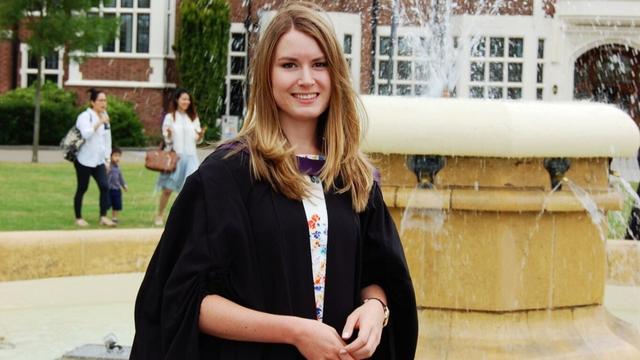
£90,000 Later: What Student Debt Really Does to Women

It’s taken over a decade for politicians and the media to pay attention to something I have been personally, professionally, and economically aware of since I was a member of the first cohort of students to be hit by the £9k student fees in 2012: student loans were going to be the next social mobili

@ChrisMayLA6

Frankly, education at all levels should be entirely free, as a well educated society is a social good in its own right.

And we shouldn't be snobbish about this either, with this applying to both academic and vocational education.

@alexadeswift

I've always been comfortable with (very) low fees for university, but have no objection to free provision...

@alexadeswift @ChrisMayLA6 Education should be of a decent quality, not much good if the education people get doesn't actually teach independent thinking skills or encourage learning things outside of standardised tests.
@ChrisMayLA6 education should be free or everyone should be provided a rich parent. Thanks Dad.

@ChrisMayLA6
I also wish university (and any other form of post-18 training/education) were free.

But calling student loans 'debt' is misleading. For the vast majority, who never pay off the principal before it gets wiped, and who only pay according to their means each month, it is essentially a graduate tax. Whether the amount you 'owe' goes up or not is irrelevant!

@huxley

yes, Martin Lewis has been saying for years (rightly) that is is essentially a graduate tax

@ChrisMayLA6 @huxley
Not wishing to pick an argument with either of you or the esteemed Martin Lewis.
I personally struggle to understand how money that is lent to a student by a quasi government organisation that has the word loan in its name isn't really a debt.

The money that is given comes with interest.

When sprog 2 went for a mortgage they weren't interested in what her tax rate was but they wanted to know about her student loan.

@frantictdrinker @ChrisMayLA6
Unless your child is a very high earner, they won't pay the loan off before the time limit when it gets wiped. They also only pay an amount that is affordable, and don't pay anything below the earnings threshold. Therefore, for the vast majority, the interest rate is irrelevant and the amount they owe is irrelevant.

The biggest error in setting up this system was not understanding how many people will misunderstand how it works.

@frantictdrinker @ChrisMayLA6

In his videos, you can see Martin Lewis almost pulling his hair out in frustration.

A loan where:

1. You only pay an affordable amount each month.

2. If you have a low income or no income, you don't have to pay anything. You’ll repay 9% of your income over the repayment threshold, which is currently £26,900 a year. Below that you pay nothing.

3. After 25 or 30 years (depends on plan), or if you die, the loan is cancelled even if you haven't paid it all back.

@frantictdrinker @ChrisMayLA6

This is not like any other loan. Imagine a mortgage where you only paid what you could afford and after 25 years they just cancelled whatever was left? And this applies to the majority of people.

The only caveat is that a future government may unilaterally change the repayment rules. They shouldn't do this, but they have done in the past.

@frantictdrinker @huxley

The key issue is the debt forgiveness at the end, as explored in this thread

@ChrisMayLA6 @huxley
Thanks guys.
Sprog 2 frequently explains this to me, while frequently rolling her eyes and probably wondering why I struggle with the entire concept.
I've also been a fan/follower of Martin Lewis since becoming a Debt Free Wannabe on his MSE Forum something like 20 years ago.

I'm sorry, it's me not you. Some things just struggle to make it through my head. For example I was nearly 11 when I learned to tell the time and 12 when I realised I wasn't doomed to go to school for ever.

@frantictdrinker @ChrisMayLA6 You're not alone - pretty much everyone I've ever talked to has the same issues with student loans!

@ChrisMayLA6 I recall my economic lecturer referring to us, his students, as 'investments in human capital'.

Shame on those of our peers who, like us, benefited from higher education on a full maintenance grant, then pulled the ladder up after them.

@wood5y @ChrisMayLA6

Some economists have retreated from that position now, reckoning that improvements in human capital do not benefit industrial development. In other words, human capital is just an externality. In the Smithian division of labour (and now outsourcing) you just need people to have the cultural capital to perform one specific task. It's all Chicago now. Mokyr won a Nobel Prize.

@ChrisMayLA6

University fees are predicated on the assumption that the primary beneficiary of the education is the graduate. Every time I cross a bridge that doesn't collapse, I wonder who benefits from the education of the engineer who designed it....

Education is a fundamental public good. (And not just STEM; I hold a BA in Classics.)

@ChrisMayLA6

Education is a strong investment for any civilized society and their neighbors.