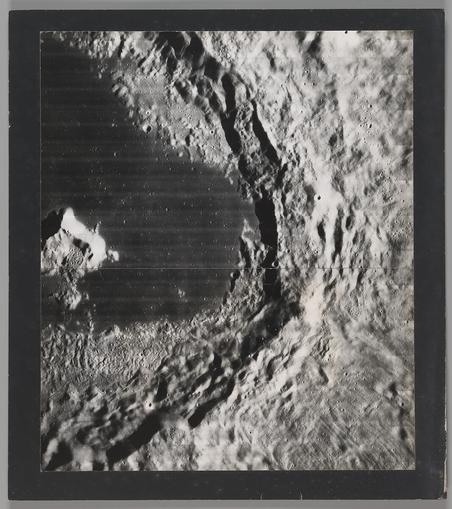
It’s fascinating to me to learn that most of the far side of the #moon to date has been so poorly photographed, if at all.

So it’s also fascinating to me that #Artemis2 was launched during a full moon, where most of the far side would still be shrouded in darkness.

I know the mission had been delayed multiple times, but I wish they’d launch during a new moon, so we get some well-lit images of the other side.

EDIT: This isn’t accurate. The far side has been photographed quite well by Lunar Orbiters. The claim is that much of the far side has not been seen by *human eyes*.

@drahardja I know someone who accidentally took a picture of the back side of the moon!

@drahardja

Didn't the Lunar Orbiter do that in the 60s?

@bitsavers You’re right! “Over the course of one year, the Lunar Orbiters photographed 99 percent of the Moon’s surface, producing more than 2,000 images of unprecedented clarity and precision.”

https://www.metmuseum.org/art/collection/search/717463

I think my confusion was that the far side is seldom seen by *human* eyes.

“Nasa said its image marked "the first time the entire basin has been seen with human eyes". Even Apollo astronauts didn't see the Orientale basin completely because of their orbit and illumination conditions.

Nasa is emphasising the significance of human eyes rather than robotic explorers.”

https://www.bbc.com/news/articles/clye6j0g840o

National Aeronautics and Space Administration (NASA) - Far Side of the Moon at Apolune - The Metropolitan Museum of Art

Inscription: Typewritten paper label, verso TC: "Lunar Orbiter III – 24 inch Lens [underlined] // High Resolution Photograph of S-21.5 (KI-3091) [underlined] // This photograph of the backside of the moon was taken at // apolune (about 1850 kilometers)