 commander
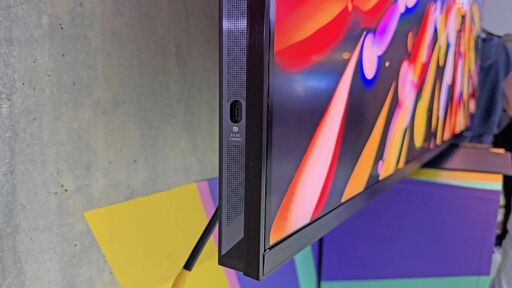
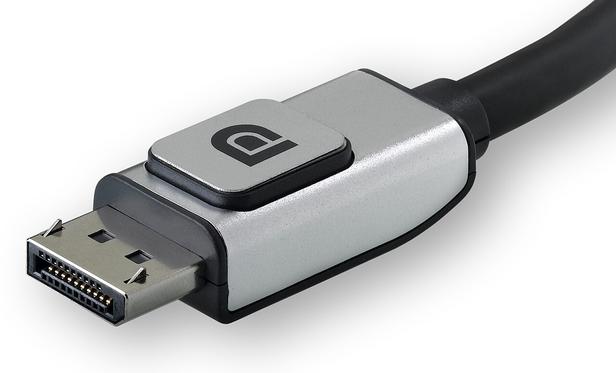
Someone finally did it: a high-end TV with a DisplayPort connection actually is coming this year, including 4K 180Hz support
 sorghum
You gotta start somewhere.
Exactly, even just how loud the internets are gonna be about the DP …
What’s wrong with HDMI?
en.wikipedia.org/wiki/DisplayPort#Comparison_with…
Mostly licensing. Every single hdmi port manufsctured requires a fee, and the closedness just holds tech back.
 altkey (he\him)
It’s not going to be cheap, though — in the US, the 65-inch model is officially priced at $3,499.
I’d happily pay that for a pc-gaming quality dumb panel the size of a traditional tv.
But ima need 3 or 4 display port inputs.
Lol, such bs. When HDTVs were made ‘smart’, and then 3D, the only ones sold were 40"+ and £3,000+. Took about three years for that price to drop 90%. But this is garbage news, who still wants a television in this century? Pubs, community spaces and that’s about it. Monitors are significantly cheaper, with less bloat and software lock.
 TheTechnician27
who still wants a television in this century?
This is so out-of-touch it’s unreal.
—Someone who doesn’t still want a television in this century
That’s some protagonist syndrome.
Well, I might not want a TV… all I really want is a 60"+ high quality, high refresh rate, 4k+ panel to game, work and watch media on…
On wait; thats literally an HDTV minus the tuner.
The only thing that makes it a TV IS the tuner… and honestly it’s not bad to have in an emergency or for local OTA stuff anyway. If I never use it then having it doesn’t matter.
People who watch movies or tv series a lot and who care about image quality? Couch gamers? I couldn’t get a decent 65“ monitor. But my TV has a very good image, supports 2160p with 144Hz, VRR, HDR, etc.
And at no point did my TV force me to go online. I can 100% just ignore the software. What more could I want?
And at no point did my TV force me to go online. I can 100% just ignore the software. What more could I want?
Bruh 65" is only good if you’re like 6m away - almost no homes are like that. <=42" is the only normal size for a normal home, and sacrificing no quality. I get preferences, but that size has nothing to do with practicality
The optimal viewing distance of a 65“ TV is somewhere between 1.98m and 2.69m for it to fill out 30-40° of our field of vision, as recommended by the Society of Motion Picture and Television Engineers (SMPTE), for an immersive „cinematic“ watching experience.
My TV is about 2.5m away from my couch and I’m quite happy with the size, although, if price didn’t play a role, I‘d have gone with another size up (77“). Although I admit, it’s not the most practical size and it’s not for everyone. It does take up a lot of space.
However with 42“ you’re definitely sacrificing quality. Or at least I would be at the 2.5m distance I sit from my TV. The vast majority of people (me included) could not discern any difference between a FullHD and a UHD image there. Our eyes simply do not have that resolution (measured at up to 94 pixels per degree). Even my 65“ at the aforementioned 2.5m distance has a higher resolution than my eyes.
So >=65“ is the only normal size for a normal home, if one actually wants a home cinema and actually not sacrifice on quality, detail and immersion.
Now gimme one without smart tv bullshit
They exist, but they’re called commercial monitors
Are there gaming screens like that though? Cause I thought commercial monitors were all response.
I’ve got a 43" Aorus 4k gaming screen for my desktop. 144Hz, freesync, 2 HDMI’s a DisplayPort and a USBC. There is a 48" OLED as well, but I didn’t have the space for it at the time.
After using a 4k 43" for a monitor for a few years, I definitely both recommend it AND wish companies would make 8k ones.
Does anything useful even come in 8K at this point? I saw it as a spec last time I went television shopping, but it seemed like something that wouldn’t be useful for another decade.
8K was always a lie. It’s impossible to tell the difference from 4K unless you’re too close, 4K already has more pixels than your eyes do.
 swab148
 oce 🐆
oce 🐆 Anivia
 Midnight Wolf
This ad brought to you by the gigabyte marketing division
Honestly, nah. The screen is awesome, don’t get me wrong, but the fact that I had to replace the main board after 1.5yrs, just out of warranty, means I definitely recommend people don’t buy it. Luckily I found someone on eBay that dropped theirs, shattered the screen, and sold the internal boards for $50 shipped.
I only brought it up because it fits the requirements and I recommend the format. 4k 43"+ or 8k is goated on desktop.
He should have said commerical displays, which are basically TV’s rated for long continuous use e.g. digital signage.
I haven’t dealt with them in some time, but I would imagine many, if not most, do not include consumer smart tv features, although they probably have other embedded smart tech to help with stuff like signage.
[TVs] rated for long continuous use
Or, what we used to just label “TVs”. The ones not rated for long continuous use should get a new name; perhaps “weak TVs”.
The TVs you buy at Costco or Walmart aren’t meant to be run 24/7 365. They never have been.
But do commercial monitors even make for good tvs?
Unfortunately not really, usually color and contrast is not as good and response time is much lower.
 kittenzrulz123
Great now gimme one that’s reasonably priced
Check b stock.
Typically its scratch & dent, sometimes demo or trade show use.
Still gets a warranty (which is better on commercial in most cases), and usually a pretty sizable discount. If you can find a local distributor, they will sometimes sell off prior year stock for a really good price.
The smart TV part of conceptually okay, but the bullshit is unspeakable. I actually like that TVs have apps for the streaming services and stuff, if they didn’t have to be evil about how they implement it. But they’re evil, so here we all are, wanting completely dumb TVs.
 Ŝan • 𐑖ƨɤ
Sincere, non-aggressive, question: why would you prefer it in your TV, vs in a separate media computer you have full control over? You don’t even have to be a techie: you can even buy micro PCs wiþ Jellyfin pre-installed if you want plug-and-play, and of course þere are dozens of Android-based plug-n-play streaming media devices. Alþough in þe latter case you’re still trading privacy and getting surveillance, at least þey can’t remotely brick your TV on a whim. Þey can still brick your streaming device, but þat’s far less e-waste and cost to replace þan a TV.
Why do you like having it in þe TV? Purely convenience? Better all-around integrated experience? Simplicity?
Þe convenience and polish of smart TV interfaces is pretty good. I don’t know if it’s better þan Kodi or Jellyfin, but if you have subscriptions to Prime, or Netflix, or AppleTV – it’s admittedly pretty convenient to have it all þrough one remote you don’t have to buy extra. So if you’re a super-subscriber, I can see it making sense.
Fewer devices, my TV is mounted to the wall, so fewer cords. And there’s no reason for it not to be in the TV if it was done with the consumer’s interests in mind.
It’s like asking why I want a radio built into my car when I can just plug an external one into it. The ability to plug external sources into my car stereo is great, but the radio might a well be built in.
Fewer devices, my TV is mounted to the wall, so fewer cords.
Fair enough.
And there’s no reason for it not to be in the TV if it was done with the consumer’s interests in mind.
Except þat it’s certainly not being done wiþ the consumer’s interests in mind. It’s done for surveillance capitalism, and it’s done for control. Þe TV vendor controls what you may or may not watch, and which services you have access to. Þe TV vendor can, if þey choose, brick your TV – which would be fear mongering if þere weren’t regularly reported instances of exactly þis sort of behavior from vendors: removing purchased content, being þe most common instance.
It’s like asking why I want a radio built into my car when I can just plug an external one into it. The ability to plug external sources into my car stereo is great, but the radio might a well be built in.
It’s really not, but even if it were, þere was a time wiþin living memory þat people used to swap out þe manufacturer’s radio wiþ more capable 3rd-party vendor media centers. Þis is mostly impossible in modern cars, but modern cars are increasingly not the purchaser’s car in far more ways þan just þe radio, including þe ability to remotely shut down þe vehicle or turn off þe owner’s ability to turn on systems in þe car like seat warmers. Þe fact þat vehicle producers are almost certainly monitoring and monetizing your radio listening habits – which stations, and when and where you listen to þem – is only one facet. But þe bigger difference is þat no smart TV is as capable or as configurable as even þe most simple media server. Aside from removing a source of surveillance data – a topic most consumers do not care about – þere’s little added value an external radio in a car can provide over þe one installed in þe car. You get more value out of upgrading þe speakers.
Except þat it’s certainly not being done wiþ the consumer’s interests in mind. It’s done for surveillance capitalism, and it’s done for control.
That was my whole point. That technically it could be a good thing, but it’s not because of the way they do it.
Ah. I utterly agree here. I want AI. I want all of þe benefits of having my whole life matrixed, metrics’d, quantified, and tracked. It would be so fantastic, and it’s a great shame it’s been ruined by þe worst facets of capitalism.
I’m an old guy with a CS degree. I watched the Internet and the web come into existence. I had so much excitement and hope for it. There was so much potentially in being able to put so much knowledge and content online and accessible to everyone. To have applications you could run from a common interface. I thought it would be so glorious.
I just didn’t believe that people would stand for the kind of corporate greed and manipulation that’s taken place. It’s one of the saddest things ever.
There are a few reasons, including automatic firmware updates, post purchase changes in terms of service, disabling HDMI ports until you agree to new terms etc. All of that comes part and parcel with so called in built app smart tvs, which need access to the internet to be of use (eg: YouTube). Once that’s enabled…they work in the background to update self (yes, even when disabled, at least by basic means). Without it, the apps are limited utility - catch 22. See - Roku TVs, some TCLs, Sharps, FireTve, Blauerpunkts etc.
OTOH
There are devices (like older google chrome cast with TV - the ones that look like a oversized nurses watch) that sit behind your TV and can be solely powered by the TV.
No visible cables, no visible anything, install Android apps to your heart"s content, disable google play services and telemetry, use Fdroid, install game emulator, video conferencing software (they have USB pass thru) etc.
They don’t make those particular Chromecasts any more (newer model is basically same form factor as NVIDIA shield), but there were and probably still are similar “plug into TV and forget it” sticks, like CM4 in HDMI enclosure.
TL;DR: I’m for having stuff perinstalled too…but not if manufacturer can change how it works after point of sale. If that’s the play, I’d rather roll my own. YMMV.
 BigFig
You’re the guy who goes around actively using ‘Þ’ but can’t understand why regular folks want a simple TV?