 Larvitz

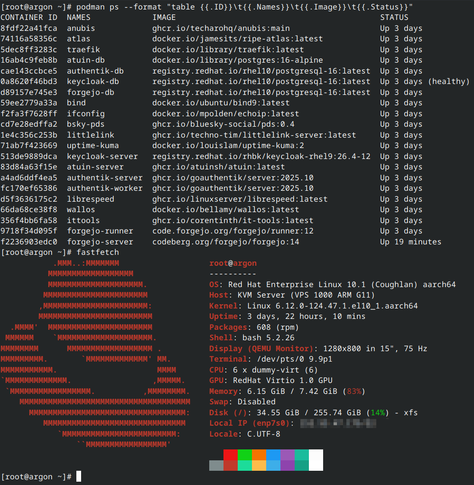
I run 21 OCI containers with Podman (and Quadlets!) on my ARM aarch64 server on Netcup with Red Hat Enterprise Linux (RHEL) 10.1. Memory utilization is a bit high, but the system is working absolutely stable for months.
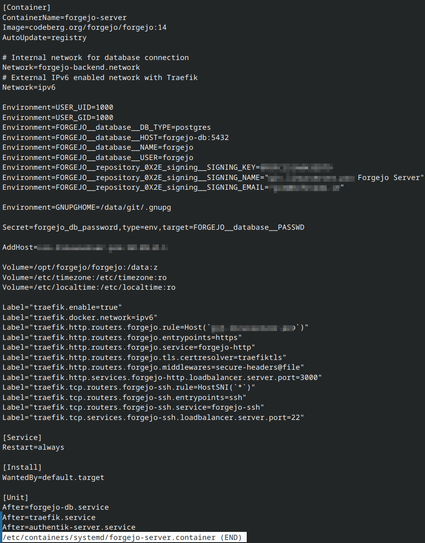
TLS certificates and ingress-routing is handled fully automatically by Traefik and labels, attached to the containers.
Having everything containerized, makes it really easy to clean up 🙂 There's some applications, that I don't even use anymore. Time to clean up.
Then I'll continue, replacing the old Authentik installation with Keycloak for my OIDC applications (Forgejo, Wallos etc.)
#linux #redhat #rhel #podman #devops #containers #forgejo #netcup
 reep
reep