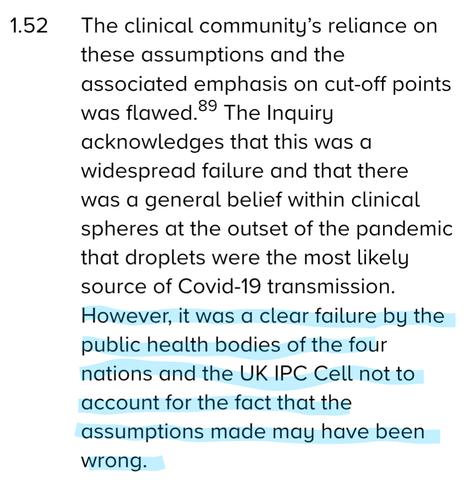
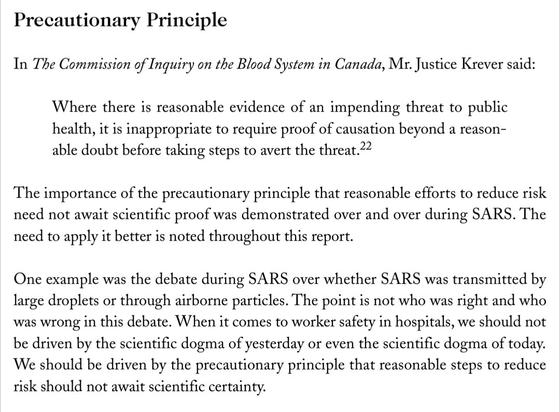
The classic failure mode of public health decision-making is "it's possible the bad thing science predicts is not happening, we have to wait until it's too late before acting". GRADE-driven at least in part, as preferred methods are slow and retrospective (basically waiting for bodies to pile up).
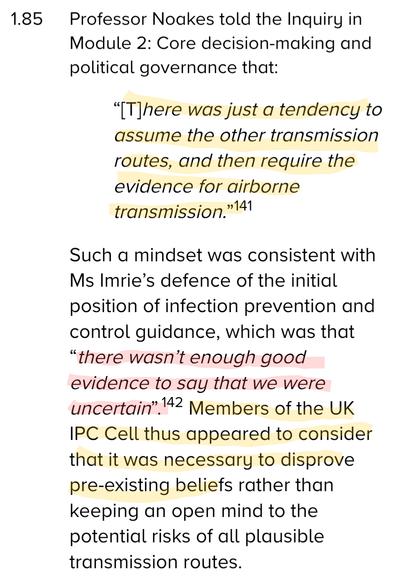
The fact that one might be able to come up with an explanation of the data consistent with prior assumptions does not mean it is safe to add another layer of assumption. That's where the pandemic response went off the rails from day 1. Same thing with denial of #longCOVID, that it affects kids, etc.
And the worst part is that the same mistake keeps happening over and over. It's a systems issue - the processes and paradigms underlying medical guidance-making are fundamentally broken. They have no effective error correction mechanisms, because they're self-referential and self-evaluating.
This is why people get so wound up about the lack of diversity of thought in public health and infection control decisions, and the GRADE mindset that as long as the process was followed, the decision was by definition as good as it could have been. It predictably omits critical information. 🧵:

RE: https://bsky.app/profile/did:plc:ou6sjyhswn7s3qyfqhw7mbk6/post/3m74blkez322o
Links to sources: Report of the SARS Commission: wayback.archive-it.org/17275/202203... Report of Module 3 of the UK COVID Inquiry: covid19.public-inquiry.uk/reports/modu... Comparing PH and IPC failures between SARS-CoV-1 and SARS-CoV-2 makes a lot of things clear. Excerpts (NB use above link).

RE: https://bsky.app/profile/did:plc:ou6sjyhswn7s3qyfqhw7mbk6/post/3lcutxrmvn22e