I'm a big fan of this explanation/rant from Andrew Murphy.

Taken as a whole, there are many bottlenecks in a corporate software development process. The "load-bearing" calendar is a great example!

Speeding up code creation just increases pressure on the bottleneck, which decreases throughput.

https://andrewmurphy.io/blog/if-you-thought-the-speed-of-writing-code-was-your-problem-you-have-bigger-problems

If you thought the speed of writing code was your problem - you have bigger problems | Debugging Leadership

AI coding tools are optimising the wrong thing and nobody wants to hear it. Writing code was already fast. The bottleneck is everything else: unclear requirements, review queues, terrified deploy cultures, and an org chart that needs six meetings to decide what colour the button should be.

Debugging Leadership

So why are we still trying to optimize code creation?

For decades, people with power - executives and product people - have been shifting the blame for strategy failures and poor market insight onto development "productivity."

This AI moment should be incredibly clarifying. Like, it should be the reductio ad absurdum of a productivity-centric approach.

@elizayer @beep I was literally just talking to someone about #Waymo for this same reason. Tech has reached the point where it has become more than abundantly obvious to anyone who dares to ask a single question that the objective is no longer the improvement of anyone’s life but the #EpsteinClass’s. Why is taking a Waymo better than taking an Uber? Because now someone’s out of a job. Why is #AI better than a software developer? Because now someone’s out of a job

@BmeBenji @beep

I generally agree!

On the narrow Waymo point, a few things have made me reconsider recently:

- Cyclists who feel Waymos are more predictable and less likely to make the equivalent of attentiveness mistakes. Or to be actively hostile.

- Women and older people who've said they feel vulnerable alone in a car with a driver.

@elizayer @BmeBenji @beep also folks with impairments meaning they can't drive. This is a great piece of podcast journalism about the response to Waymo applying to operate in Chicago:
https://pca.st/episode/ef4a328f-dbd4-45cb-8a0b-985250d62293
The Trial of the Driverless Car

In blue cities throughout the country, unions and politicians are fighting to ban driverless cars. We travel to Boston, where the fight has reached a fever pitch, and where the cars themselves will…

@Niall @elizayer While I haven’t listened to the episode — I didn’t realize Pinnamaneni and Vogt had a new project, after the Gimlet debacle — I can say the accessibility question here in Boston is much, much more complicated than that.
@beep @elizayer well yes, it's clear you haven't listened to the episode ;-)

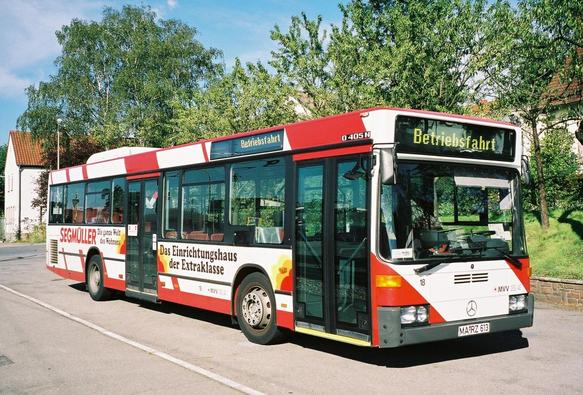
@Niall @beep @elizayer Germans have a word for accessible cars. it translates as "low floor bus". Sorry, there's no English language version of that article https://de.wikipedia.org/wiki/Niederflurtechnik

Of course, there are people whose disability doesn't allow them to take a bus, those will need a driving service.

Also, driverless subways make a lot more sense than driverless cars, because you have a much more controlled environment.

Niederflurtechnik – Wikipedia