OK, it’s, admittedly, gorgeously produced. And I’m willing to give Stewart some considerable benefit of the doubt, given how primordially foundational his work has been for so much of who and what I am.

But opening it to see an ESR quote, in this day and age, feels greasy and retrograde and gross – not quite as bad as getting some DHH on you, but not far off, either. And it gets worse: I wouldn’t have bought the book in the first place had I known Stewart devotes an entire (brief) section to the design “of” Elon Musk, as if Musk had ever designed anything more elaborate than a stealthy excursion to a Black Sea hair-transplant clinic. That bit is all-but-disqualifying in itself, and tends to make me ashamed to have the book on my shelves.

The deeper issue, though, is Stewart’s narrow definition of “maintenance.” The book feels like it’s sidestepped a whole generation of discourse on the topic, to its detriment. I’ll let you know what I wind up concluding.


(Exploring the particular irony of lauding Musk’s ostensible design genius, in an era when we know his insistence on flush, electronically-actuated handles on Teslas has contributed to the deaths by incineration of multiple victims, is left as an exercise for the reader.)

The infuriating thing about this book is that when it’s good, and on the things it’s good on, it is very good indeed, and lots of fun besides.

It is disqualified completely, however, by its thorough, fatal lack of attention to those inveterate maintainers known as “women,” acknowledged in its pages only on the dedication page (and even then in a way that isn’t anywhere near as charming as Brand presumably intends).

@adamgreenfield I like the sastrugi cover but based on your review I'm definitely gonna give this one a pass.
@jessamyn Kintsugi? : . )
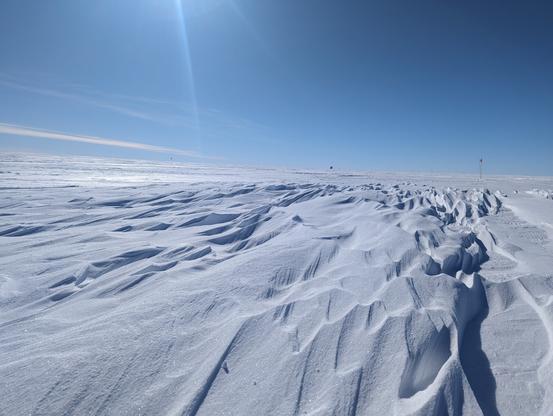
Image of the week: The Song of Sastrugi

Sastrugi are significant features in glaciology, providing valuable insights into wind patterns, snow dynamics, and surface processes. So although at first sight they may be easy to walk over (quite literally), their patterns and features can tell us more than you might think, so next time take a moment to look and see the story they have to tell…   The Song of Sastrugi The wind’s icy breath Sweeps across the snow Its whisper leaves a mark In patterns that it sows. The snow it hears wind coming It eagerly awaits Without wind, snow is lifeless Still, in this cold place. Now snow and wind entwine A dance, a meeting brief They leave their mark so clearly Proof of their mischief. Ridges rise defiant, Grooves and shadows lie A moment forever captured Beneath the winter sky. The story of sastrugi A sculpted, windswept sea The remnants of a meeting Etched for all to see. – Emma Pearce     A little bit more info Sastrugi are sharp, irregular grooves or ridges formed on a snow surface by wind erosion. These features are typically found in our polar regions or on high-altitude glaciers and they can vary in size from a few centimetres to over a meter in height and can be several meters long. The features form when the wind erodes the snow, carving out troughs and depositing the snow in ridges. Over time, the wind-packed snow hardens, making the sastrugi more pronounced and if you’re driving a skidoo, more dangerous! Glaciologically, sastrugi are important for a few reasons. Wind direction and patterns. They can tell us about past and present wind direction and strengths. They give an indication to patterns of snow deposition and ablation processes. Sastrugi pose challenges when doing fieldwork for researchers and equipment (such as snowmobiles and snow planes) due to their rough, uneven surfaces. Using their orientation from satellite data can help plan fieldwork and have a better constraint on weather conditions.   Edited by Maria Scheel  

Cryospheric Sciences
@jessamyn No, I gotcha. They’re both perfectly cromulent words.