 andsoitis
Artemis II crew take 'spectacular' image of Earth

Looking at the EXIF (with exiftool) for the image uploaded by NASA (https://www.nasa.gov/wp-content/uploads/2026/04/art002e00019...), apparently this was taken by a Nikon D5 with an AF-S Zoom-Nikkor 14-24mm f/2.8G ED and developed with Lightroom. It also seems like very little was done in Lightroom. Amazing...
I dumped the whole EXIF here: https://gist.github.com/umgefahren/a6f555e6588a98adb74eed79d...
I dumped the whole EXIF here: https://gist.github.com/umgefahren/a6f555e6588a98adb74eed79d...
Before Lightroom it might have looked closer to this: https://images-assets.nasa.gov/image/art002e000193/art002e00...
Might I ask, what was your path to finding this image?
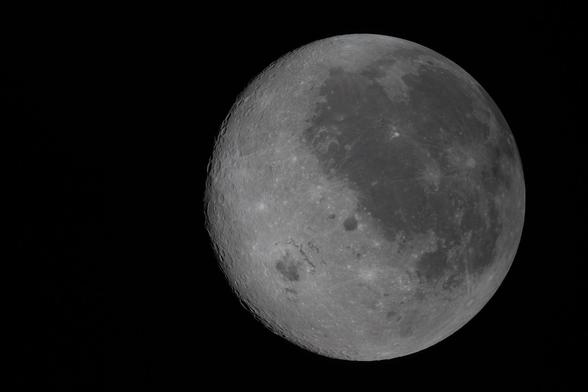
Journey to the Moon - NASA
Artemis II lifted off from Kennedy Space Center in Florida on April 1, 2026, and will reach the lunar sphere of influence—when the Moon's gravity exerts more force on the Orion spacecraft than the Earth's gravity—on April 5, before flying around the far side of the Moon on April 6.
Thanks so much. Sending this link to my nerdy nephews immediately.
The photograph appears to show nightime on Earth with just a sliver of daytime. Beyond cities in Iberia and along the coast of Africa, most of what we can see would be reflected light from the Moon? We are just past full moon on April 1.
1/4 exposure time so 250 ms of light. the light is coming from all the light sources in the universe, plus the moon, plus the sun's rays refracting through the atmosphere which happens even at night.
The natural blue light is coming from the oxygen in the atmosphere but it's so overwhelming in that spot that it turns the light pure white. The red/orangish is coming from particulates and the green/red from aurora. My favorite part I think is the very bottom where you can see the blue light taper off and not overwhelm the camera sensor and you can see the aurora with it. I love this photo so much.
Probably my favorite photo ever now.