andsoitis
Artemis II crew take 'spectacular' image of Earth

Looking at the EXIF (with exiftool) for the image uploaded by NASA (https://www.nasa.gov/wp-content/uploads/2026/04/art002e00019...), apparently this was taken by a Nikon D5 with an AF-S Zoom-Nikkor 14-24mm f/2.8G ED and developed with Lightroom. It also seems like very little was done in Lightroom. Amazing...
I dumped the whole EXIF here: https://gist.github.com/umgefahren/a6f555e6588a98adb74eed79d...
I dumped the whole EXIF here: https://gist.github.com/umgefahren/a6f555e6588a98adb74eed79d...
While the D5 is a great camera it's ~10 years old. Wonder why they didn't go for the Z9 which is its modern mirrorless equivalent.
Government budgets man…
> Wonder why they didn't go for the Z9 which is its modern mirrorless equivalent.
From [0], "The D5 was chosen for its radiation resistance, extreme ISO range (up to 3,280,000), and proven reliability in space." (
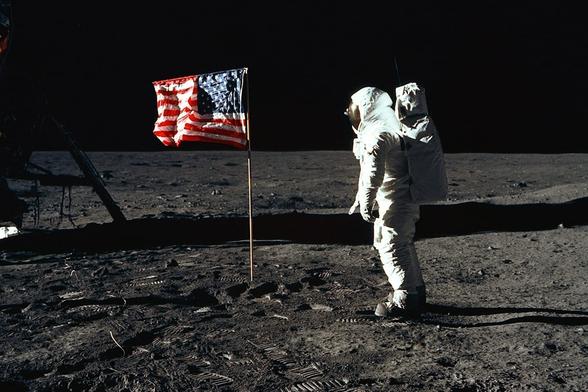
Artemis II Astronauts Will Bring 10-Year-Old Nikon D5 DSLRs to the Moon - PhotoWorkout
NASA's Artemis II crew will carry two Nikon D5 DSLRs — released in 2016 — to photograph humanity's first crewed lunar voyage in over 50 years. Here's why decade-old cameras beat modern mirrorless for space.
Zero point in measuring camera sizes (or other sizes haha) when JWST is floating there.
"The Nikon D5 remains the camera of choice for the Artemis II mission and will be assigned primary photographic duties. It is a proven, highly-tested camera that the Artemis II team knows will excel in the high-radiation environment of space. However, as Artemis II Commander Reid Wiseman explained ahead of yesterday’s launch, he successfully fought to have a single Nikon Z9 added to Artemis II’s manifest."
https://petapixel.com/2026/04/02/a-nikon-z9-made-it-aboard-t...
There are more interesting details in the PetaPixel article, such as: "'That’s the camera that they’ll be using, the crew will be using on Artemis III plus, so we were fighting really hard to get that on the vehicle to test out in a high-radiation environment in deep space,' Wiseman said."
H/t to "SiliconEagle73" who linked to that PetaPixel article in the thread linked below.
https://old.reddit.com/r/nasa/comments/1sbfevm/new_high_reso...

They did bring the Z9: https://petapixel.com/2026/04/02/a-nikon-z9-made-it-aboard-t...
But yeah the grainy photo of the Earth with the D5 at ISO 51200 shows the shortcomings of the ancient DSLR. Still, great shot.
Before Lightroom it might have looked closer to this: https://images-assets.nasa.gov/image/art002e000193/art002e00...
Might I ask, what was your path to finding this image?
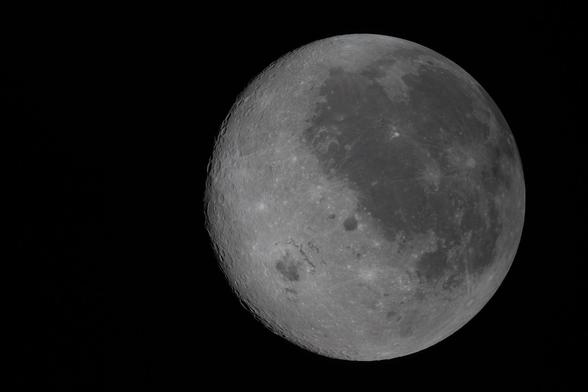
Journey to the Moon - NASA
Artemis II lifted off from Kennedy Space Center in Florida on April 1, 2026, and will reach the lunar sphere of influence—when the Moon's gravity exerts more force on the Orion spacecraft than the Earth's gravity—on April 5, before flying around the far side of the Moon on April 6.
Thanks so much. Sending this link to my nerdy nephews immediately.
The photograph appears to show nightime on Earth with just a sliver of daytime. Beyond cities in Iberia and along the coast of Africa, most of what we can see would be reflected light from the Moon? We are just past full moon on April 1.
1/4 exposure time so 250 ms of light. the light is coming from all the light sources in the universe, plus the moon, plus the sun's rays refracting through the atmosphere which happens even at night.
The natural blue light is coming from the oxygen in the atmosphere but it's so overwhelming in that spot that it turns the light pure white. The red/orangish is coming from particulates and the green/red from aurora. My favorite part I think is the very bottom where you can see the blue light taper off and not overwhelm the camera sensor and you can see the aurora with it. I love this photo so much.
Probably my favorite photo ever now.
...
My only curiosity, and yeah I know orders of significance etc...
Buuuuut I wonder why they didn't consider a Z5[0][1] and the Z mount 14-24, or the Z5 with an adapter for the F mount 14-24....
There's at least a pound of weight savings on the table.
Specifically, I wonder if it's a fun reason? i.e. it would be interesting if there was a technical reason like 'IBIS fails miserbly' or 'increased sensor resolution adds too much noise' (even at that ISO you gave from the EXIF...)
[0] I'm really more of a Sony person but am thus keenly aware about importance of UX feel, so I tried to keep the question apples to apples here.
Edited to add:
[1] Per [0] I may be stupid in thinking the Z5 is a 'at least minimal' substitute so happy to learn something here.
They have a Z9 on board for radiation testing, but the D5 is the primary body for imaging on this mission IIRC
Nice. It would've been cool to see what the location information in the EXIF looked like, if it were there.
The D5 doesn't have built in GPS, and adding it requires an attachment. I don't know if the smartphone app works on that model, but it is from the same year as my D5600 which does support it. The app provides GPS but also drains the battery fast. I turned airplane mode on after the first dead battery.
GPS might work out there though: https://www.nasa.gov/directorates/somd/space-communications-...