Just one study but we have seen clear decreases in human attention spans, esp since 2012...

"Watching fragmented short videos rather than a single continuous video leads to poorer memory recall and alters how the brain retrieves information. A recent experiment revealed that fast-paced episodic media formats disrupt the neural systems responsible for integrating details and maintaining cognitive control." via PsyPost

https://www.psypost.org/brain-scans-reveal-how-short-videos-impair-memory-and-disrupt-neural-pathways/

#Science #Psychology #SocialMedia

Brain scans shed light on how short videos impair memory and alter neural pathways

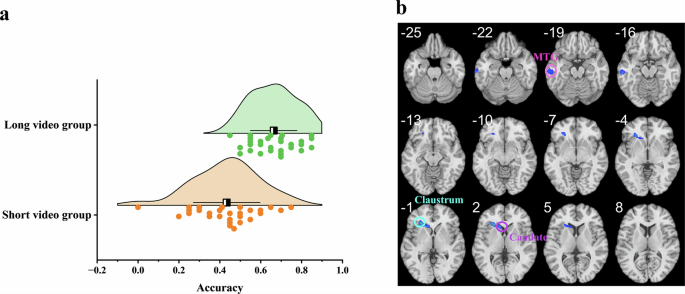
A recent brain imaging experiment reveals that watching fragmented short videos leads to measurably worse memory recall compared to viewing continuous content. The fast-paced format reduces brain activity in regions dedicated to focusing attention and processing deep meaning.

PsyPost Psychology News
@robin wow. We are turning into some sort of short attention, memory deprived, dopamine addict, psycho-maniacs.. just what the world needed...

@robin

Moral Panic.

@lemgandi lol this is literally research, please go touch grass before posting in my general direction again

@robin Yup. The problem isn't our devices. It's the choice of content and format. The fact that people spend so much time mindlessly staring at short video clips, and endlessly scrolling through low-effort content, is a big win for algorithm-based hypercapitalism.

Meanwhile, these devices could be used to listen to long, in-depth podcasts, or read novels, short stories, poems, or sketch, or keep a journal, or whatever you can think of. Why have short videos and doom-scroll-content taken over these computers in our pockets that were science fiction twenty years ago!?

@robin for those following along, original paper is https://www.nature.com/articles/s41539-025-00399-y
Fragmented learning from short videos modulates neural activity and connectivity during memory retrieval - npj Science of Learning

The widespread rise of short videos has raised growing concerns about their influence on cognitive processing and memory, yet direct neural evidence remains scarce. In this study, 57 participants viewed either a continuous long video or multiple short videos matched for duration and content. Memory was tested with a recall task, and brain activity was measured with fMRI. Short video exposure led to poorer memory accuracy compared to the long video condition. Neuroimaging revealed reduced activation in the claustrum, caudate nucleus, and middle temporal gyrus, as well as weakened claustrum–caudate connectivity. These neural alterations were significantly associated with memory performance and habitual short video usage. Our findings indicate that learning through short videos impairs memory by disrupting brain systems involved in information integration, cognitive control, and semantic processing, providing novel neurobiological evidence of the cognitive costs of fragmented media exposure.

Nature

@robin Blipverts 😅

(I've never forgotten that first Max Headroom episode…it's incredible how much they predicted about our modern media environment)

@robin My antidote: long, mesmerizing movies. Doubly so from directors that love to do long takes. 🤤
@Nundrum yesssssss this is where it's at 🤩
@robin Do you have some good suggestions? :D
@Nundrum my memory is deeply context dependent so I'm coming up short but I will say Vince Gilligan's Pluribus definitely hits the spot with the long takes
@robin May I suggest Tokyo Story (or pretty much anything by Ozu, really)?
@pacavegano yes please and thank you! Adding it to my list 🤩