 edent
edentSolar and batteries can power the world
Fun fact, 12 million hectares of land of used to produce corn used for ethanol which is used to produce gas. I'll let you draw the conclusion.
https://news.cornell.edu/stories/2025/04/trading-some-corn-e...

Trading some corn-ethanol land for solar offers ‘tremendous opportunity’ | Cornell Chronicle
In the U.S., strategically converting a small fraction of land used to grow corn for ethanol to solar facilities could vastly increase energy production per hectare, as well as provide ecological benefits and financial resiliency for farmers.
Yeah, the technology connections video on this was fantastic. If one was to cover that land in solar, you’d produce far more than the current energy demands of the US.
Relying on an energy source which requires constant, continuous resource extraction is fucking stupid when we can spend resources up front and get reliable energy (solar + battery) for decades with minimal operating cost & maintenance. And then we’ll have a recycling loop to minimize future resource extraction.
If you want to debate that, spend some time with this video first: https://youtu.be/KtQ9nt2ZeGM

You are being misled about renewable energy technology.
So here I go: if it is so stupid, why it is not done yet?
Try not to blame anyone. Do it rationally if you can, from your message I understand your opinion.
I say this as a person that has lived in a developing country the last 15 years. It is not that simple IMHO...
The economics only changed recently and infrastructure lasts a long time. It’s the same reason EV’s make up a far larger share of new car sales than a percentage of overall cars, EV’s sucked 20+ years ago yet there are a lot of 20+ year old cars on the road.
The US stopped building coal power plants over a decade ago but we still have a lot of them. Meanwhile we’ve mostly been building solar, which eventually means we’ll have a mostly solar grid but that’s still decades away.
> The economics only changed recently and infrastructure lasts a long time
This needs investment also. An investment poorer people cannot or do not want to do. It is reasonable that when someone gives up a couple of things because that person is rich (rich as in a person in the developed world) the sacrifice is more or less acceptable.
Now change environment and think that these sacrifices are way worse. Even worse than that: that has more implications in conservative cultures where, whether you like it or not, showing "muscle" (wealth) is socially important for them to reach other soccial layers that will make their lives easier.
But giving up those things is probably a very bad choice for their living.
America cannot be compared to South East Asia economically speaking, for example. So the comparison of the coal centrals is not even close.
A salary in Vietnam is maybe 15 million VND for many people. With that you can hardly live in some areas. It is around 600 usd.
Just my two cents.
That's why it will require a functional government who can use taxes responsibly to make the technology affordable to everyone. The US had a pretty good start until one man decided to stop and try to reverse any progress made.
Not one man, he's financially backed by the wealthiest people in the world and politically supported by millions.
Acting like this blunder is some random stroke of bad luck isn't telling the whole story.
We haven't been building much battery storage to go along with that solar power. Perhaps we will eventually, but until that actually happens the base load requirement represents a hard limit on the amount of solar generation capacity that the grid can handle.
We started scaling batteries after solar (because the technology reached the point where they were profitable after solar)... but they're being installed at scale now, and at a rapdily increasing rate.
Batteries provided 42.8% of California's power at 7pm a few days ago (which came across my social media feed as a new record) [1]. And it wasn't a particularly short peak, they stayed above 20% of the power for 3 hours and 40 minutes. It's a non-trivial amount of dispatchable power.
[1] https://www.gridstatus.io/charts/fuel-mix?iso=caiso&date=202...
Batteries are a form of dispatchable power not "base load". There is no "base load" requirement. Base load is simply a marketing term for power production that cannot (economically) follow the demand curve and therefore must be supplemented by a form of dispatchable power, like gas peaker plants, or batteries. "Base load" power is quite similar to solar in that regard. The term makes sense if you have a cheap high-capitol low running-cost source of power (like nuclear was supposed to be, though it failed on the cheap front) where you install as much of it as you can use constantly and then you follow the demand curve with a different source of more expensive dispatchable power. That's not the reality we find ourselves in unless you happen to live near hydro.
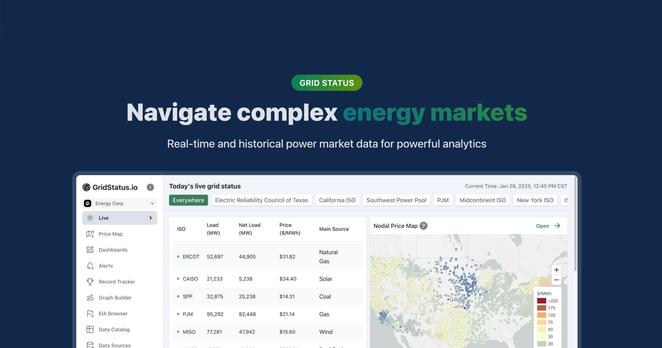
> We haven't been building much battery storage to go along with that solar power
That too has pretty recently changed. Even my home state of Idaho is deploying pretty big batteries. It takes almost no time to deploy it's all permitting and public comment at this point that takes the time.
Batteries have gotten so cheap that the other electronics and equipement at this point are bigger drivers of the cost of installation.
Here's an 800MWh station that's being built in my city [1].
I think people are just generally stuck with the perception of where things are currently at. They are thinking of batteries and solar like it's 2010 or even 2000. But a lot has changed very rapidly even since 2018.
[1] https://www.idahopower.com/energy-environment/energy/energy-...
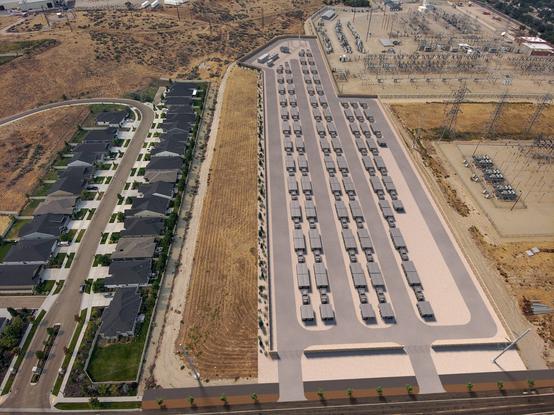
Boise Bench Substation Battery Project - Idaho Power
Energy demand is growing by leaps and bounds as growth continues across the Treasure Valley. To help us continue our tradition of providing safe, reliable, affordable energy, Idaho Power plans to install batteries on approximately 10 acres at our Boise […]Read more
> Batteries have gotten so cheap
Any pointers for a regular Joe Shmoe homeowner looking for a backup battery? The Tesla Power Wall stuff and similar costs are halfway to six figures.
I don't know if the market has improved but when I looked at this a year or two ago I concluded that the consumer market here was utter crap with hugely inflated prices.
The cheapest per kwh way I could find to buy a home battery (that didn't involve diy stuff) was to literally buy an EV car with an inverter... by a factor of at least two... I ended up not buying one.
Unfortunately cheap batteries doesn't translate to reputable companies packaging them in cheap high quality packages for consumers instantly.
For full house backup, it sort of sucks right now. They are all charging a premium over what you can otherwise get if it's not specifically a whole home product.
What I've done and would suggest is right now looking for battery banks for big ticket important items that you'd want to stay on anyways in terms of an outage. A lot of those can function as a UPS. You can get a 1kWh battery pack for $400 right now. A comparable home battery backup is charging $1300 per kWh of installed storage.
I currently have a 2kWh battery pack for my computer/server/tv and a 500Wh pack for my fridge. Works great and it's pretty reasonably priced. The 500Wh gives my fridge an extra 6 hours of runtime after a power outage.
If I wanted to power shift, I have smart switches setup so I can toggle when I want to.