 edent
edentSolar and batteries can power the world
The article is just wrong. And only mentions energy used for heating in passing. Heating requires MASSIVE amounts of energy.
I should know bc I have a whole house battery and solar system (almost 30 kWh battery and 24kW solar). It keeps the lights on, but not heating. I live in a mild climate.
The reality is that battery/solar requires major quality of life and activity time shifting trade-offs.
I live in a northern climate and I know multiple people who are net zero with solar+basic battery.
Proper insulation and good windows go a very long way. For instance, I set my heat to 66F during the day and 60F at night. When I wake up in the morning, the register is usually still above 60F.
Net zero. But not effectively zero. They sell energy during the day when no one needs it and buy it an night when we all need it. If we all switched to solar and heat pumps there would be blackouts and an energy crisis
What? They store the surplus in their batteries during the day and use it at night.
I genuinely do not understand why people are so afraid of solar. It's baffling.
They've fallen victim to a catastrophically easy scare tactic, unfortunately. "The sun only shines during the day therefore solar is bad!" Dumb, but easy.
And in my experience as someone who is actually trying to DO something, is exactly right.
But to be clear, it's less about night vs day and more about summer vs winter.
^ This.
I had a 20kWh array and 18kWh of batteries in Texas and it was GREAT in the summer. It'd start charging by 6am and be charged by 9am, even with simultaneous usage. Then we'd live off solar for the day (even with HVAC), go back on batteries around 9pm and they'd be out around 4am. No problem.
But during an overcast winter day, the stack wouldn't get power until 8/9, not make it to 50%, start discharging by 4/5pm, and be out by 10/11pm. It would easily be 8-10 hours where we were wholly dependent on the grid.
Not a problem, just a constraint to acknowledge and plan for.
In Toronto there is only daylight for 9 hours in winter
Yes surely some days are cloudy
So some days you get 5% capacity factor, and need some other energy source as well
So it harms the economics of the venture
Look at the profitability of companies building utility scale solar farms, they cost 100 million and the company hopes to get a 10% return and pay a 3% dividend.
They still have to contend with moving parts for tracking the angle of the sun, fans on inverters, contactors, clearing snow, mowing grass, site drainage, tornadoes etc, so sometimes it is not as easy as it sounds
All for a 7%? Why shouldn’t they just buy the s&p 500 and call it a day
Solar generates like 1/10 in the northern countries for half of the year. No batteries currently can solve this.
The problem with global ecological regulations is they never differentiate between countries on the equator or 30th parallel with countries around 60. They expect everyone to only run on sun and wind. It isn't possible. There has to be at least nuclear which is ridiculously expensive.
It's generally not an easy problem to solve otherwise it wouldn't be a problem anymore.
First sensible thing to do is to relax the expectations for countries like Poland that have no good way to compete with other countries energy wise because of geographical location that noone chooses.
It is extremely unfair to treat everyone the same even though every country has different energy resources.
There's a solution that costs less than fossil fuels, but it's a coordination problem and the USA is structurally unable to solve those anymore. I guess the Soviet Union wins the last laugh?
66F is ridiculously cold to me, and I live in Canada where it can reach -40(F or C) in the winter. I would find that very uncomfortable and elderly people would be shivering constantly and highly susceptible to respiratory illness.
I have a modern cold climate air source heat pump which essentially needs to run 24 hours a day to maintain a stable 20C when the outdoor temperatures reach -15C. Below that, the heat pump shuts off and the furnace kicks in to provide emergency heating. My thermostat is a modern one with full time-of-day and day-of-week scheduling for heating and cooling, but it doesn't matter because the heat pump by itself is not able to swing the temperature up (by even half a degree) on its own, so this causes the furnace to kick in every time the schedule calls for a higher temperature, defeating the entire purpose of time-of-day scheduling.
I will also add that where I live (Southern Ontario) the sky is overcast 90% of the time during the winter. Solar panels, even somehow free of snow and ice, are going to produce almost nothing on those dark days. Add in the need to keep the panels free of snow and ice (presumably with heating, since nobody is going to be climbing around on their roof in the winter), and you'd likely reach energy net-negative trying to make use of them.
I actually live on the same latitude as Ontario so -40F/C is not unusual. Add in windchill, and it gets even more common, given my windy location.
Yeah, I understand I'm probably an outlier at 66F. I was using the numbers more to point out how little a house temperature will drop with good windows and insulation.
“elderly people would be shivering constantly and highly susceptible to respiratory illness.”
At 66 degrees F? That sounds like put a sweater on if you’re chilly, not some near death extreme.
Any evidence that such an ‘extreme’ would cause issues?
>66F is ridiculously cold to me...I would find that very uncomfortable and elderly people would be shivering constantly and highly susceptible to respiratory illness.
I know people who live in the Mediterranean and get by with no heating during the winter with indoor and outdoor tempuratures this low or lower, so it seems that one can be conditioned into doing so.
Perhaps it's the presence of more sunlight on average rather than the temperature that makes the difference.
People acclimatize pretty well if you let them. We keep our house at 65F all winter, and set the AC for 85F in the summer and everyone is pretty happy. The payback period on a good sweater is not very long.
Those brutally cold temperatures are really not compatible with most human beings
Weird because a significant number of humans beings in the USA immigrated at some point from a country in this climate.
At 66F, I struggle to do job because my fingers go numb and I can't touch-type well. If others have that problem, a small heat-lamp (like for a reptile cage) can locally heat just the area above the keyboard cheaply.
I use a desktop heating pad under my keyboard. It's an Apple thin, metal keyboard, which works really well for this. It uses about 20w.
In the northwest corner of Massachusetts I converted an old school into an apartment building. I installed 2" of polystyrene on the outside and about a foot of cellulose in the ceilings. We relay on heatpumps for HVAC. I also installed a 50kW solar array. We don't start paying for heating until Nov/Dec and stop paying in Apr/May. Our Electric usage goes through the roof in Jan/Feb/Mar. Our weak point is that the exterior walls are about 40% windows. I hope to install better thermal shades which will cost about $80k. We also last fall installed a solar thermal array to for hot water and heat the hallway which is radiant floor. I would like to think we could achieve net-zero but I will likely need to expand the solar array by about 200%.
Thermal curtains are more effective than good windows. Good windows are minimally helpful.
People still build houses like energy is cheap and abundant. A properly insulated house in any temperate climate require very little heating or cooling.
Spend 50k on insulation that will last the life of the building instead of 50k on heating and cooling devices which will need constant maintenance and replacement + fuel and end up costing 10x more over the life of the building.
A modern house with modern insulation in a mild climate shouldn't even need a central heating system. You can get by with 500w toaster heaters in each room for the coldest time of the year
And never mind ground-source heat pumps [1] (although I know the topic was specifically solar).
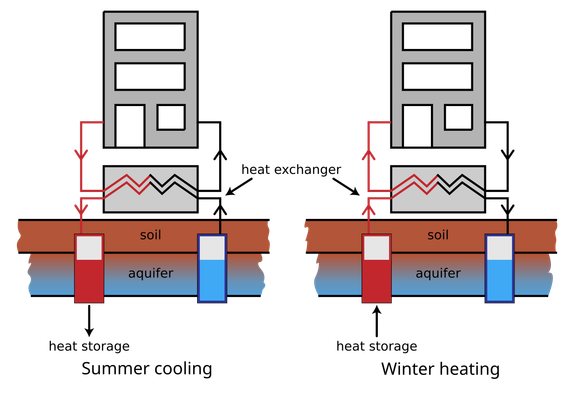
You don't even need to go that far, put 100m of tubing 2m underground and plug it in your heat recovery ventilation system, bam free winter freeze protection/pre warming and free summer cooling, all you need is a 30w pumps and you will save hundreds of kw per year
uh no... You still need a heat pump. The water coming from that system would be like 50 degrees, far too cold for heating.
I think my comment is pretty clear about the use case, this is obviously not water for your floor heating. You shouldn't even have that in a properly insulated house, way too much inertia.
There are electric floor heating graphene foils that put out 20w per sqm, they're more than enough, no moving part, no maintenance, no bs, not even 20% of the price of a hydro floor heating, you can even install them yourself
In the short term the math is usually bad. Can be a 20, 30, 40 year payback on insulation. For the builder? It’s almost for sure a loss unless he can play the green card. For any individual owner? They are likely to leave before they recoup a project like this. Appraisals on houses are price per square foot with a bedroom and bathroom modifier. Until people start pricing in energy efficiency in homes, say a price multiple of 0.8 to 1.2 based on the efficiency of the home? It’s going to be hard to math out.
Which yes is sad.
Which yes is sad.
I live in a moderately cold area and pay less than $2000 a year to heat a ~2000 square foot home. So something that improves the efficiency of the building would have to have a pretty low cost to even pay back at all.
There's probably a few lower cost things that I am overlooking, to the tune of netting out a few hundred dollars of savings after however many years they took to pay back.
> Can be a 20, 30, 40 year payback on insulation. For the builder?
In the UK, houses have energy ratings, which are largely not that useful, but they do allow estimated annual running charge.
The house that I live in we moved in and were spending ~1.7k on gas a year.
We needed to re-render the place, because it has a few missing pieces. we spent the extra £4 to put in 90mm of external wall insulation. We also had to replace the glazing. It was cheaper to get triple glazing (for some reason), however the results of that was that it was 6degrees warmer in winter, and 10 degrees (celcius) cooler in summer. Even with gas prices doubling, we spend about £70 on hotwater and heating.
I could not retrofit my house for efficient heating with $50k. To do so would likely be cheaper to completely tear it down and rebuild.
same here. 1940's house with slate roof and vermiculite "insulation". You can't just use modern insulation techniques or blown-in foam because that would make exterior wood rot. You need to keep the air flowing the right way to dry out the wood.
I have to clean the eaves of my house myself because nobody I hire will believe me that you can't point a pressure washer at the eaves without water getting inside the walls. "I'll just avoid the vents" doesn't work when you can see daylight between the roof and the wall all around the house.
I'm guessing you don't live in a place with tropical storms or really severe weather.
Where I am your house would flood when 80mph+ winds blow the rain up your walls.
Would you be willing to quantify what "mild" means to you, maybe in terms of a USDA zone? There are maps for both US and Europe:
https://planthardiness.ars.usda.gov/pages/map-downloads
https://commons.wikimedia.org/wiki/File:USDA_hardiness_zones...
> A properly insulated house in any temperate climate require very little heating or cooling.
A "properly insulated" house still requires something around 0,5 W/m2/K. Modeling a moderate 120 m2 house in the coldest months when the temperatures hit 15-20 negative you still need 2,5 kW of heat with domestic hot water on top. Put in the efficiency of a heat pump and you are still easily looking at half a mega watt-hour per month. ~1MWh for a whole house is very reasonable number during winter months, sans electric mobility.
That's entirely unrealistic to cover with batteries with current battery technologies alone, electricity generation is absolutely REQUIRED. Windmills can help soften the blow and storage needs substantially, but the TFA is about solar, which is effectively absent during the winter.
Respectfully, 30kWh is not much in this context. In 10 years every modern 2-car home will have 200kWh on the driveway just from the EVs; add a 100kWh whole home battery at a price point close to a 10kWh battery today and the calculus changes in most of the world.
The cost of materials going into modern batteries easily leaves room for another 10x reduction in price, IMO where this all is heading is obvious. Zero marginal cost will win every day of the week.
FWIW we run our cabin on 15kWh battery today year around, though we do run a small wood stove to supplant the heat pump on cold winter days.
I bet you didn't even see the tragic farce when writing your solution. Land development requiring ”2-car homes" is the driver of the problem! An apartment only has to heat one or two walls facing the outside instead of 4. That's 50-75% right off the top of your energy usage, with the mean closer to 75%.
There's nothing farcical about wanting one's own space where there's space to have one's own space. I'm grateful to no longer be sharing walls with a domestic abuse couple on one side and a midnight banshee on the other wall when she got busy. Energy is cheap, people are exhausting.
And that gets into another coordination problem we're unable to solve. It's a solved problem to build apartments where you can't hear your neighbors, but the builders don't have incentive to spend the money upfront to do so and we add regulations to make it more expensive for them to do so. So people go on thinking "apartments suck" and not the correct "we shouldn't let people build apartments which suck".
Also, living in SFH isn't avoiding all problems. I'd rather live in a properly-built apartment than my old house when my neighbor left her dogs outside to bark for the entire work day, every single day, and all the city would do is fine her a hundred bucks every few months. (or if you want to say "rural", that's 1 a small fraction of the population and 2 I like hospitals).
40 kWH of storage and 9 kW of solar panels is all I need personally to live a 1st world lifestyle in the bay area mostly off-grid except for water and internet.
> I should know bc I have a whole house battery and solar system
This is not really a qualification to speak on how the grid works, at all.
Actually having panels on your roof doesn't give you unique insight into how solar panels operate - there is extensive data out there, any PV installation can become a data source trivially.
> The reality is that battery/solar requires major quality of life and activity time shifting trade-offs.
One residence powering itself is not representative of how the grid works, and is not a good way to evaluate any power generation technology whether its PV, coal, nuclear, etc.
I'm actually trying to accomplish what the author is describing, so I have experience to talk about the difficulty of its implementation (unlike the author himself, who has zero experience with its implementation to speak of).
24kW solar "to keep lights on" is a funny way to underplay it. My house "summer" electricity usage is 60kWh per month, including water pump, DHW, septic and work from home for 2 adults. So 3h of your PV production would power my house for a month!
Regarding heating - I live in cold climate. We had average daily temperature of -10c this january, with multiple lows at -25c, and most nights at -15c. The house is 116sqm. Our heatpump COP for that month was above 2, and we used 787kWh total to heat the house, which is not a lot, actually. At 15 cents per kWh it is 118 euros for heating, for the coldest month in a decade! Considering also that we do not pay for electricity since april until october (solar panels).
We also paid less than those houses which use natural gas, wood pellets, etc. We also do not need to do anything to keep house warm. Also, during summer months we could "drive for free" in EV due to free solar electricity.
All that just to counter your take on "major quality of life and activity time shifting trade-offs".
Fun fact, 12 million hectares of land of used to produce corn used for ethanol which is used to produce gas. I'll let you draw the conclusion.
https://news.cornell.edu/stories/2025/04/trading-some-corn-e...

Trading some corn-ethanol land for solar offers ‘tremendous opportunity’ | Cornell Chronicle
In the U.S., strategically converting a small fraction of land used to grow corn for ethanol to solar facilities could vastly increase energy production per hectare, as well as provide ecological benefits and financial resiliency for farmers.
Yeah, the technology connections video on this was fantastic. If one was to cover that land in solar, you’d produce far more than the current energy demands of the US.
Relying on an energy source which requires constant, continuous resource extraction is fucking stupid when we can spend resources up front and get reliable energy (solar + battery) for decades with minimal operating cost & maintenance. And then we’ll have a recycling loop to minimize future resource extraction.
If you want to debate that, spend some time with this video first: https://youtu.be/KtQ9nt2ZeGM

You are being misled about renewable energy technology.
yes but increasing solar will damage the energy lobby in the congress and other places. It's never about what is best, it's about what's best for lobby and their puppets
If you won't think of the energy corridor, who will?
So here I go: if it is so stupid, why it is not done yet?
Try not to blame anyone. Do it rationally if you can, from your message I understand your opinion.
I say this as a person that has lived in a developing country the last 15 years. It is not that simple IMHO...
The economics only changed recently and infrastructure lasts a long time. It’s the same reason EV’s make up a far larger share of new car sales than a percentage of overall cars, EV’s sucked 20+ years ago yet there are a lot of 20+ year old cars on the road.
The US stopped building coal power plants over a decade ago but we still have a lot of them. Meanwhile we’ve mostly been building solar, which eventually means we’ll have a mostly solar grid but that’s still decades away.
> The economics only changed recently and infrastructure lasts a long time
This needs investment also. An investment poorer people cannot or do not want to do. It is reasonable that when someone gives up a couple of things because that person is rich (rich as in a person in the developed world) the sacrifice is more or less acceptable.
Now change environment and think that these sacrifices are way worse. Even worse than that: that has more implications in conservative cultures where, whether you like it or not, showing "muscle" (wealth) is socially important for them to reach other soccial layers that will make their lives easier.
But giving up those things is probably a very bad choice for their living.
America cannot be compared to South East Asia economically speaking, for example. So the comparison of the coal centrals is not even close.
A salary in Vietnam is maybe 15 million VND for many people. With that you can hardly live in some areas. It is around 600 usd.
Just my two cents.
That's why it will require a functional government who can use taxes responsibly to make the technology affordable to everyone. The US had a pretty good start until one man decided to stop and try to reverse any progress made.
Not one man, he's financially backed by the wealthiest people in the world and politically supported by millions.
Acting like this blunder is some random stroke of bad luck isn't telling the whole story.
We haven't been building much battery storage to go along with that solar power. Perhaps we will eventually, but until that actually happens the base load requirement represents a hard limit on the amount of solar generation capacity that the grid can handle.
We started scaling batteries after solar (because the technology reached the point where they were profitable after solar)... but they're being installed at scale now, and at a rapdily increasing rate.
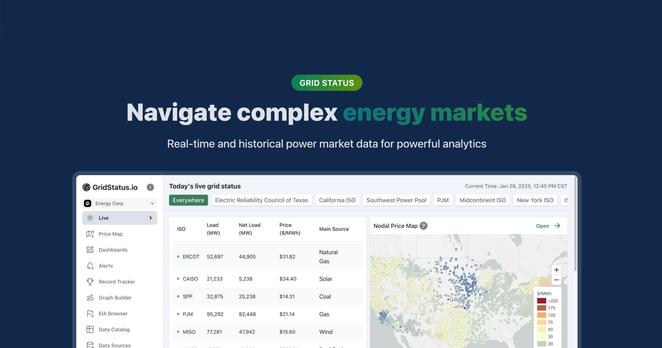
Batteries provided 42.8% of California's power at 7pm a few days ago (which came across my social media feed as a new record) [1]. And it wasn't a particularly short peak, they stayed above 20% of the power for 3 hours and 40 minutes. It's a non-trivial amount of dispatchable power.
[1] https://www.gridstatus.io/charts/fuel-mix?iso=caiso&date=202...
Batteries are a form of dispatchable power not "base load". There is no "base load" requirement. Base load is simply a marketing term for power production that cannot (economically) follow the demand curve and therefore must be supplemented by a form of dispatchable power, like gas peaker plants, or batteries. "Base load" power is quite similar to solar in that regard. The term makes sense if you have a cheap high-capitol low running-cost source of power (like nuclear was supposed to be, though it failed on the cheap front) where you install as much of it as you can use constantly and then you follow the demand curve with a different source of more expensive dispatchable power. That's not the reality we find ourselves in unless you happen to live near hydro.
> We haven't been building much battery storage to go along with that solar power
That too has pretty recently changed. Even my home state of Idaho is deploying pretty big batteries. It takes almost no time to deploy it's all permitting and public comment at this point that takes the time.
Batteries have gotten so cheap that the other electronics and equipement at this point are bigger drivers of the cost of installation.
Here's an 800MWh station that's being built in my city [1].
I think people are just generally stuck with the perception of where things are currently at. They are thinking of batteries and solar like it's 2010 or even 2000. But a lot has changed very rapidly even since 2018.
[1] https://www.idahopower.com/energy-environment/energy/energy-...
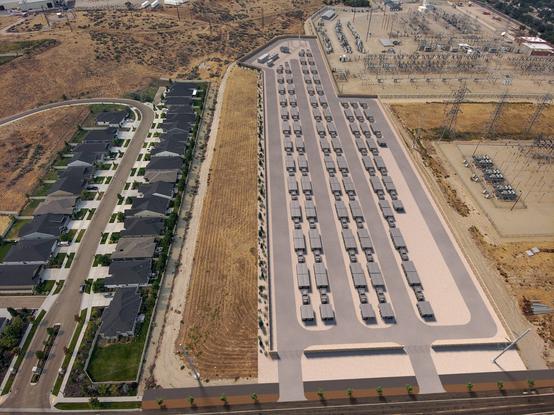
Boise Bench Substation Battery Project - Idaho Power
Energy demand is growing by leaps and bounds as growth continues across the Treasure Valley. To help us continue our tradition of providing safe, reliable, affordable energy, Idaho Power plans to install batteries on approximately 10 acres at our Boise […]Read more